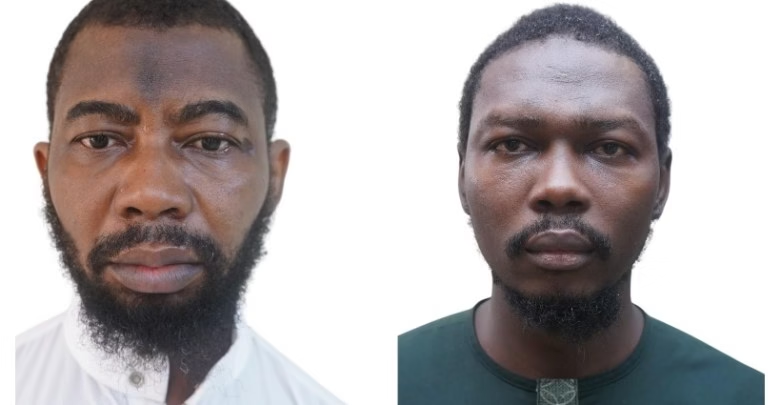

Nigeria has announced the arrest of two of its most wanted militant leaders in what officials are calling the country’s most significant counterterrorism breakthrough in years. National Security Adviser Nuhu Ribadu confirmed on Saturday that Mahmud Muhammad Usman, head of the al-Qaida-linked Ansaru, and Mahmud al-Nigeri, leader of the lesser-known but increasingly violent Mahmuda group, were captured in a joint multi-agency operation conducted between May and July.
The two men have long been accused of masterminding deadly assaults on civilians, security forces, and infrastructure. Ribadu said Usman and al-Nigeri were behind the 2022 Kuje prison break, which freed dozens of Boko Haram fighters, and the 2013 attack on a Niger uranium facility. Both suspects are also wanted internationally for maintaining “active links with terrorist groups across the Maghreb, particularly in Mali, Niger, and Burkina Faso.” Authorities reported seizing valuable digital evidence during the operation, which is now under forensic analysis and could lead to further arrests across the region.
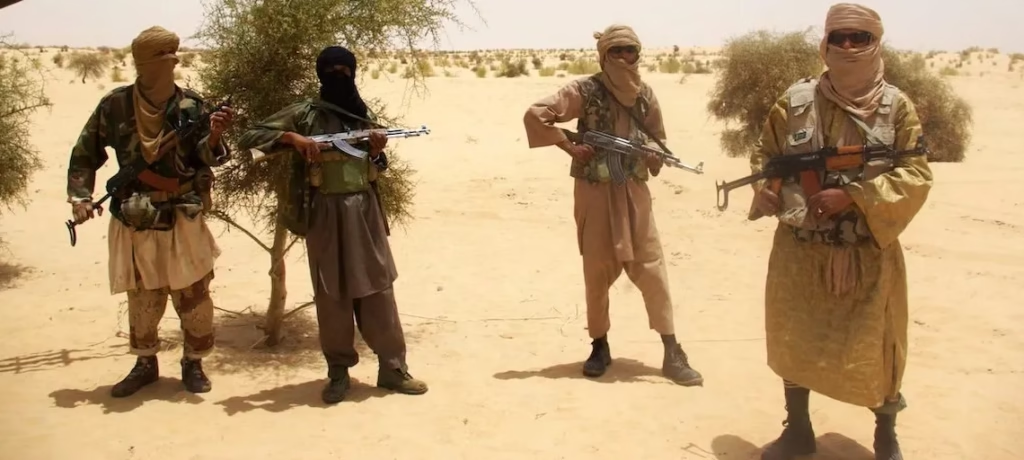
Ansaru, a Boko Haram offshoot formed in 2012, has specialized in high-profile kidnappings of foreigners and attacks on international targets. Mahmuda, a newer militant outfit, gained national attention earlier this year after a wave of assaults in north-central Nigeria. Nigeria’s north remains a hotspot of insecurity, with Islamist factions like Boko Haram, Ansaru, and ISWAP operating alongside amorphous armed “bandit” groups engaged in kidnapping for ransom and looting. Despite military offensives, these groups have continued to expand, with Boko Haram staging a resurgence in 2025.
The arrests came just days after Washington approved a $346 million arms sale to strengthen Nigeria’s fight against insurgents. Ribadu hailed the breakthrough as a turning point. The successful decapitation of the leadership of this dangerous franchise marks the most decisive blow against Ansaru since its inception. Its central command has been dismantled, paving the way for its complete annihilation. Security experts, however, cautioned that the impact will depend on how Nigeria capitalizes on fresh intelligence. “The resilience of Ansaru and Mahmuda will be tested in the coming weeks,” said Oluwole Ojewale of the Institute for Security Studies in Dakar. “If the state acts decisively, this could cripple their networks. If not, splinter groups may emerge even more radicalized.”