
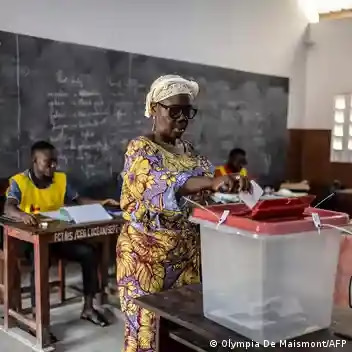

Benin has begun counting ballots following a closely watched presidential election that could shape the country’s political and economic direction for years to come. The vote is expected to determine the successor to outgoing President Patrice Talon, who is stepping down after completing his constitutionally limited two terms. Finance Minister Romuald Wadagni, widely seen as Talon’s preferred candidate, is the frontrunner in a race marked by limited opposition. He faces Paul Hounkpe, whose campaign has struggled to gain momentum.
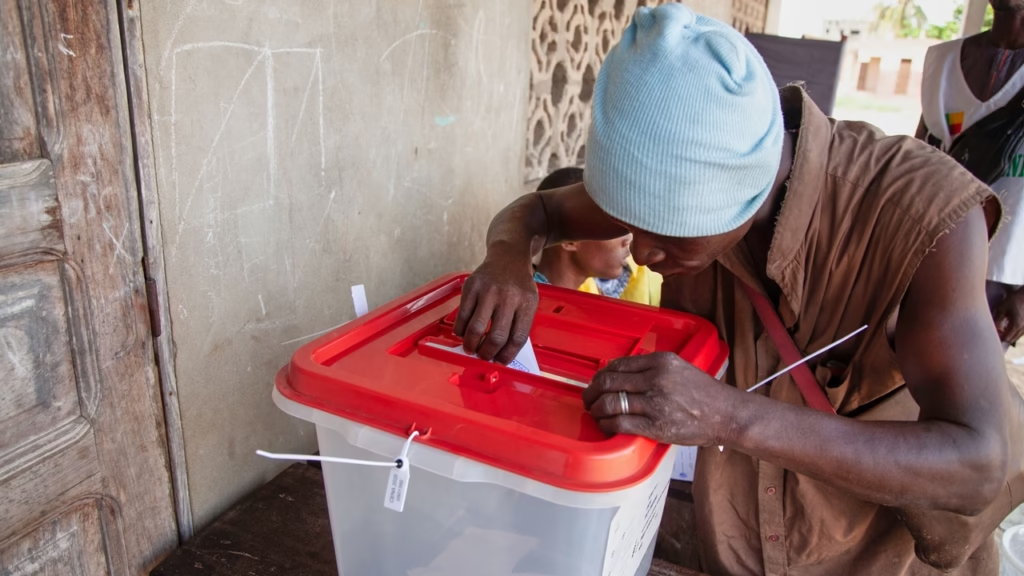
According to electoral commission chief Sacca Lafia, voting proceeded calmly overall. However, civil society observers reported around 100 irregularities, including delayed openings at polling stations and concerns over ballot box handling. Despite nearly eight million registered voters, turnout appeared relatively low in parts of the commercial capital Cotonou, raising questions about voter engagement and confidence in the process.
The election has drawn criticism over its competitiveness. The absence of a strong opposition candidate after the main opposition party failed to field a contender has fueled concerns about political inclusiveness and democratic balance in the West African nation. Economically, Benin has recorded significant growth under Talon, with GDP reportedly doubling over the past decade and major infrastructure projects transforming urban centers. However, inequality remains a key issue, with more than 30 percent of the population still living in poverty.
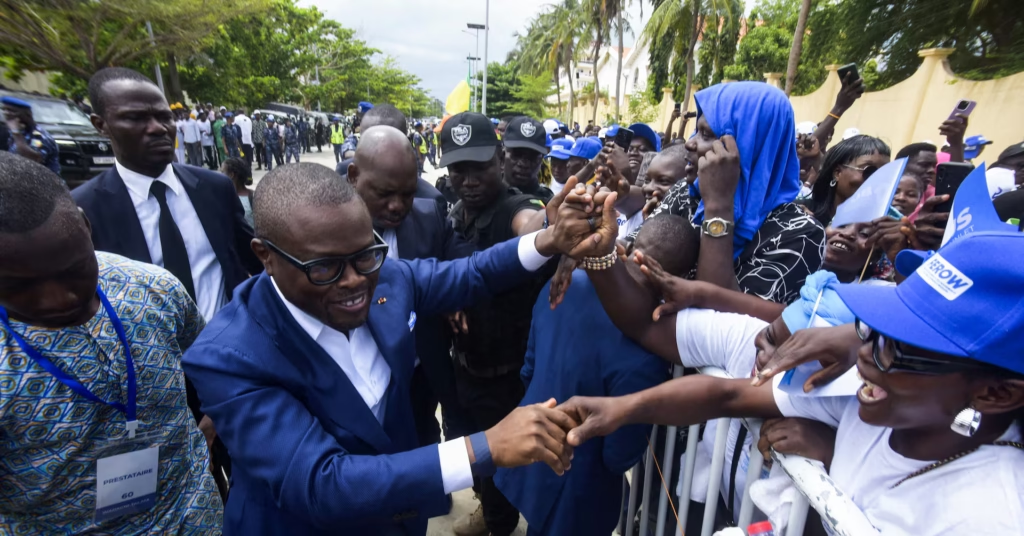
Security challenges are also mounting, particularly in northern regions where jihadist violence linked to Sahel-based groups has begun to spill over into Benin. Many voters, especially young people, are calling for more inclusive governance and better social policies. Analysts say the next president will face the dual challenge of sustaining economic progress while addressing inequality and strengthening national security. The winner will serve under new constitutional provisions extending presidential terms to seven years, potentially shaping Benin’s political landscape until at least 2033.


