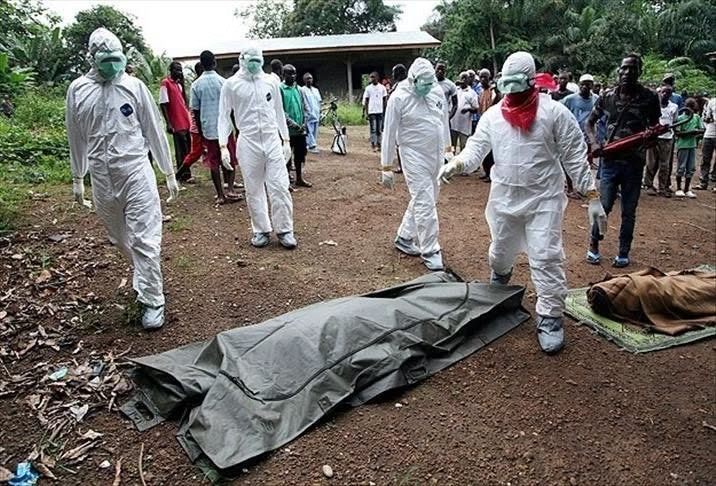

The World Health Organization (WHO) has declared the Ebola outbreak in the Democratic Republic of Congo an international health emergency after more than 120 suspected deaths and hundreds of possible infections linked to the highly contagious virus. Health officials say the outbreak, centered in Ituri province in northeastern DR Congo, is spreading rapidly beyond the initial epicenter, raising fears of a wider regional health crisis in East and Central Africa. Authorities have already confirmed infections in Goma, a major eastern city near the Rwandan border, while neighboring Uganda has reported one confirmed case and one death involving Congolese nationals who travelled across the border.
At Kyeshero Hospital in Goma, health workers have introduced strict infection prevention measures as hospitals struggle to contain the outbreak. Medical staff now require all visitors to wash their hands before entering screening areas where temperatures and vital signs are checked. Hospital worker Celestin Ngengele said anyone showing signs of fever is immediately isolated for further examination. Medical director Fabrice Bichenge warned that hospitals are facing shortages of protective equipment and infection control supplies, forcing authorities to appeal urgently to aid agencies and international partners for support. DR Congo’s Health Minister Samuel-Roger Kamba said at least 91 deaths are strongly suspected to be linked to Ebola, while approximately 350 suspected infections have been recorded so far. Most of the reported cases involve adults aged between 20 and 39, with women accounting for more than 60 percent of infections.
The outbreak is linked to the Bundibugyo strain of Ebola, a rare variant for which there is currently no approved vaccine or specific treatment. The strain previously caused outbreaks in Uganda in 2007 and DR Congo in 2012, with fatality rates ranging between 30 and 50 percent. The Africa Centers for Disease Control and Prevention has warned that heavy cross-border movement, mining activities and insecurity in the region significantly increase the risk of further spread. Authorities also revealed that some affected communities initially believed the illness was linked to witchcraft or spiritual causes, leading many infected individuals to seek help at prayer centers instead of hospitals, delaying detection and isolation efforts. Health experts say rapid testing, isolation of suspected cases and strict hygiene measures remain the most effective tools available to slow transmission as the outbreak continues to expand.