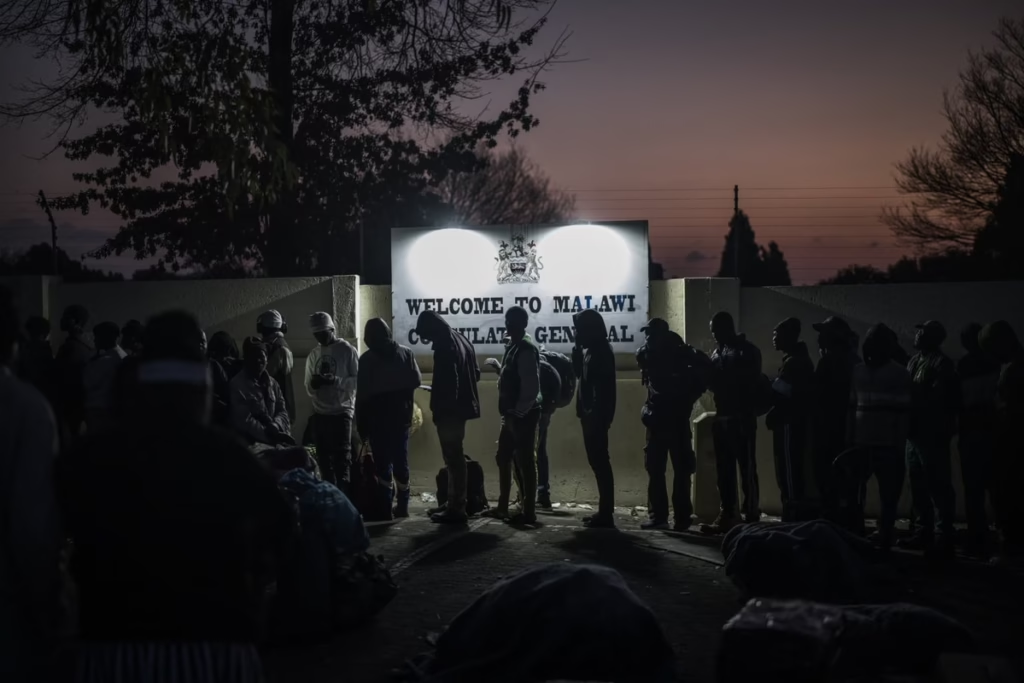

Hundreds of Malawian nationals gathered outside Malawi’s embassy in Johannesburg on Tuesday, seeking assistance to return home as South Africa’s intensified immigration enforcement and rising anti-migrant sentiment continue to affect foreign nationals. Among those waiting was Bashil Austin, who appealed to the Malawian government to help citizens who no longer feel safe in South Africa and wish to return voluntarily. The gathering comes after South African authorities announced that more than 53,000 African migrants had been deported or voluntarily repatriated within a month as part of a nationwide immigration crackdown. Officials said over 80% of those returned were Malawian nationals, although they did not specify how many were deported versus those who chose voluntary repatriation.

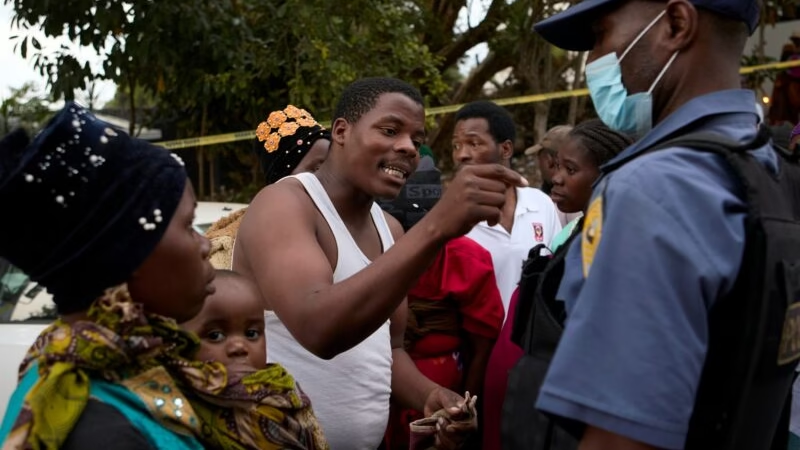
The enforcement campaign has coincided with a wave of protests by anti-migrant groups demanding stricter immigration controls and the removal of undocumented foreign nationals. While the South African government has rejected calls for unofficial deadlines imposed by protest groups, it has intensified efforts to enforce existing immigration laws. Several African governments have organized transport and consular support to assist citizens wishing to leave South Africa as tensions over immigration have escalated. South African police are also investigating the deaths of at least three migrants two from Mozambique and one from Malawi during the recent unrest. Nigeria has separately claimed that two of its citizens were killed in anti-immigrant protests, although South African authorities dispute that the deaths were directly linked to the demonstrations.
Last month, President Cyril Ramaphosa announced new measures to strengthen border security and improve immigration enforcement, acknowledging growing public concern over illegal migration while urging that the issue be addressed within the framework of the law. South Africa remains one of Africa’s leading destinations for economic migrants because of its relatively stronger economy. However, recurring economic challenges, high unemployment and periodic outbreaks of xenophobic violence have continued to strain relations between local communities and migrant populations, prompting concern from neighboring countries.