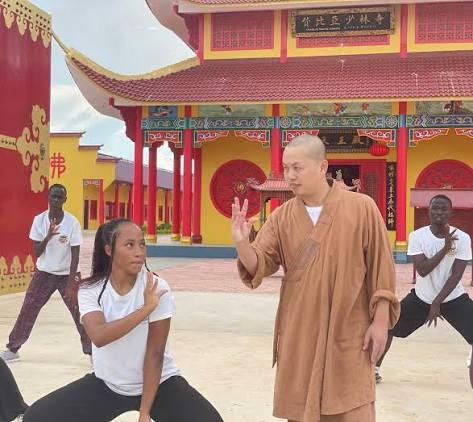

A Shaolin temple on the outskirts of Lusaka is giving young Zambians a unique introduction to Chinese martial arts while becoming an increasingly visible center for cultural exchange between Zambia and China. Located about 18 kilometers north of the capital, the Zambia Shaolin Cultural Center occupies a 20,000-square-metre site and is recognized as Africa’s first Shaolin temple. The complex was built at an estimated cost of nearly $6 million on land donated by Chinese businessman Jiang Qingde. It officially opened in 2021. Inside the compound, teenagers perform dragon dances while younger students practize rolls, acrobatics and kung fu under the supervision of Chinese and African instructors.
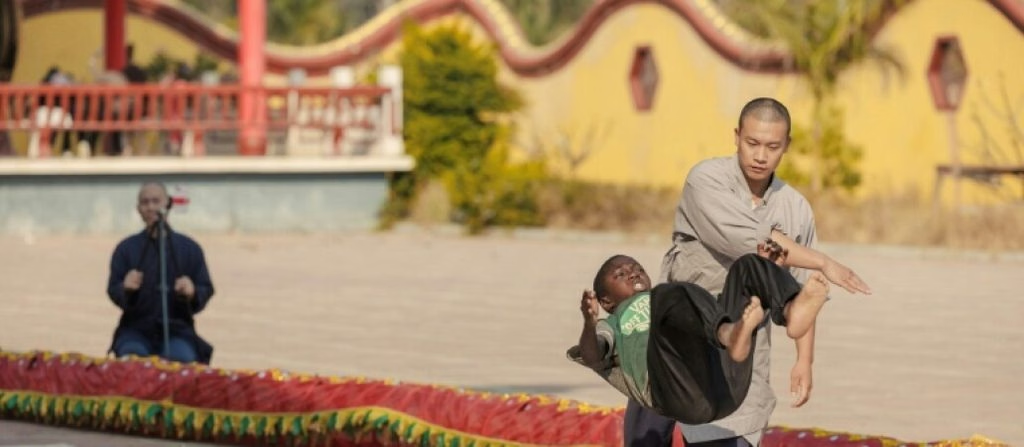
About 37 students, many from disadvantaged backgrounds, live at the center, where they study, train and take part in cultural and religious activities. Their routines can begin as early as 3 a.m., with martial arts forming a central part of their daily lives. For 23-year-old John Bwalya, the attraction began with films featuring martial arts. After arriving three years ago, he became one of the students living and training at the temple. Others came for different reasons. Some were encouraged by their families after struggling with discipline or bullying, while others saw the center as an opportunity to develop skills and pursue new careers.
The temple has become part of a broader expansion of people-to-people exchanges between Zambia and China. Beyond kung fu, students are exposed to Chinese language, Buddhist traditions, music and cultural practices, while African students also bring their own experiences and traditions into the program. The center’s activities have also gained attention online. Student Ronald Mwale, known by his Chinese name Hang Shao, has built a large following on TikTok by documenting his life at the temple. His growing profile has opened opportunities to travel to China and pursue acting.
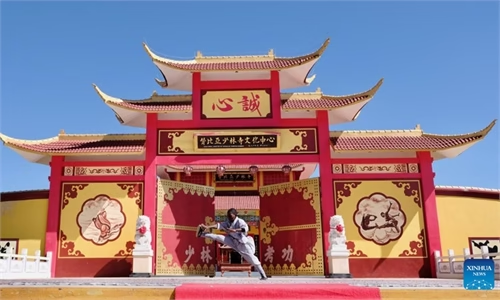
The temple’s cultural role comes as Zambia and China continue to expand cooperation in areas including tourism, culture, infrastructure and trade. In February, the two countries jointly held a Chinese Spring Festival event in Lusaka as part of efforts to strengthen people-to-people exchanges. For instructors such as Yan Chen, however, the center is about more than China’s cultural influence. He believes martial arts can give young people discipline, confidence and opportunities that may otherwise be difficult to find. As the students move between intense training sessions, schoolwork and Buddhist prayers, the Lusaka temple is developing into something unusual: a place where Chinese traditions are being taught, adapted and embraced by a new generation of Zambians.