
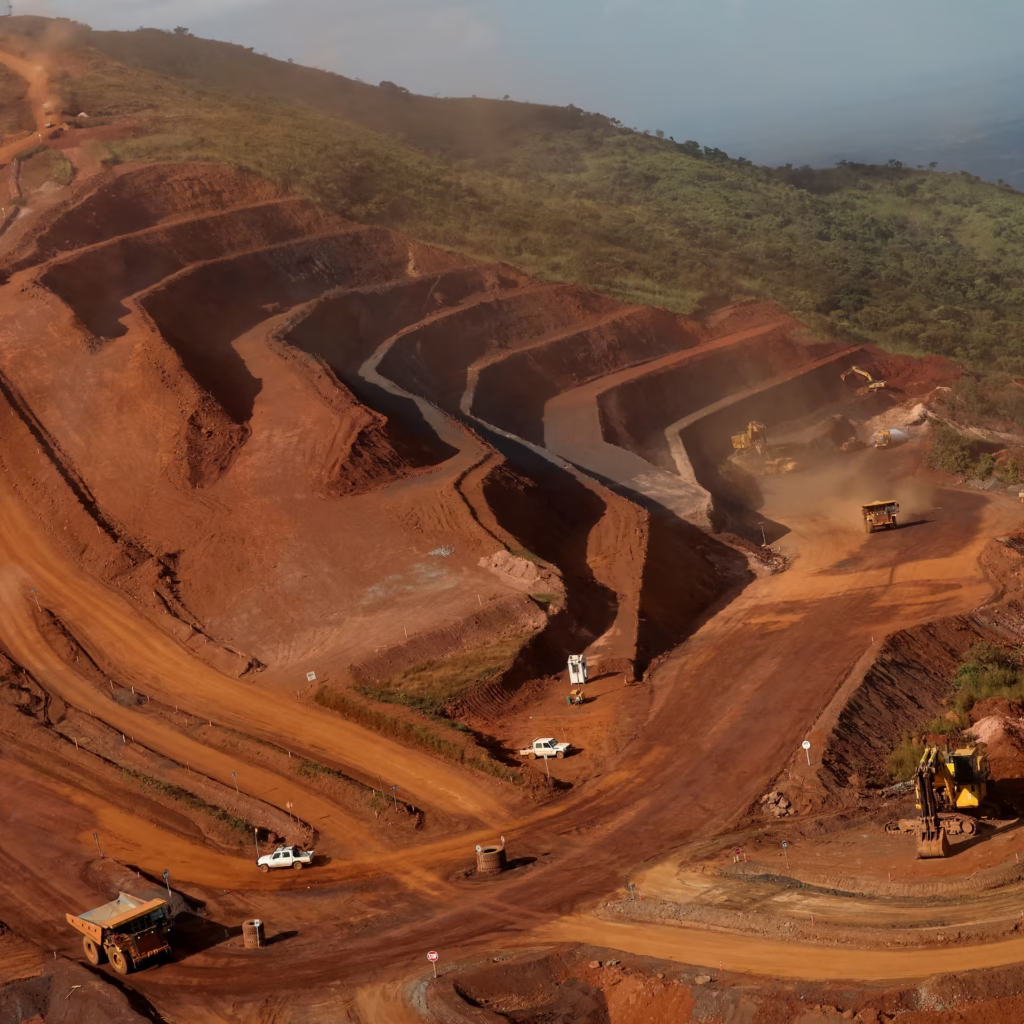

Guinea’s long-delayed Simandou iron ore project has officially begun production and exports, marking a major milestone for one of the world’s largest untapped iron ore reserves. But the start of operations has been accompanied by large-scale layoffs, fueling concern that the mine’s economic promise may come with significant social costs. During peak construction in 2024 and early 2025, the Simandou project employed more than 60,000 workers, according to industry and government estimates. As the mine shifts from construction to full operations, employment is expected to fall to fewer than 15,000 permanent jobs, leaving tens of thousands without work, particularly in Guinea’s remote southeastern region where alternative employment is scarce.
The Simandou project is jointly developed by multinational mining giant Rio Tinto and the Winning Consortium Simandou, with strong backing from the Guinean state. It includes four massive iron ore blocks in the Simandou mountain range and a newly built 670-kilometre railway linking the mines to a deep-water port on the Atlantic coast. The mine is expected to eventually produce over 100 million tones of high-grade iron ore annually, positioning Guinea as a major global supplier. Local leaders, contractors and labor representatives warn that the sudden workforce reduction risks triggering social unrest, particularly around mining towns such as Dantilia and Kamara and along the new railway corridor. Some former workers have also raised safety concerns, saying abandoned camps and reduced security could leave infrastructure vulnerable.
The Guinean government says Simandou is central to its long-term development vision, known as “Simandou 2040,” which aims to use mining revenues to finance infrastructure, agriculture, energy and industrialization. However, economists and civil society groups note that Guinea’s heavy reliance on extractive industries and limited economic diversification make it difficult to absorb displaced workers in the short term. While the launch of iron ore exports is a landmark moment for Guinea’s economy, the Simandou experience highlights the challenge of translating vast natural resource wealth into inclusive growth and stable livelihoods for local communities.


