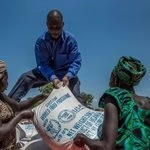

Somalia’s government has strongly denied U.S. allegations that it ordered the demolition of a World Food Programme (WFP) warehouse in Mogadishu and seized American-funded food aid meant for vulnerable civilians. The dispute led the U.S. State Department to suspend all assistance to Somalia’s federal government, citing a zero-tolerance policy for the diversion or misuse of humanitarian aid. A senior U.S. official said the warehouse, located at Mogadishu Port, was destroyed on the direct orders of President Hassan Sheikh Mohamud without advance notice to donors, raising concerns over the safety and integrity of aid operations.
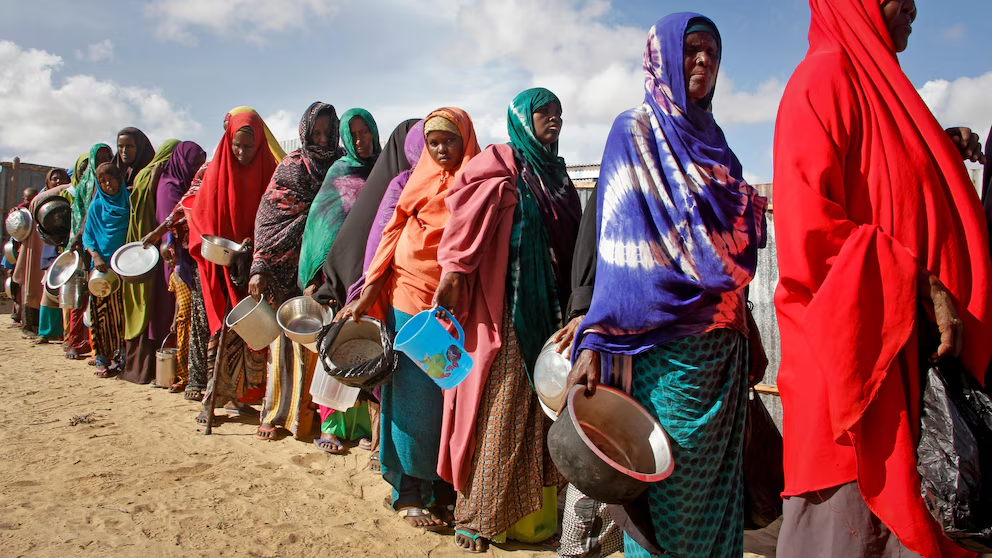
Somalia’s foreign ministry rejected the accusation, saying no food aid was destroyed and that all supplies remain under WFP control. It said the structure was affected by port redevelopment plans and insisted that humanitarian operations were not disrupted. The government reaffirmed its commitment to transparency, accountability, and cooperation with international partners. The issue has triggered domestic criticism. Opposition lawmaker Abdurahman Abdishakur Warsameh called for an independent investigation, warning that any interference with humanitarian infrastructure is especially serious as Somalia faces worsening drought and food insecurity.
Somalia remains heavily reliant on foreign aid, with the United States providing about $770 million in humanitarian and development assistance last year, most of it channelled through UN agencies and NGOs rather than the government. It is still unclear how much ongoing aid will be affected by Washington’s decision or how long the suspension will last.