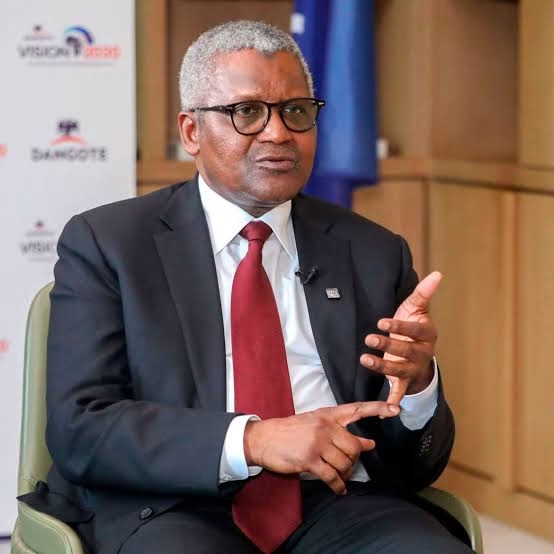

Nigerian industrialist Aliko Dangote says Africa could meet most of its refined petroleum needs within the continent by 2030 as construction begins on his planned $16 billion refinery in Kenya. The proposed East Africa Refinery, located in Lamu, is designed to process 700,000 barrels of crude oil per day and is expected to take about three years to complete. The project is being launched with Kenyan President William Ruto and is expected to become one of the largest industrial investments in the region. Dangote said the refinery is part of a broader effort to reduce Africa’s dependence on exporting raw materials while importing finished products. “By 2030, the majority of African countries will be self-sufficient,” Dangote said, arguing that more crude should be refined on the continent to create jobs and retain greater economic value in Africa.
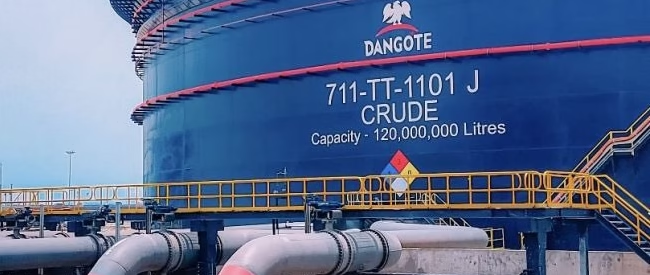
The project is expected to supply Kenya and neighboring markets, while Dangote said the refinery would source crude from multiple countries, including producers outside East Africa. Kenya is also seeking to expand production from its oil fields in Turkana. The project has, however, faced opposition and legal challenges. A Kenyan court has ordered parties to maintain the status quo over disputed land claimed by local residents, with the case scheduled for further hearing on October 14. Dangote’s group says the court action will not stop the planned groundbreaking, although it could affect some site activities. Environmental groups have also raised concerns about the potential impact of the refinery on Lamu’s coastal ecosystem, including mangroves, coral reefs and seagrass areas.
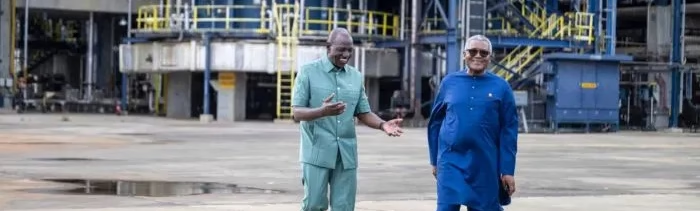
More than 2,900 tones of construction machinery had already arrived at the Port of Lamu ahead of the groundbreaking, signaling that preparations for the project are moving forward. Dangote said the refinery would be only the beginning of a wider industrial complex, with petrochemical and other businesses expected to develop around it. Kenyan authorities estimate the broader project could create more than 60,000 jobs. The businessman argues that Africa’s long-term economic challenge is not simply producing raw materials, but processing them locally so that more of the resulting jobs and value remain on the continent.