
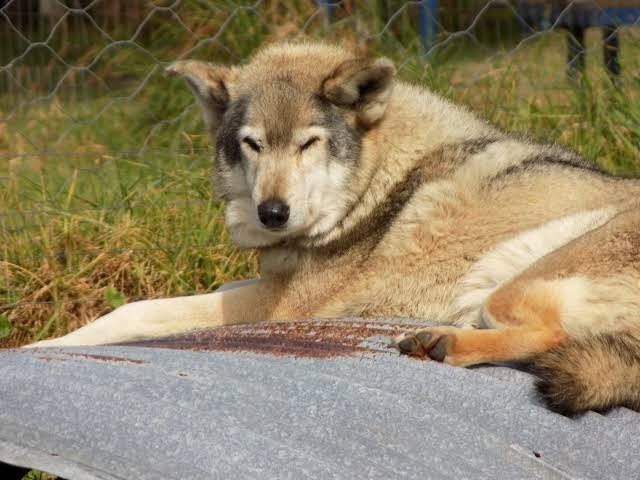

Behind the fences of a sanctuary near Pretoria, dozens of wolves run, swim and play but they can never truly return to the wild. The animals are part of a complicated South African history that stretches back to the apartheid era. The All Hearts Wolf and Animal Foundation in Hartbeespoort, founded about a decade ago by animal rescuers Lexi and Ronnie Austen, cares for around 60 wolves and several wolf-dog hybrids. The sanctuary also takes in animals surrendered by people who can no longer manage them as exotic pets. The cost of keeping the animals is enormous. Ronnie Austen says the sanctuary uses roughly 4.5 to 6 tones of chicken every month, in addition to two or three cattle for red meat. The foundation depends heavily on donations to maintain the animals and their large enclosures.
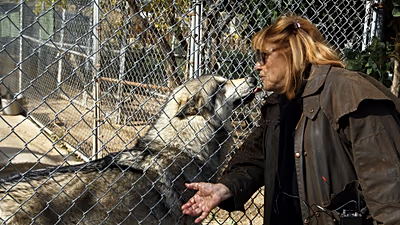
Wolves are not native to South Africa. Historical research shows that wolf-dog breeding programs emerged during the apartheid period, with wolves reportedly introduced for experiments aimed at developing animals with some of the strength, endurance and tracking abilities associated with wolves while retaining characteristics of domestic dogs. Research by historians Sandra Swart and Lance van Sittert documents experiments involving the South African Defense Force and Roodeplaat Breeding Enterprises near Pretoria during the 1970s and 1980s. The program sought wolf-dog hybrids for military and security purposes, particularly in the conflicts involving Angola and Namibia. But the experiment had limitations. Historical accounts describe difficulties with the hybrids, including their behavior and their suitability for South Africa’s harsh terrain. Some animals eventually ended up in private hands, the exotic-animal trade or sanctuaries after their military role disappeared.
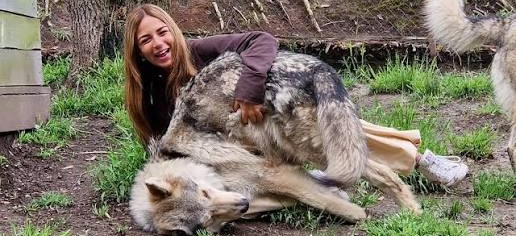
Today, sanctuaries argue that releasing these animals would not be a responsible option. Many have been raised by humans and are not equipped to survive independently in South African ecosystems. The Austens instead try to provide enrichment through large spaces, swimming pools, digging areas and activities that encourage natural behaviors. The All Hearts Foundation is not alone. The Tsitsikamma Wolf Sanctuary in the Eastern Cape has also spent decades caring for wolves and wolf-dogs, highlighting the long-term challenge created by animals that were introduced into South Africa but have no natural place in the country’s wild. For the sanctuaries, the wolves are more than rescued animals. They are living reminders of a controversial chapter in South Africa’s history and of the responsibility that remains after humans create animals for purposes they were never meant to serve.




I like this