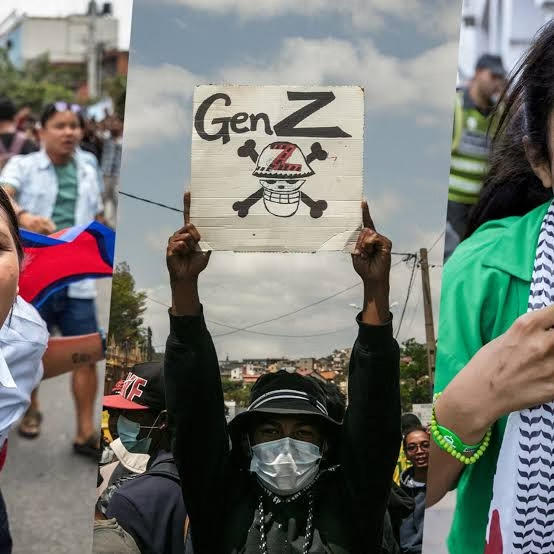

Young Moroccans who took part in last year’s Gen Z protests are entering politics or watching Wednesday’s parliamentary election closely, as the country votes for the first time since demonstrations over jobs, healthcare, education and public services shook several cities. Nearly 16 million registered voters are expected to choose 395 members of the House of Representatives from 7,288 candidates representing 27 political parties. Among the candidates is 29-year-old Younes Belaidi, a former protest participant running for the Progress and Socialism Party in Casablanca’s Ain Chock district. He says greater youth participation in politics is necessary to address the problems that drove young people onto the streets.
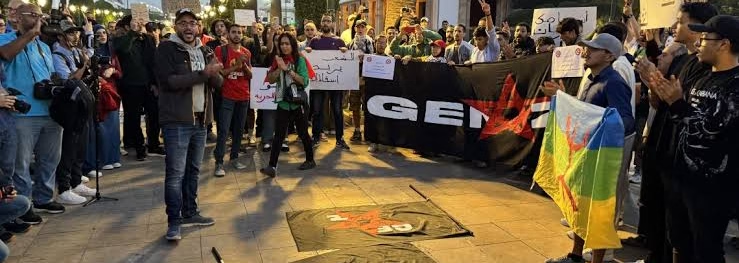
Another former protester, Aymane Saissi, said he remains hopeful that the next government will improve healthcare, education, employment and living conditions. The election comes amid continued economic pressure on young Moroccans. Official figures put unemployment among people aged 15 to 24 at 37% in 2025, compared with 13% for the overall population. Frustration was also highlighted in July, when tens of thousands of mostly young Moroccans attempted to enter the Spanish enclave of Ceuta, with many citing the search for better opportunities. Among them was 23-year-old Ayoub Belaidi, who later returned to Morocco after facing difficult conditions in Ceuta.
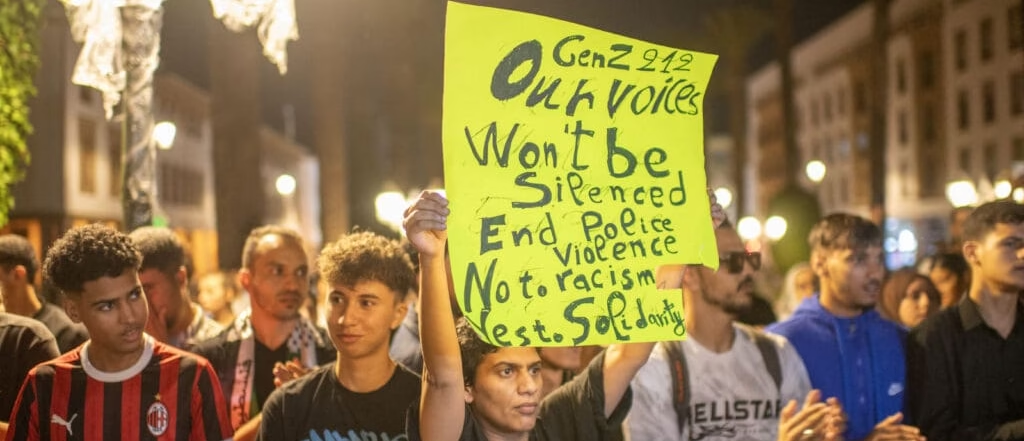
Despite young people making up about 12% of Morocco’s population, those aged 18 to 24 account for only around 4% of registered voters, underscoring the challenge political parties face in mobilizing younger citizens. The election is therefore being closely watched as a measure of whether Morocco’s political parties can rebuild trust among a generation that has increasingly expressed frustration over economic opportunities and public services.