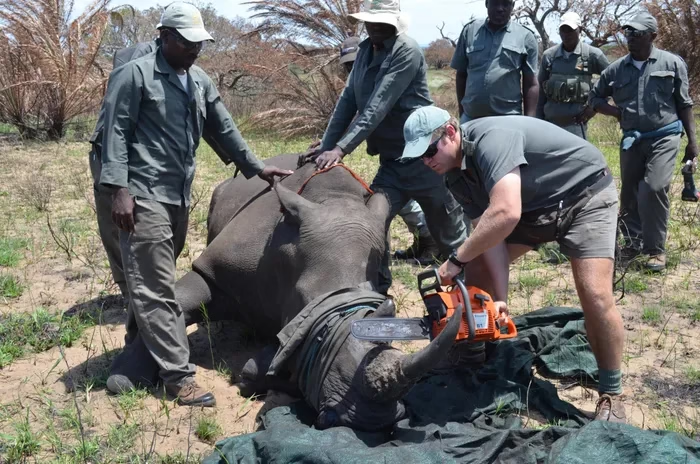

Conservationists in South Africa marked World Rhino Day with renewed urgency, as the nation remains both a sanctuary and a battleground for the survival of rhinos, one of the world’s most endangered species. At Dinokeng Game Reserve near Pretoria, where security around rhinos is kept tightly confidential, rangers and wildlife monitors warned that the crisis is far from over. On average, one rhino is killed every day in South Africa, often by highly organized poaching syndicates linked to the illegal horn trade in Asia, where rhino horn is falsely marketed as medicine or a luxury status symbol.
“Please, please, please, do not expect rangers to just go out in the bush and shoot poachers. That’s not something rangers need to hear,” said wildlife monitor Marius Fuls, urging the public to support rangers rather than pressure them. “If we as conservationists stop believing we can win, then we’ve lost. We are the last thin green line between rhino survival and extinction.” South Africa is home to the world’s largest rhino population, with an estimated 12,000–13,000 white rhinos and around 2,000 black rhinos. That success has made the country a global stronghold for the species but also a prime target for international crime networks.
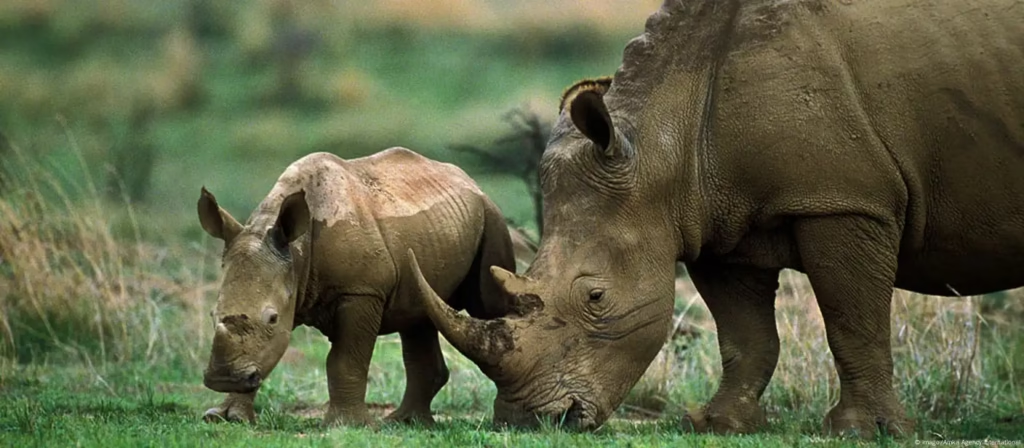
“Because South Africa has managed conservation so well, we still have the biggest rhino populations in the world. But that success has also made us the focus of poaching and organized crime,” said Gillian Rhodes of the Peace Parks Foundation. According to the International Rhino Foundation, about 26,700 rhinos remain in the wild worldwide, a number conservationists fear could fall rapidly without coordinated action. South Africa accounts for the majority of these, underscoring its pivotal role as custodian of the species. Despite the grim statistics, experts say there is hope. Community engagement programs, regional cooperation with neighboring countries, and stronger international law enforcement efforts are beginning to show results in some reserves. “We’re not giving up,” Fuls said. “This is a fight for the future of rhinos and it’s a fight we must win.”