

Tensions in Madagascar’s capital, Antananarivo, flared again on Wednesday as security forces tightened their grip on the city to block a wave of anti-government protests. Police sealed off the city center to stop demonstrators from reaching Democracy Square, a symbolic gathering site in Ambohijatovo. Witnesses reported heavy use of tear gas as protesters tried to push through barricades, forcing many to scatter into narrow alleys.
“What’s happening now is that we want to go to Democracy Square in Ambohijatovo, and we’re being blocked here. They’re firing tear gas at us, and people are fleeing through the small alleys. The police are still here, in large numbers,” one protester said. The crackdown comes a day after protesters successfully occupied Democracy Square, only for it to stand deserted by Wednesday under the weight of police control. Both demonstrators and journalists at the scene denounced what they called an attack on freedom of speech.
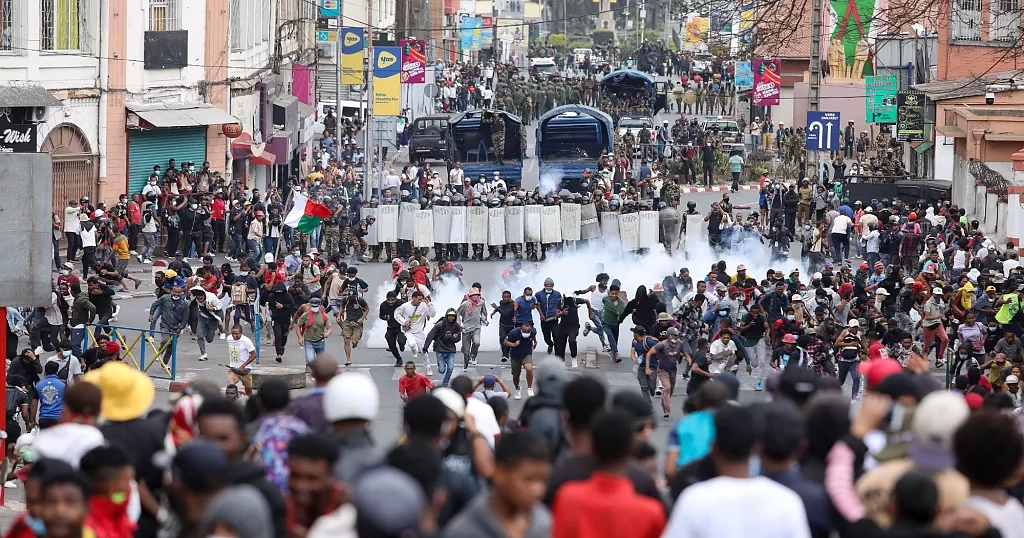
The rallies, largely led by young people and amplified through social media, began last Thursday in response to worsening water and electricity shortages. But the unrest has since swelled into a direct challenge to President Andry Rajoelina’s rule. On Monday, Rajoelina attempted to defuse tensions by dissolving his government, but the move has failed to satisfy protesters, who are now demanding his resignation. “We are not afraid. We’re here because we are ready to fight. We are not going to run away, we are ready to fight to the end,” another demonstrator said.
Adding to the political tension, Rajoelina’s allies have taken to social media, urging his supporters to rally and “protect” the president from what they describe as destabilization attempts. The protests mark one of the most serious challenges to Rajoelina since he returned to power in 2019. Analysts say the anger reflects years of frustration with unreliable public services, rising living costs, and a perception that the government has failed to address the everyday struggles of ordinary Malagasy citizens.