


The Confederation of African Football (CAF) has postponed the 2026 Women’s Africa Cup of Nations just 12 days before the tournament was scheduled to begin in Morocco, citing “unforeseen circumstances.” In a statement released on Thursday, CAF said the competition initially set to run from March 17 to April 3 will now take place from July 25 to August 16, 2026. The governing body said the decision was made to “ensure the success of this important women’s competition,” adding that preparations are continuing. The tournament will feature an expanded 16-team format and also serves as a key pathway for qualification to the 2027 FIFA Women’s World Cup in Brazil. Morocco was expected to host the finals for a third consecutive time, although CAF has not yet confirmed whether the venue will remain unchanged following the rescheduling.
The delay follows weeks of speculation over Morocco’s readiness to host, particularly after security and organisational concerns were raised following the dramatic 2025 Africa Cup of Nations Final 2025 at Rabat’s Stade Moulay Abdellah, where Senegal national football team defeated Morocco national football team 1–0.
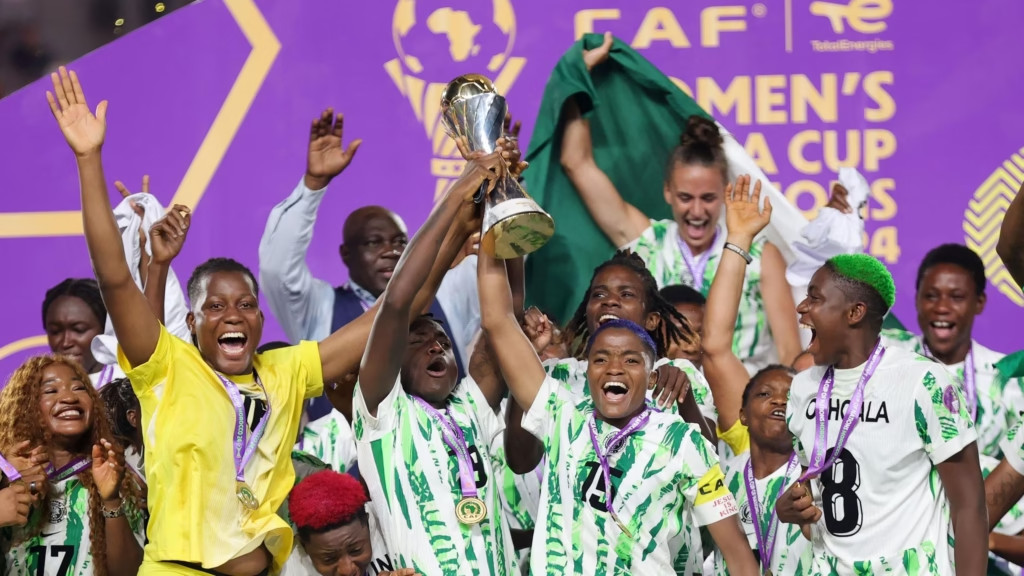
CAF had conducted the group stage draw for the women’s tournament on January 15 but had not yet released a detailed match schedule before announcing the postponement. The uncertainty also led to confusion earlier this year when officials in South Africa suggested the country might step in as host before later clarifying the remarks. The decision has revived concerns about the scheduling stability of women’s competitions on the continent. The 2020 edition of the tournament was cancelled due to the COVID-19 pandemic, while the 2024 finals won by Nigeria women’s national football team were pushed to July because of calendar conflicts, including the 2024 Summer Olympics in Paris.
It also marks the second major CAF tournament to be postponed at short notice in recent years. The 2024 African Nations Championship was delayed in early 2025 after infrastructure concerns in Kenya, Tanzania and Uganda, before eventually taking place later that year. Despite the disruption, CAF insists the revised timeline will allow organizers and participating teams to better prepare for one of Africa’s most important women’s football competitions.


