
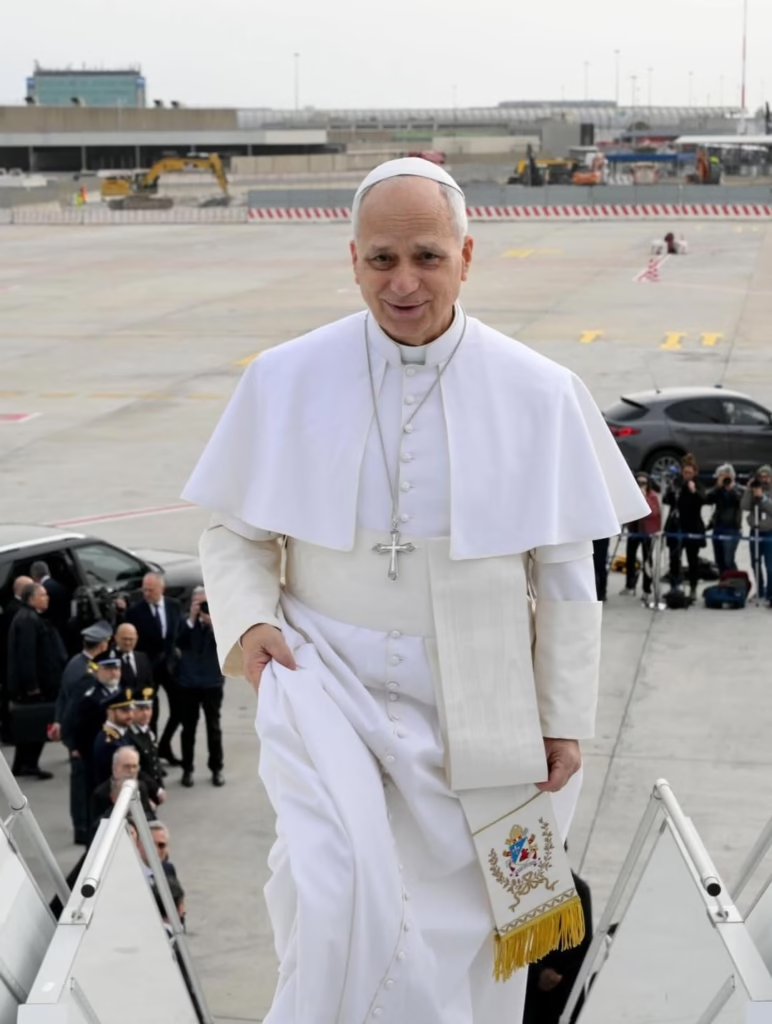

Pope Leo XIV has begun a landmark visit to Algeria, becoming the first pontiff to travel to the country as part of an 11-day African tour focused on interfaith dialogue and regional engagement. The visit aims to strengthen Christian-Muslim relations at a time of rising global tensions, while also highlighting Algeria’s historical significance to Christianity—particularly as the home of Saint Augustine, one of the Church’s most influential figures who was born in present-day Algeria. Algeria is home to a small Catholic community of roughly 9,000 people, most of them foreign nationals, within a predominantly Sunni Muslim population of about 47 million. The trip is seen as both symbolic and strategic, reflecting the Catholic Church’s growing focus on Africa, where the faith is expanding rapidly.
During his first day in Algiers, Pope Leo XIV is expected to honor the 19 Catholic martyrs of Algeria, who were killed during the country’s civil conflict in the 1990s. He will also visit Augustinian nuns running social outreach programs from a basilica, providing humanitarian support to people of all faiths, an example of grassroots interfaith cooperation. The Algeria visit marks the opening leg of a broader African itinerary that includes stops in Cameroon, Angola, and Equatorial Guinea, underscoring the continent’s increasing importance within the global Catholic community. Reactions within Algeria have been mixed. Some view the visit as a positive step toward dialogue and cultural exchange, while others question its timing and geopolitical implications. Analysts note that such high-profile visits often carry both religious and diplomatic significance. Despite differing views, the visit is widely seen as a moment of international attention for Algeria and a potential platform for promoting tolerance, coexistence, and regional engagement.


