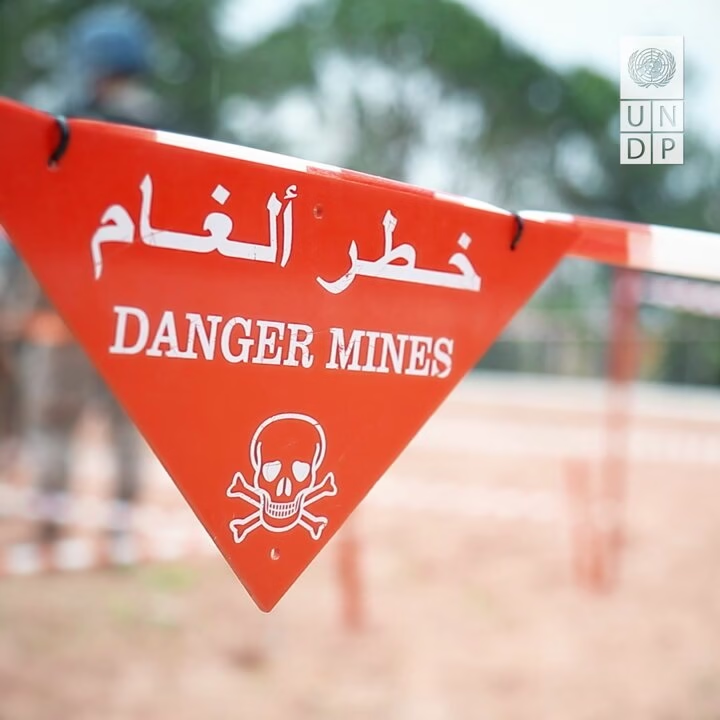

In the heart of Khartoum, demining teams are working under extreme conditions to remove thousands of explosive remnants left behind by Sudan’s ongoing conflict, as civilians begin returning to devastated neighborhoods. At Al-Mugran Park once a popular family destination specialists like veteran deminer Hussein Idris are painstakingly scanning the ground for hidden explosives. The site has been heavily contaminated since fighting between the Sudanese Armed Forces and the paramilitary Rapid Support Forces spread across the capital. Although government forces retook much of Khartoum in 2025, the city remains riddled with unexploded ordnance, including rockets, artillery shells, and landmines. Authorities say tens of thousands of explosive devices have already been cleared, but vast areas are still unsafe.
At Al-Mugran Park alone, humanitarian groups such as the Danish Refugee Council and local partner JASMAR have removed over 12,000 explosive items. Teams have also identified at least three major minefields across the capital, including one covering approximately 4.5 square kilometres. Demining officials say the mines, some deliberately placed during the war were designed to maim rather than kill, creating long-term hazards for both soldiers and civilians. So far, teams have recovered anti-personnel mines, anti-vehicle devices, and other dangerous remnants hidden in roads, parks, and residential areas.
The situation is especially dangerous as more than 1.8 million residents have returned to Khartoum since the fighting subsided. Many are unknowingly entering contaminated homes and neighborhoods, where grenades, mortars, and unexploded shells have been found in living spaces, schools, and streets. Mohamed Sediq Rashid recently warned that returning families face “a highly dangerous environment,” often without adequate awareness of the risks. Despite progress, large parts of the city remain abandoned, with destroyed infrastructure and lingering threats delaying full recovery. Deminers say clearing operations could take years, underscoring the long-term impact of the conflict on Sudan’s capital.