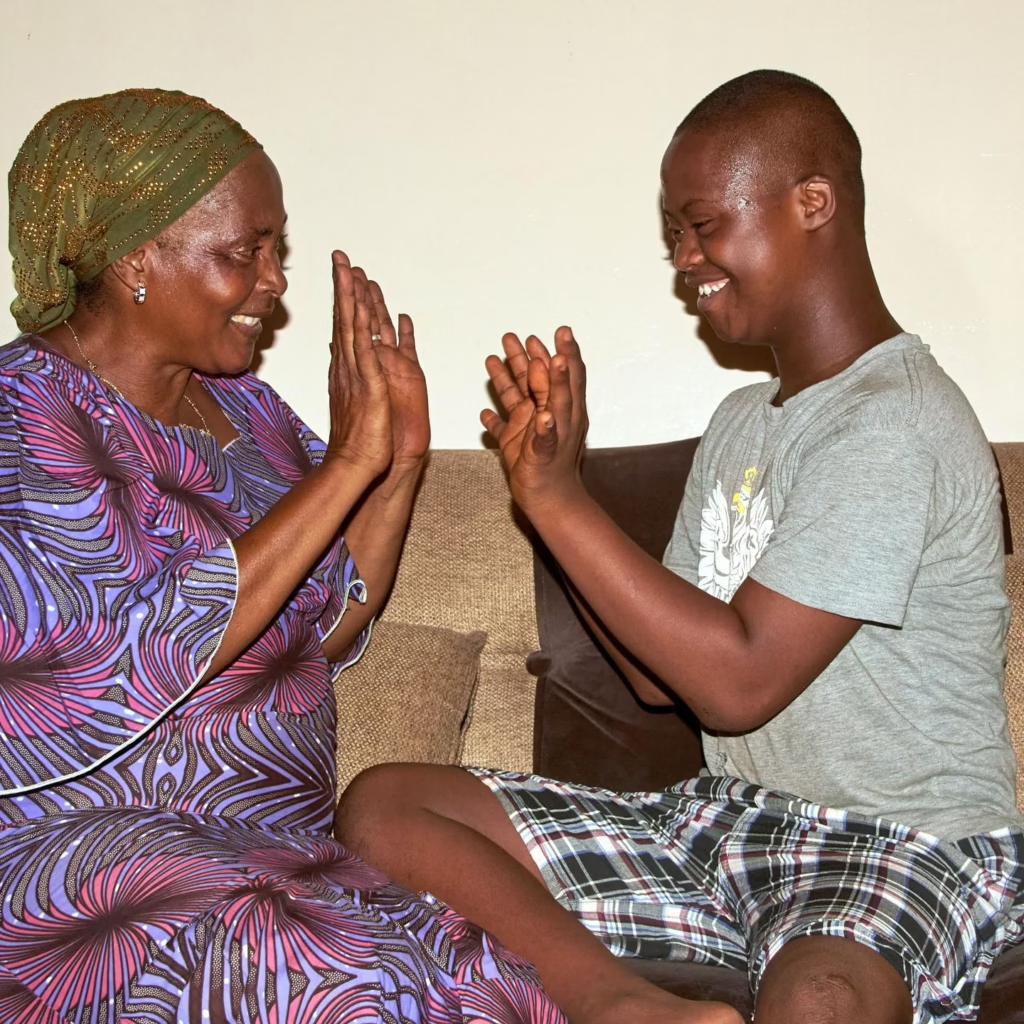

In the Guinean town of Fria, 15-year-old Kazaliou Baldé’s journey reflects the challenges many families face in caring for children with autism in a country where awareness remains low and support services are scarce. Kazaliou’s parents first became concerned when he showed little eye contact, struggled to communicate and failed to meet developmental milestones. Like many families unfamiliar with autism, they initially sought help from a traditional healer, who recommended protective amulets. It was only after taking him to a hospital in Conakry that doctors diagnosed him with autism spectrum disorder, a condition his family had never heard of. The diagnosis brought little relief. His mother, Kadiatou Diallo, says neighbours often mocked her son and even urged the family to abandon him, believing his condition was caused by evil spirits. “Those words really hurt me,” she said. “Even so, I took him with me when I sold goods at the market because I had no one else to care for him.”
Autism spectrum disorder is a developmental condition that affects communication, behaviour and social interaction to varying degrees. However, in Guinea, limited public awareness and a lack of government support have contributed to widespread misconceptions, leaving many children undiagnosed and their families isolated. According to the World Health Organization, about one in 127 people worldwide was living with autism in 2021. The agency notes, however, that reliable data from many low- and middle-income countries, including Guinea, remains limited because of inadequate diagnosis and reporting systems. Clinical psychologist Dr Alhasane Cherif says cultural beliefs often result in discrimination against autistic children and emotional hardship for their families. “In our Guinean culture, children like this are often rejected. It is a real ordeal for parents, and the government must do more to support them,” he said.
Access to specialised education is also a major challenge. Guinea, with a population of around 15 million, has only a handful of schools serving children with autism. Fees can reach $300 per month far beyond the means of many families in a country where the minimum monthly wage is about $65 and nearly 44 percent of the population lives below the poverty line, according to the World Bank. After struggling to find a school willing to accommodate her son, Kadiatou Diallo finally found support at a free learning center run by the Salim Foundation for Children with Autism in Fria. There, children are taught communication, daily living skills and basic learning activities designed to help them become more independent. The foundation also organized what it described as Guinea’s first international seminar on autism, aimed at raising awareness and promoting inclusion. Despite these efforts, Kazaliou continues to face stigma outside the classroom, highlighting the long road ahead in changing public attitudes toward autism in Guinea.