
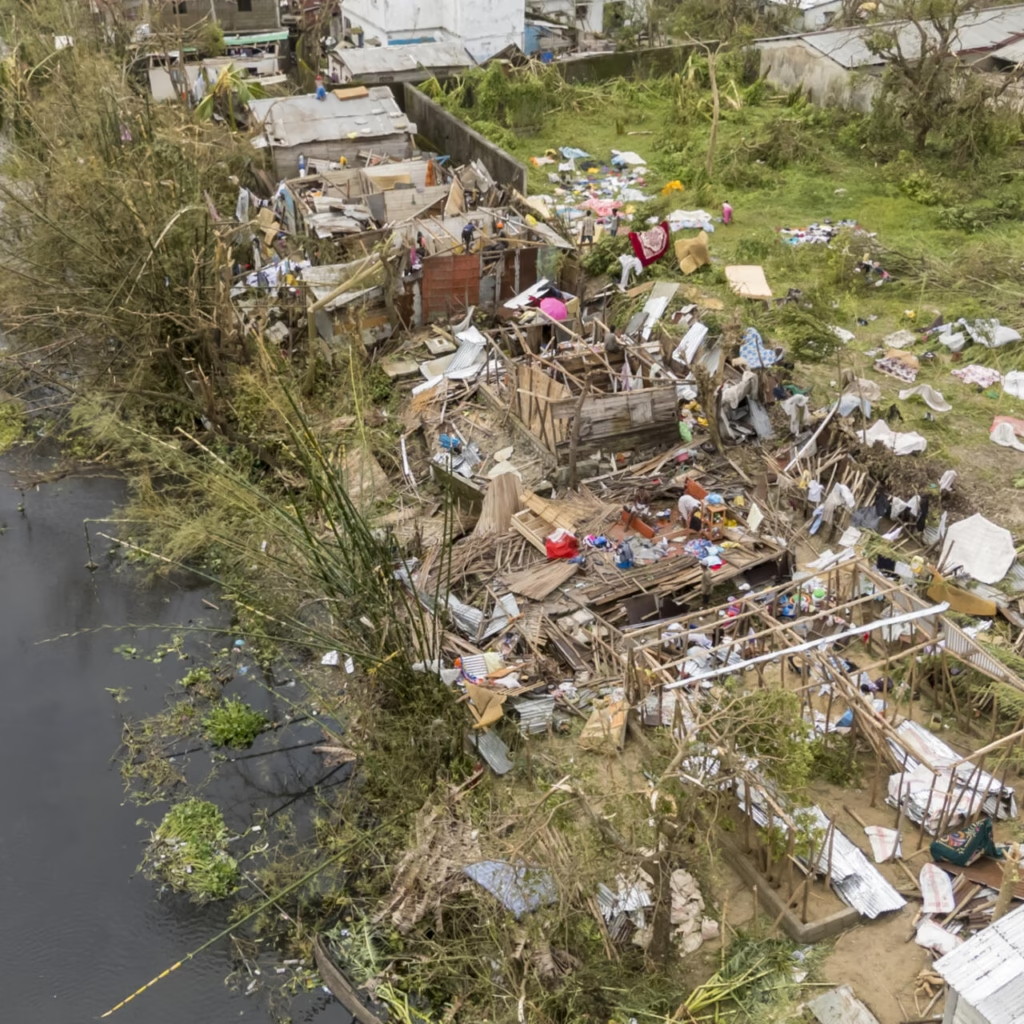

Drone footage released by National Office for Risk and Disaster Management (BNRGC) shows widespread destruction in Toamasina, after powerful Cyclone Gezani made landfall on Tuesday. Authorities say at least 38 people were killed when the cyclone struck Madagascar’s second-largest city, with six still missing and at least 374 injured as of Thursday. More than 12,000 residents were displaced by the storm. Gezani hit Toamasina with winds of up to 250 kilometres per hour, tearing off roofs, uprooting trees and flattening entire neighbourhoods in the city of about 400,000 people. The BNRGC reported that more than 18,000 homes were destroyed, while over 50,000 others were damaged or flooded.
The cyclone also severed sections of the main road linking Toamasina to the capital, Antananarivo, disrupting humanitarian aid deliveries. Telecommunications were also reported to be unstable. Madagascar’s leader, Colonel Michael Randrianirina, appealed for international assistance, saying up to 75 percent of Toamasina and surrounding areas had been devastated. Damage assessments are continuing across the wider Atsinanana region. The CMRS said Toamasina was hit by the most intense part of the storm, calling Gezani one of the strongest cyclones recorded in the region since satellite monitoring began—comparable to Cyclone Geralda in 1994, which killed at least 200 people.
Although Gezani weakened after landfall, forecasters say it could regain strength over the Mozambique Channel and make landfall in southern Mozambique. Mozambican authorities have issued warnings for violent winds and waves of up to 10 metres, urging evacuations in high-risk areas. Mozambique has already been hit hard by seasonal flooding, with nearly 140 deaths recorded since October, according to its disaster management agency. Cyclone season in the southwest Indian Ocean typically runs from November to April.


