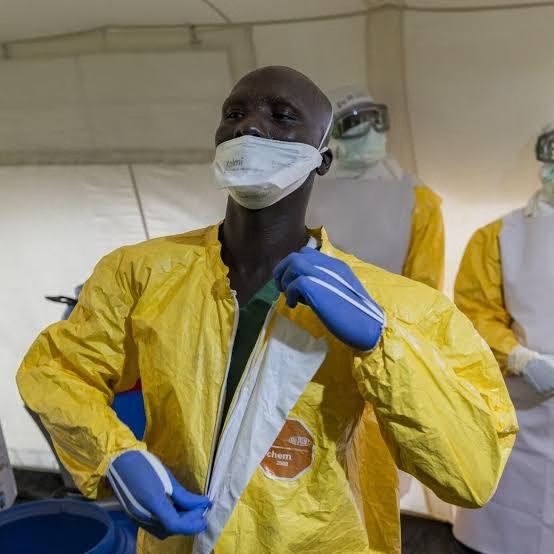

Health workers in Bunia, eastern Democratic Republic of Congo, have gone on strike over unpaid salaries, disrupting medical services in one of the areas hardest hit by the country’s ongoing Ebola outbreak. Doctors, nurses, hygienists and other frontline response workers on Wednesday barricaded the entrance to Bunia General Hospital, saying they have worked for more than two months without receiving their wages despite risking their lives to contain the deadly virus. “We have been working for two and a half months without receiving anything. We continue saving lives, but we are also suffering,” said hospital hygienist Jeannine Anyie.
According to the Ministry of Health, the Ebola outbreak has recorded 2,011 confirmed cases, including 754 deaths. Authorities say 753 patients remain in isolation or under treatment, while 366 people have recovered since the outbreak began. The Democratic Republic of Congo has been battling the outbreak of the rare Bundibugyo strain of the Ebola virus since May 15. Health officials say the disease continues to spread faster than response teams can contain it. The World Health Organization (WHO) warned that at least 80% of newly reported infections are linked to unknown chains of transmission, making it increasingly difficult to trace contacts and break the spread of the virus. Current contact tracing coverage stands at just 67%, well below the level needed to effectively control an outbreak.
Residents in Bunia expressed concern that the strike could further undermine the Ebola response. “Healthcare workers are risking their lives to help the community, but they are not being paid. When they ask for their salaries, problems begin,” said local resident Denis Kpadjanga. The Bunia protest follows a similar strike by healthcare workers earlier this week in nearby Rwampara, another Ebola hotspot, where staff also demanded payment of salary arrears. Public health experts warn that prolonged industrial action could weaken disease surveillance, treatment and vaccination efforts, increasing the risk of further transmission unless authorities urgently resolve the workers’ grievances.