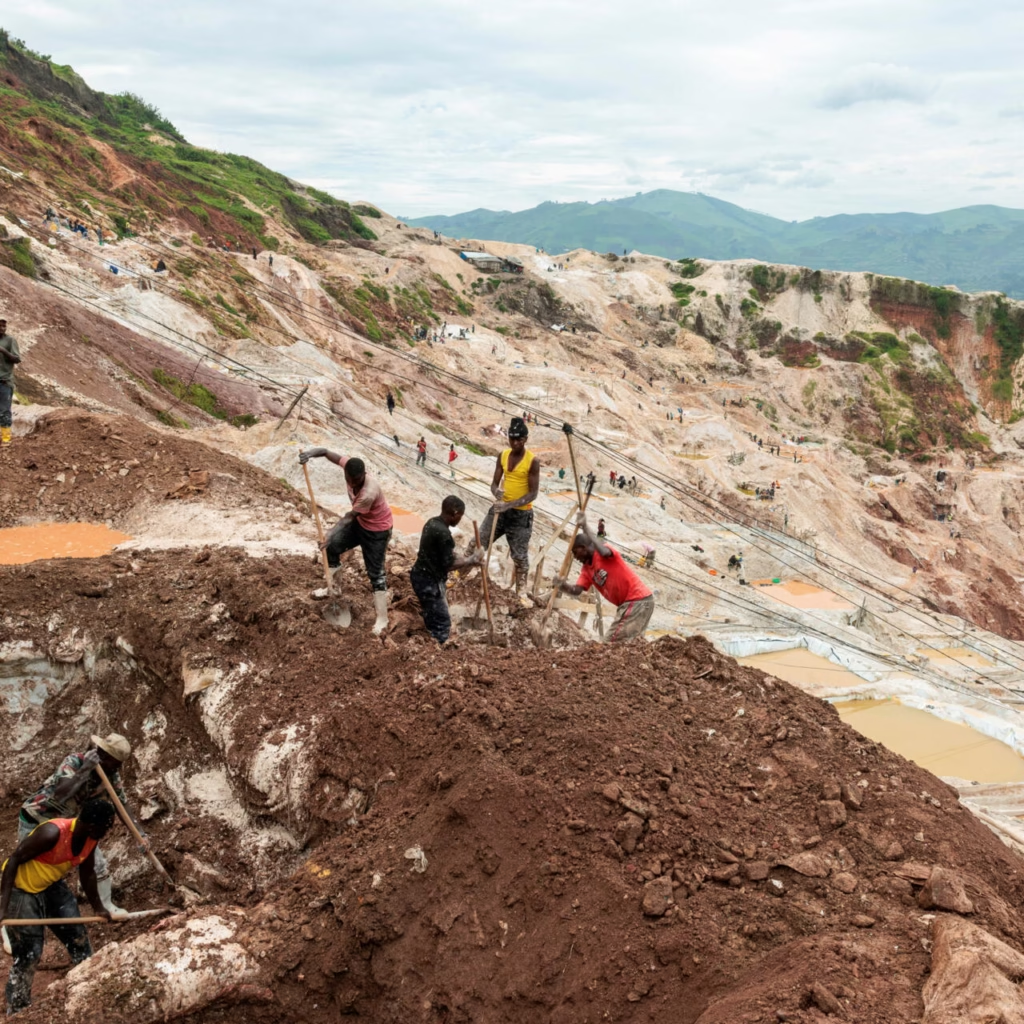

More than 200 people, including at least 70 children, have been killed after a landslide triggered a collapse at a major mining site in eastern Democratic Republic of the Congo, according to government officials. The disaster struck on Tuesday in Rubaya, one of the country’s most important sources of coltan, following days of heavy rainfall that destabilized the ground around the informal mining pits. In a statement, the country’s mines ministry said the collapse occurred in an area currently controlled by the March 23 Movement (M23) rebel group. Authorities accused the rebels of allowing unregulated mining activities without proper safety standards, exposing thousands of workers to dangerous conditions.
“The provisional toll counts more than 200 compatriots who lost their lives, including 70 children and numerous injured,” the ministry said, adding that the lack of official oversight at the site contributed to the scale of the tragedy. However, a source in Rubaya told the BBC that the collapse may have been linked to clashes between government forces and rebels, claiming the death toll was much lower. The government has not responded to that claim, and independent verification has been difficult due to limited access to the remote mining area.
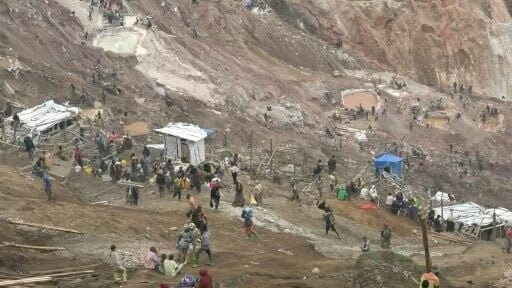
Rubaya lies about 70 kilometres west of Goma, the provincial capital of North Kivu. The site is believed to contain around 15% of the world’s coltan supply and roughly half of the DR Congo’s known deposits. Coltan contains tantalum, a rare metal widely used to manufacture high-performance capacitors found in smartphones, laptops and other electronic devices, making it a highly sought-after resource in global technology supply chains. The M23 rebel group has controlled Rubaya since 2024 as it expanded its influence across the mineral-rich eastern region. The ongoing conflict has disrupted governance and allowed large-scale informal mining operations to flourish, often involving child labour and unsafe practices.
Rescue efforts after the landslide were reportedly hampered by unstable ground conditions and restrictions on movement in the rebel-held area. Many of the injured were transported to hospitals in Goma for treatment. The Congolese government had previously banned mining at the site in 2025 due to safety concerns, though the order had little effect after the area fell under rebel control. The region has seen repeated mining disasters. In late January, another collapse at the same site after heavy rains reportedly killed more than 200 people.
Meanwhile, international scrutiny of the conflict has intensified. A panel of experts from the United Nations has alleged that minerals from eastern Congo are being smuggled across the border into Rwanda. Rwanda has denied accusations that it supports the M23, despite claims from UN investigators and the United States government. The Rubaya mine has also been mentioned in recent discussions between Kinshasa and Washington as part of a potential minerals cooperation framework aimed at securing supply chains for critical raw materials.