
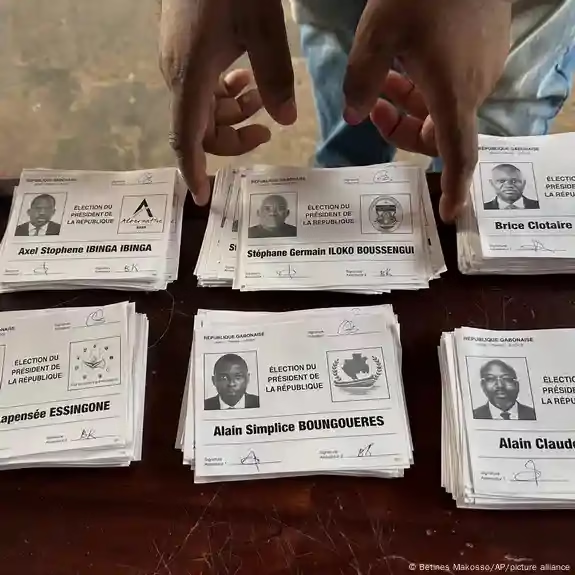

Gabon is on edge as results from Saturday’s legislative and local elections trickle in, the first since a military coup in 2023 ended the decades-long rule of the Bongo family. More than 900,000 registered voters were called to elect 145 members of parliament and local councillors. Those councillors will later indirectly choose senators, mayors, and regional assembly presidents making this vote critical for shaping the country’s political future. The elections will also test whether General Brice Clotaire Oligui Nguema, who seized power in August 2023 and was formally sworn in as president six months ago, can secure a parliamentary majority to support his agenda.
Vote counting began Saturday evening, with observers present at polling stations. Early reports indicate that the process unfolded peacefully across much of the country. However, voting was canceled in one constituency in Ntoum, a suburb of Libreville, after tensions flared between rival candidates. The former ruling Gabonese Democratic Party (PDG) which dominated politics since its creation in 1968 until being ousted in the coup is seeking to regain influence. Its main challenger is the Democratic Union of Builders (UDB), a party founded only three months ago by Nguema. Several smaller, resource-poor parties are also competing.
If no candidate wins an outright majority in the first round, a runoff is scheduled for 11 October. With the stakes high, the results will signal whether Gabon’s transition under military-backed leadership is moving toward consolidation or renewed uncertainty.


