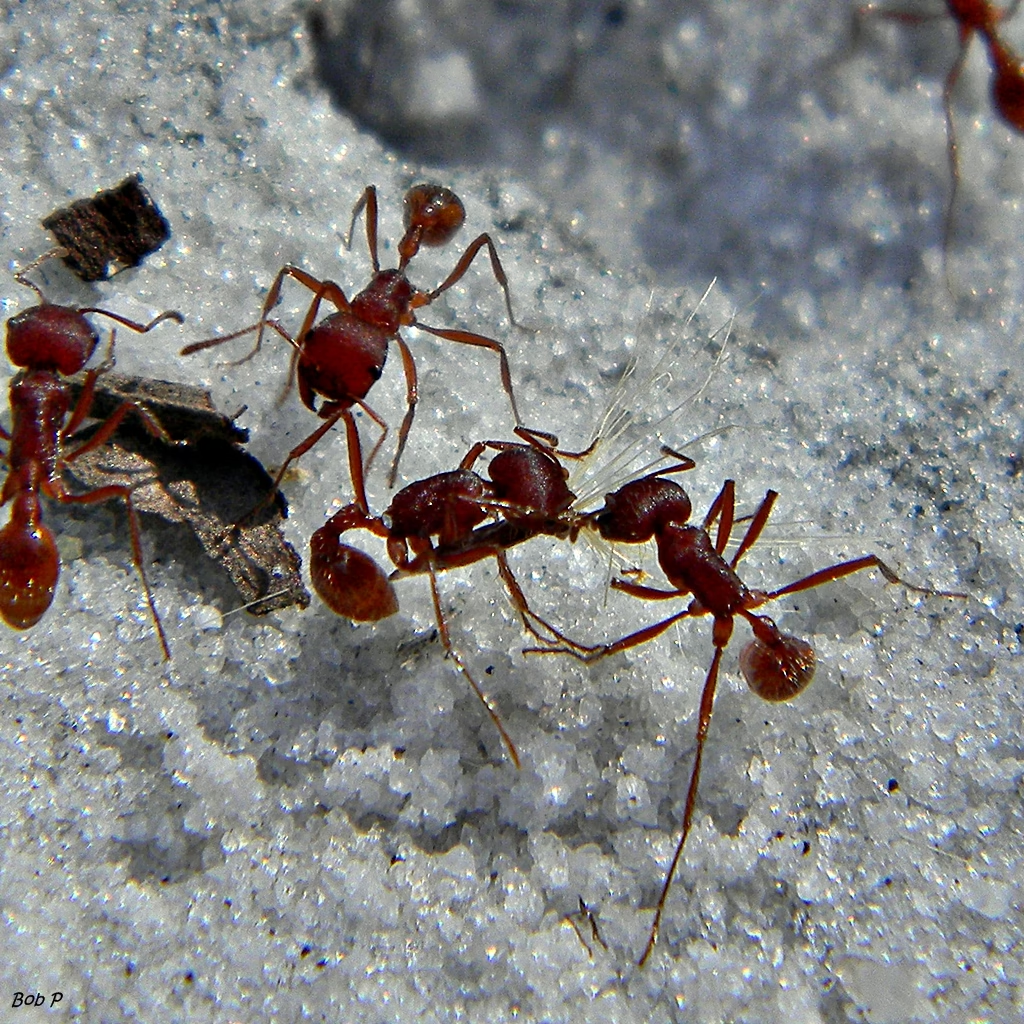

Kenya is facing an unusual form of wildlife trafficking as authorities crack down on the illegal trade of giant African harvester ants, a species increasingly sought after by exotic insect collectors overseas. The ants, scientifically known as Messor cephalotes, are common across parts of East Africa but have become highly valuable in international insect markets, where queen ants can reportedly sell for hundreds of dollars online. Near Nairobi, entomologist Dino Martins said he was shocked by the growing demand for the insects, which are admired for their bright red color, calm behavior and complex colony structure. “These are the ants who’ve now become world-famous because they’re being traded,” Martins explained. “Here in East Africa they are very abundant. They’re one of our most common ants.” Martins warned that the collection of queen ants poses a major threat to the survival of colonies because each nest depends entirely on a single queen, which can live for up to 60 years and produce every ant in the colony. “Each nest here has just one queen,” he said. “So I was really shocked when I saw thousands of queens were being collected.”
Kenyan authorities describe the growing trade as a form of biopiracy, where local biodiversity is exploited for profit without proper regulation or environmental protection. Wildlife officials fear uncontrolled harvesting could damage ecosystems because harvester ants play an important role in soil aeration, seed dispersal and maintaining ecological balance. The illegal insect trade has become an emerging global concern, with collectors increasingly targeting rare ants, beetles and other exotic species for private collections and online sales. Kenya, known globally for protecting iconic wildlife such as elephants and rhinos, is now expanding enforcement efforts to include lesser-known species threatened by international trafficking networks. Environmental experts say stronger regulations, public awareness and international cooperation will be needed to curb the growing demand for illegally traded insects and protect Africa’s biodiversity.