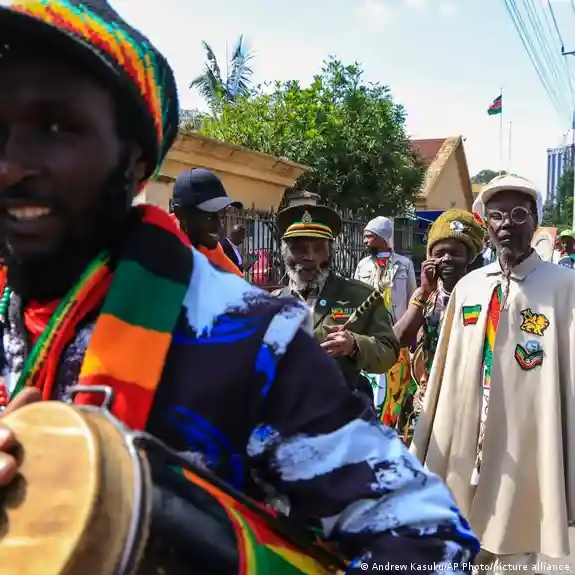

Kenya’s High Court has dismissed a petition seeking legal permission for Rastafarians to use cannabis as part of their religious practices, ruling that the group failed to prove the country’s anti-drug laws violate their constitutional right to freedom of religion. In a judgment delivered on Wednesday, the court rejected the long-running case, bringing to an end years of legal efforts by members of the Rastafarian community to secure an exemption from Kenya’s strict narcotics laws. Rastafarians regard cannabis as a sacred herb used during prayer, meditation and other religious ceremonies. They argued that criminalizing its use infringes on their constitutional right to freely practice their faith. However, the judge ruled that the petitioners had not demonstrated that the prohibition on cannabis substantially interfered with their religious freedoms, dismissing the case in its entirety.
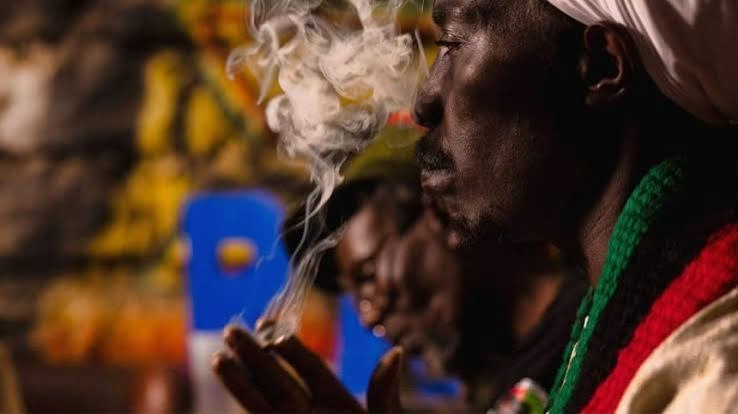
Despite rejecting the petition, the court questioned the effectiveness of Kenya’s current cannabis laws, noting that widespread recreational use suggests the existing legal framework may no longer reflect social realities. The judge said the current situation was “untenable” and called for an open national conversation on cannabis policy and possible legal reforms. Under Kenya’s Narcotic Drugs and Psychotropic Substances Control Act of 1994, possession of cannabis is punishable by up to 10 years in prison and substantial fines. Rastafarians have long argued that the law has been used to unfairly target and harass members of their community.
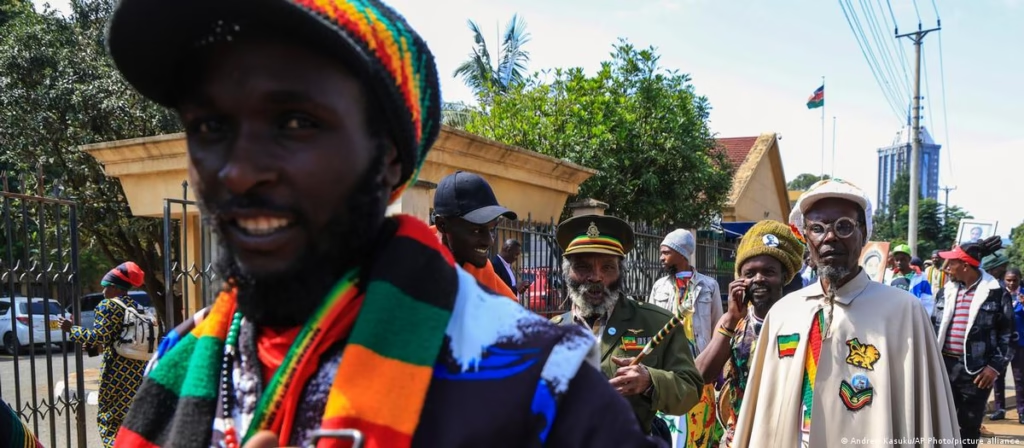
The Rastafarian movement has historical significance in Kenya, where dreadlocks an important symbol of the faith were also worn by many Mau Mau freedom fighters during the struggle against British colonial rule in the 1950s. In 2019, Kenya’s judiciary recognized certain religious rights of Rastafarians when a court ruled that expelling a schoolgirl because of her dreadlocks violated her constitutional freedom of religion. Although official figures are unavailable, Rastafarianism is believed to be growing in Kenya, particularly among young people attracted to its teachings on Pan-Africanism, spirituality and natural living.