
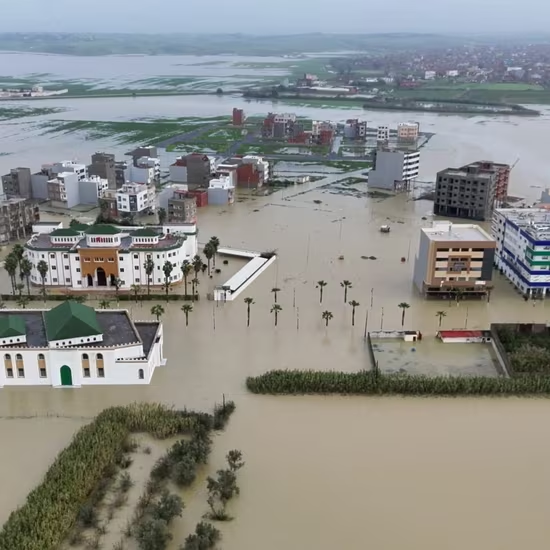

Morocco has announced a $330 million emergency recovery package to support communities hit by weeks of severe flooding across the country’s north, where key agricultural areas have suffered extensive damage. In a government statement on Thursday, King Mohammed VI directed authorities to roll out a “broad support programme” for affected families and local economies. Four of the hardest hit provinces; Larache, Kenitra, Sidi Kacem, and Sidi Slimane have been declared disaster zones. The government has earmarked 3 billion dirhams (about $328 million) to repair roads and irrigation networks, restore damaged farms, relocate displaced families, and compensate households and businesses for lost income.

The funds will also provide direct assistance to farmers and cover basic needs for affected residents. Since late January, “exceptional weather conditions” have flooded more than 110,000 hectares of land and displaced nearly 188,000 people, according to official figures. Authorities carried out preventive and emergency evacuations, but at least four people were killed last weekend near Tetouan when flash floods swept away a vehicle. One passenger remains missing.

The floods have severely impacted the Gharb and Loukkos river basins, which drain into the Atlantic Ocean and irrigate some of Morocco’s most productive farmland. These regions are vital to national food supplies and exports, hosting large cereal fields, livestock farms, and plantations producing red fruits, vegetables and sugar beets. Between January 11 and February 11 alone, water inflows reached 8.82 billion cubic meters, almost equaling the combined total recorded over the previous two years, highlighting both the scale of the flooding and the strain on infrastructure.


