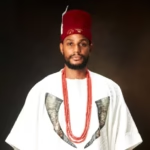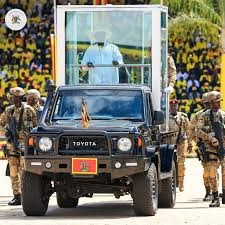

Ugandan President Yoweri Museveni has been sworn in for a seventh consecutive term, extending his nearly four-decade rule and intensifying speculation over who could eventually succeed him with his son, General Muhoozi Kainerugaba, emerging at the center of the conversation. Museveni, 81, took the oath of office on Tuesday during a military-backed inauguration ceremony in Kampala attended by thousands of supporters. The event featured fighter jet flyovers, military parades, and displays of state power overseen by General Kainerugaba, Uganda’s army chief and widely viewed as the president’s preferred successor. Museveni first seized power in 1986 after leading a guerrilla movement that ended years of political instability and civil conflict. Over time, he became one of Africa’s longest-serving leaders, maintaining close ties with Western allies while gradually tightening his grip on power through constitutional changes that removed presidential term and age limits.
As questions about succession grow, many political observers believe Uganda is entering a critical transition phase. Kainerugaba, 52, has openly expressed interest in the presidency and recently declared that his political mission was “unstoppable.” Analysts say his path to power could depend either on constitutional maneuvering within the ruling National Resistance Movement (NRM), which dominates Parliament, or on the military’s growing political influence. Parliament Speaker Anita Among recently pledged support for Kainerugaba’s political ambitions, reflecting what many see as increasing alignment between senior state figures and the general’s rise. Kainerugaba’s growing influence has fueled long-standing allegations of a “Muhoozi Project,” claims that Museveni has been preparing his son to inherit power. Although both men previously dismissed such accusations, critics argue recent political developments suggest a dynastic transition is becoming more likely.
Unlike his father’s consensus-building style, Kainerugaba has cultivated a more confrontational public image, often using social media to issue controversial political statements and criticize rivals. He has also led anti-corruption crackdowns within the military, including against senior officers once considered allies. Opposition leader Bobi Wine, who rejected the outcome of the latest presidential election, remains one of the most popular opposition figures and is widely expected to challenge any future succession attempt linked to the Museveni family. Meanwhile, concerns over democratic freedoms continue to grow. Critics have accused the government of increasing authoritarianism, citing arrests of opposition activists, tighter restrictions on civil society groups, and recently passed legislation limiting foreign funding for organizations without government approval. Despite criticism, Museveni remains a key regional security ally for Western governments and is credited by supporters with maintaining relative stability and economic growth in Uganda over decades of turbulent regional politics.