
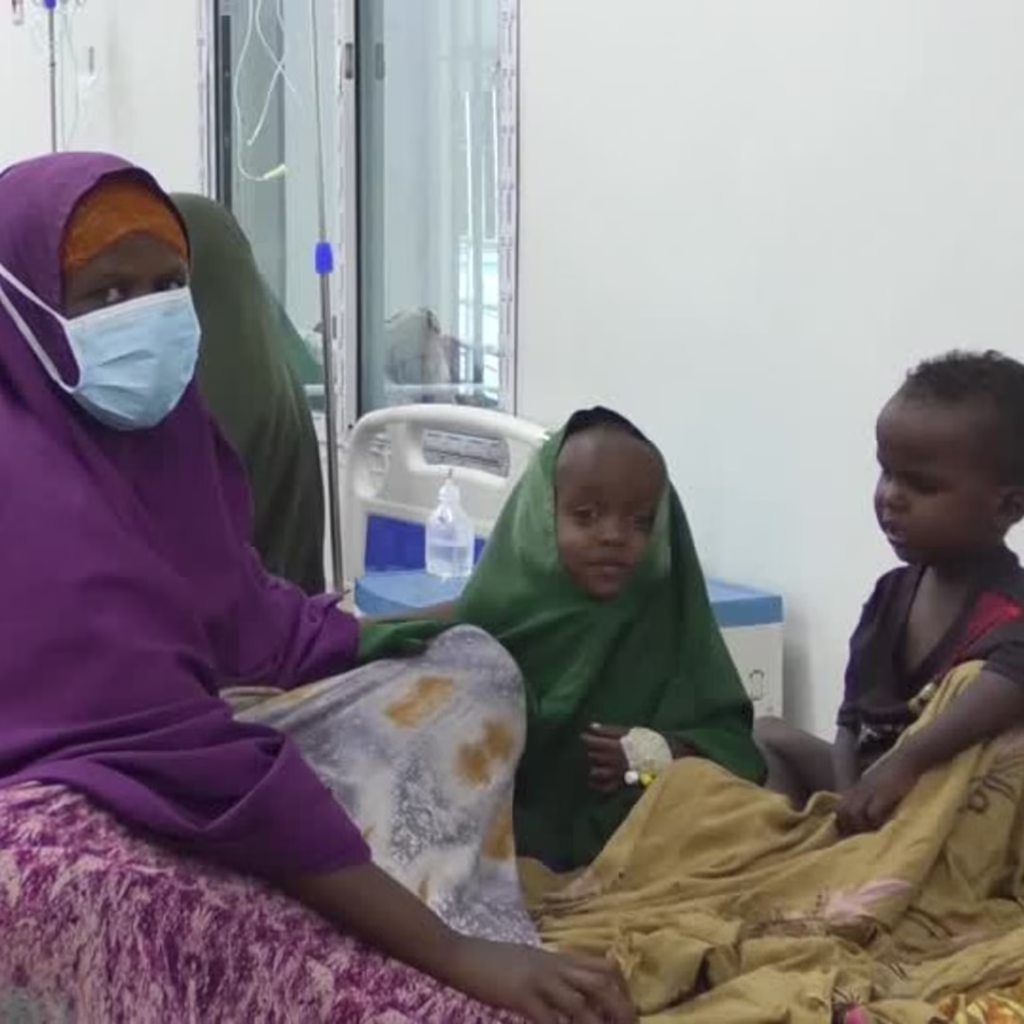

Somalia is slipping deeper into a health care emergency after the Trump administration dismantled the U.S. Agency for International Development (USAID) earlier this year, cutting off one of the country’s most critical lifelines. The loss of funding has hit communities already strained by decades of conflict, poverty, and weak public institutions. In August, Doctors Without Borders warned that widening financial gaps are “undermining health care in Somalia,” noting that the end of USAID support forced the closure of 37 health and nutrition centers around Baidoa, a region heavily affected by drought and displacement.
Although al-Shabab attacks have declined in recent months progress many link to President Hassan Sheikh Mohamud’s stepped-up military offensive, local analysts say these gains have come at the cost of essential social services. “A significant amount of domestic revenue goes to the security sector,” said Mahad Wasuge of the Somali Public Agenda, pointing out that health care remains chronically underfunded. In Mogadishu, the country’s main public hospitals are struggling to survive. Banadir Hospital, Somalia’s largest pediatric facility, now relies entirely on donor-funded programs to treat malnourished children after dozens of staff members were laid off due to U.S. aid cuts. De Martino Hospital, one of the city’s oldest, depends on two remaining NGOs for equipment, laboratory supplies and free patient care. With a diphtheria outbreak spreading in rural districts, the strain is growing.
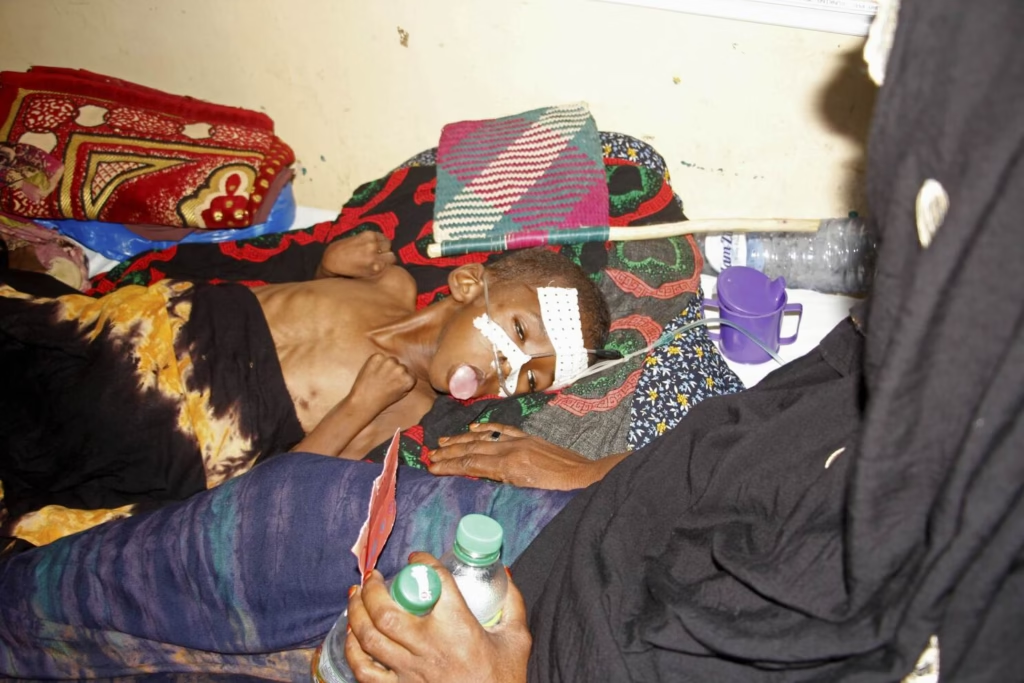
Hospital officials fear even more closures next year as international funding contracts expire. “Donors are fatigued,” warned De Martino director Dr. Abdirahim Omar Amin. The government says it is drafting a contingency plan, but has yet to outline how it will replace the massive financial gap. Somalia’s health system has been fragile for more than three decades. The civil war that followed the 1991 collapse of Siad Barre’s regime left most public infrastructure destroyed. Even now, the government controls limited territory outside the capital and relies on foreign security partners—including Turkey, the U.S., and the African Union to maintain stability. Parliamentarian Mohamed Adam Dini says the crisis reflects a broader governance failure: “There is no national health plan because there is no national political plan.” Public hospitals, he added, are battling disease outbreaks without a coordinated strategy.
Yet thousands of Somalis still depend on these facilities. For some, like new mother Amina Abdulkadir Mohamed, the promise of free treatment at De Martino Hospital is their only option. As donor fatigue deepens and foreign funding becomes uncertain, Somalia faces a dual challenge: stabilizing its security while preventing the collapse of a health system already stretched to its limits.


