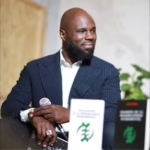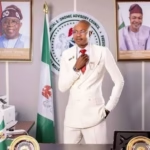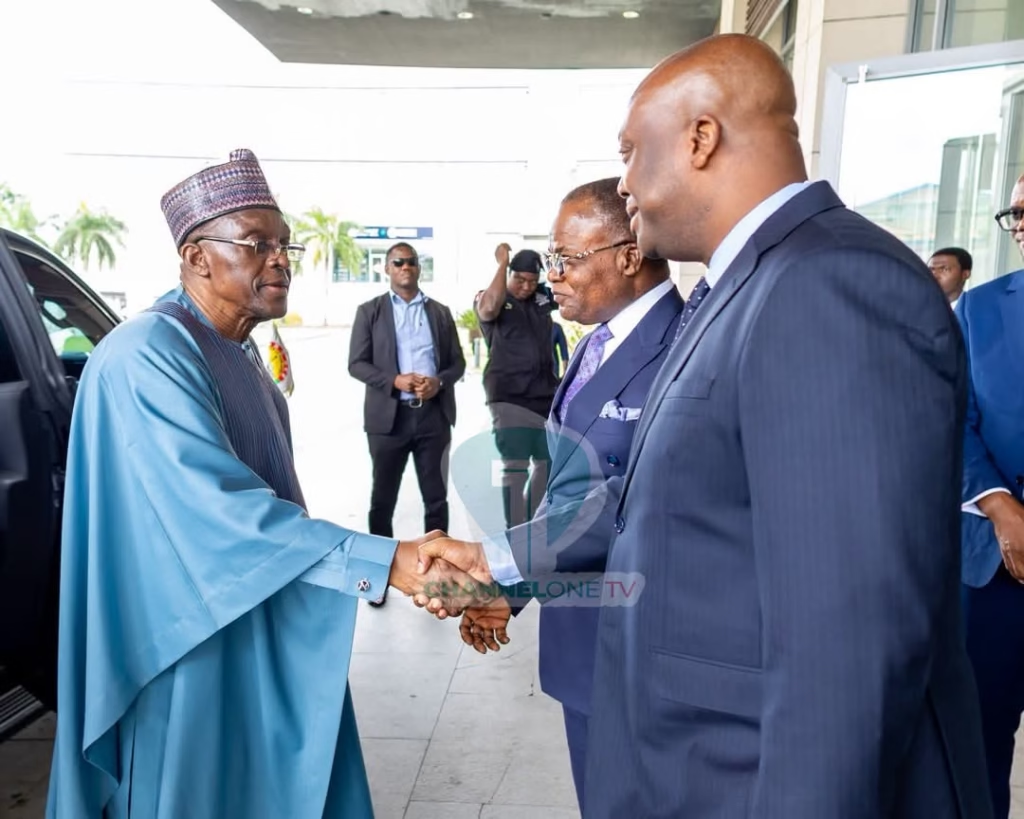

In a searing and deeply personal opening address at the High-Level Regional Convening on the “Financialization of Politics in Africa,” the Rt. Hon. Speaker of Ghana’s Parliament, Alban Sumanu Kingsford Bagbin, issued an urgent call to action against the corrosive impact of unregulated money in democratic governance.The landmark three-day conference, which opened in Accra, is co-organized by the Ghana Center for Democratic Development (CDD-Ghana), the Open Society Foundations (OSF), and Transparency International, in cooperation with the African Union Advisory Board Against Corruption (AUABC). Addressing policymakers, heads of state, electoral authorities, and civil society, Speaker Bagbin warned that the rapidly rising cost of political campaigns across the continent is fueling democratic backsliding and eroding public trust.A Personal Crusade Against a “Global Challenge”Drawing on his extensive career spanning student leadership, legal practice, and over three decades in Ghanaian politics, Speaker Bagbin offered a candid reflection on his personal fight against corruption.
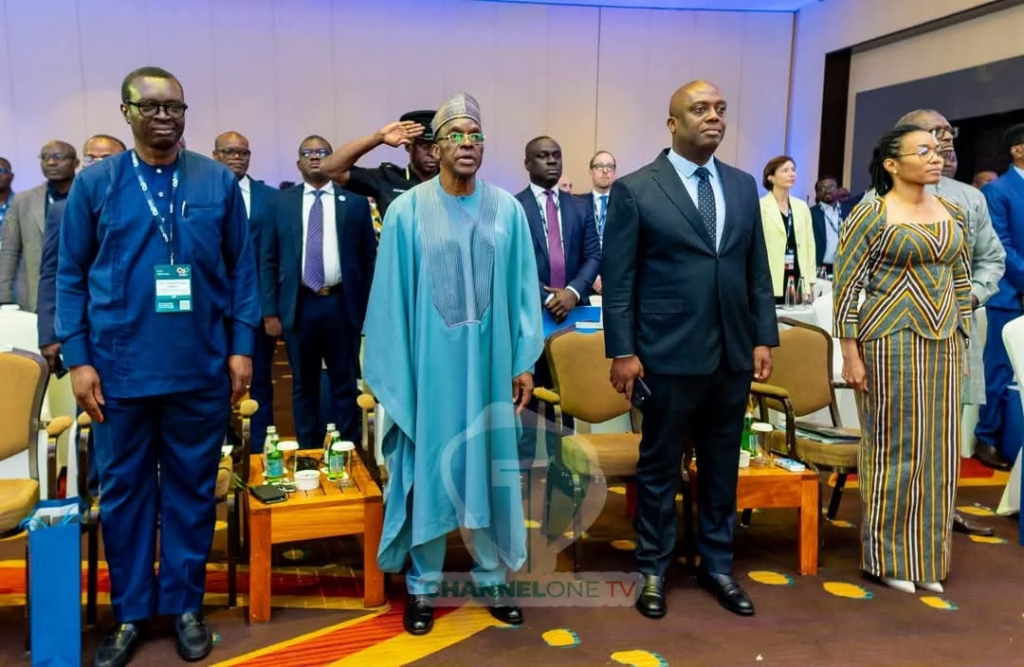
“He who feels it, knows it better,” Bagbin remarked, noting the stark, exponential rise in what it costs a Member of Parliament to run for office today compared to 1992. “When money becomes the principal determinant of political success, democracy risks becoming inaccessible to ordinary citizens. Public office is then viewed less as a public trust and more as an investment to recover.” The Speaker emphasized that the monetization of politics shifts democratic competition away from an honest contest of ideas and services toward an unfair contest of raw financial muscle, ultimately isolating decent citizens who wish to serve.Bagbin challenged participants to move past standard talk shops, workshops and conference rhetoric. Highlighting the historical momentum of the 1999 Durban Conference and the policy of “Zero Tolerance for Corruption,” he noted that the continent must now focus strictly on execution. The Ghanaian Speaker proudly recalled leading Ghana’s delegation alongside Norway and Mongolia to negotiate the United Nations Convention Against Corruption (UNCAC) Resolution 11/7 in Doha. The resolution mandates legislative frameworks to protect campaign funding transparency and whistleblower safety. He singled out H.E. Ambassador Matilda Alomatu Osei-Agyeman for her stellar diplomatic leadership in securing this global milestone. Defending institutional accountability, Bagbin recounted his firm stance against assertions of absolute independence by state institutions. He firmly asserted that no institution is independent of parliamentary oversight when utilizing public funds.
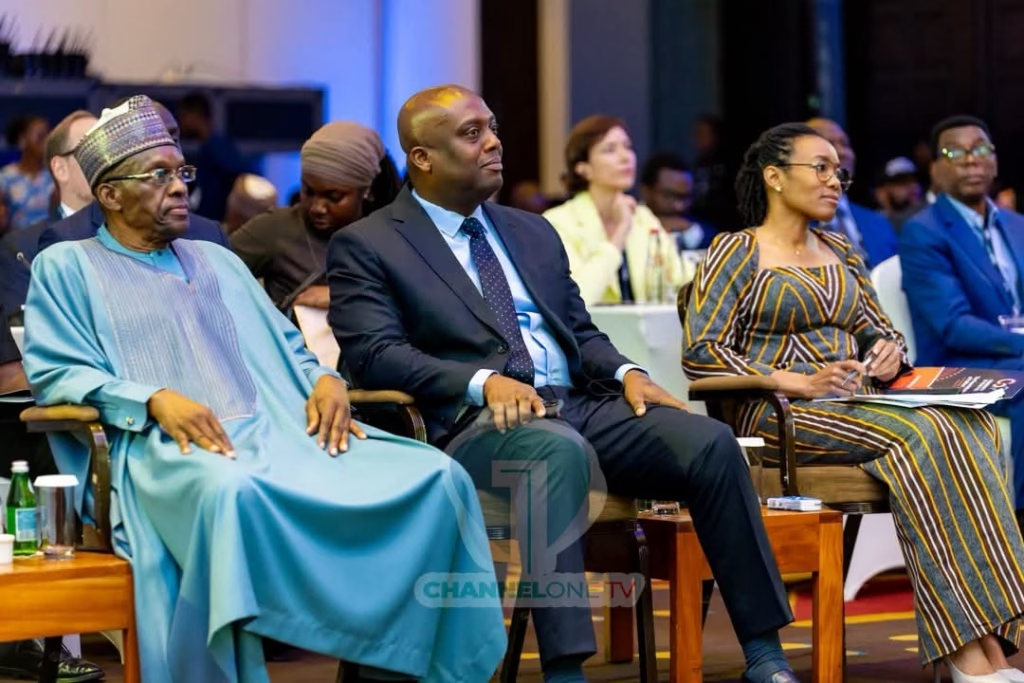
To back his call for structural accountability, Speaker Bagbin highlighted groundbreaking structural transformations implemented under his leadership in the parliamentary organogram, establishing a Legal and Governance Services Division featuring an Anti-Corruption Department to formalize internal checks, an Investigations Department tasked with “piercing the veil” of political rumors and allegations to deliver actionable proof, a Human Rights Department ensuring parliamentary oversight on global human rights reporting and an Ethics and Standards Committee, which will soon be supported by an independent Commissioner on Ethics and Standards holding the rank of a High Court Judge.
Concluding his speech as the President of the African Parliamentarians Network Against Corruption (APNAC) and Vice President of the Global Organization of Parliamentarians Against Corruption (GOPAC), Speaker Bagbin left attendees with critical, systemic questions. He challenged African nations to devise legal and financial frameworks that insulate ordinary citizens from shouldering the crushing costs of political processes, ensuring that wealth never dictates public policy.”This convening offers African countries a platform to translate these international commitments into practical reforms,” Bagbin stated. “This is the time to act.”