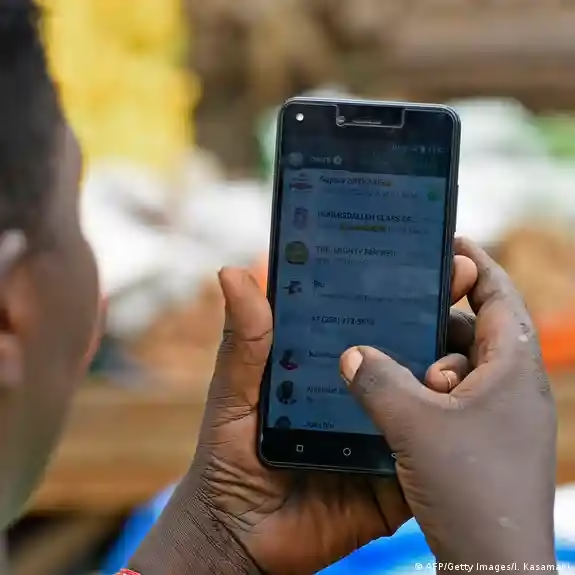

Ugandan authorities have denied plans to shut down the internet during next week’s general elections, pushing back against opposition claims that access will be cut to limit mobilization and control the flow of results. Concerns intensified on Friday after satellite internet provider Starlink restricted its services in Uganda following a directive from the communications regulator. The move echoed memories of the 2021 elections, when authorities imposed a nationwide internet blackout that lasted four days amid widespread protests and deadly clashes.
President Yoweri Museveni, in power since 1986, is seeking to extend his nearly 40-year rule in the January 15 vote. His main challenger is opposition leader Robert Kyagulanyi, popularly known as Bobi Wine, a former pop star who also ran in the disputed 2021 election. The Uganda Communications Commission (UCC) dismissed reports of a looming blackout as “mere rumours,” insisting there was no decision to switch off the internet. UCC Executive Director Nyombi Thembo said the regulator’s mandate was to ensure uninterrupted connectivity across the country.

Communications Minister Amina Zawedde also denied any planned shutdown, warning instead against the spread of false or inflammatory content online. She said digital platforms remain subject to the Computer Misuse Act and stressed that only the Electoral Commission has the authority to declare official election results. Despite the assurances, Bobi Wine’s National Unity Platform (NUP) has launched an offline vote-monitoring app, Bitchart, which uses Bluetooth technology to share images of polling station results without internet access. The opposition says the tool is a precaution against possible disruptions.
The election comes amid heightened political tensions. Amnesty International has accused Ugandan security forces of torturing and arbitrarily arresting opposition supporters, allegations the government has previously denied. Rights groups warn that restrictions on media, communications, and opposition activity could undermine the credibility of the vote.