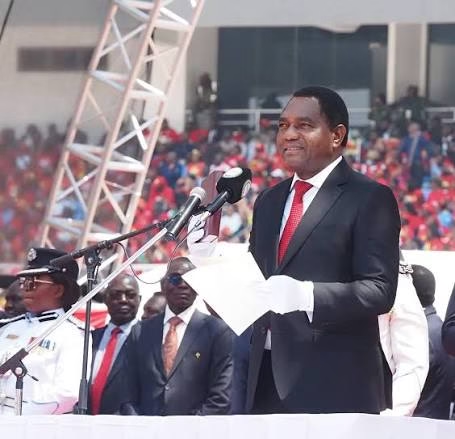

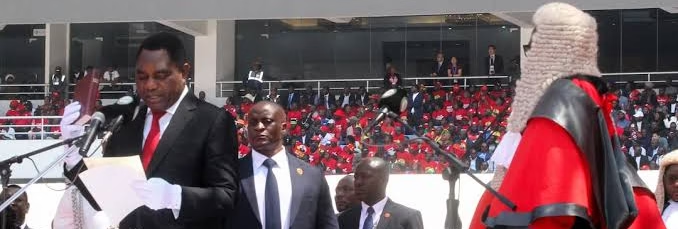
President Hakainde Hichilema has been sworn in for a second five-year term, following a disputed election that has left his main challenger, Brian Mundubile, facing treason charges. Hichilema, 64, was declared the winner of the August 13 presidential election with about 60% of the vote, compared with roughly 38% for Mundubile, according to official results. Mundubile rejected the outcome, alleging irregularities in the counting and tallying process. The European Union’s election observers said voting was generally calm, but raised concerns about the transparency of the results process. The EU reported that the Electoral Commission temporarily suspended nationwide counting on August 14 and that the quality of tabulation deteriorated after counting resumed.
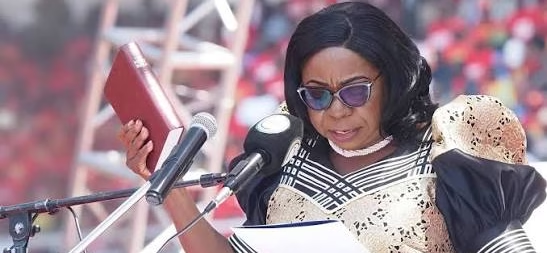
The dispute intensified after Mundubile and his running mate, Makebi Zulu, were detained and later charged with treason. The charges followed a security raid linked to allegations that opposition figures were involved in plans to destabilise the government. Mundubile denies wrongdoing. The opposition’s ability to challenge the presidential result was also questioned after Zambian courts were closed on the final day of the constitutional period for filing an election petition. The government said no valid challenge had been filed within the deadline. At his inauguration at Lusaka’s National Heroes Stadium, Hichilema called for political tolerance and urged the opposition to work with his government. “Democracy does not require us to agree on everything. It requires us to respect one another even when we disagree.”
Hichilema’s second term will focus heavily on economic growth after his first administration worked to restructure Zambia’s debt and restore relations with international creditors. The country, one of Africa’s major copper producers, remains heavily dependent on the mineral, which is crucial to export earnings and government revenue. The president said his administration was now moving from economic stabilization to growth, promising greater investment, job creation and improved prosperity. But the political controversy surrounding his re-election is likely to remain a major test of his second term. International observers have urged Zambia’s authorities to address concerns over electoral transparency and protect the country’s long-standing reputation for peaceful democratic transitions.