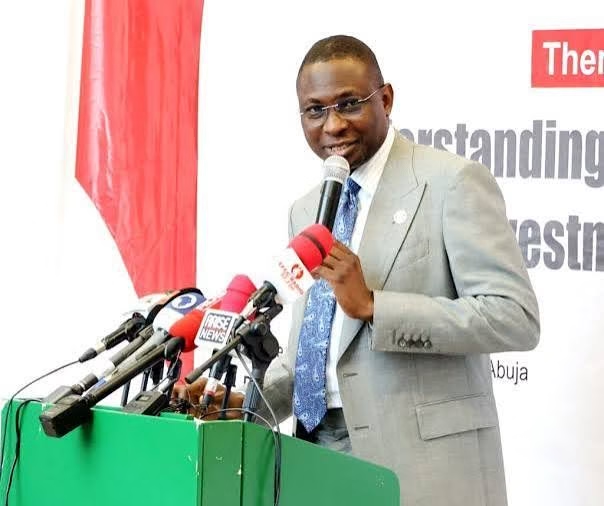

Nigeria’s Economic and Financial Crimes Commission (EFCC) has dismissed more than 40 employees over alleged corruption and financial misconduct since Ola Olukoyede became chairman in October 2023. Olukoyede disclosed the figure at a briefing in Abuja reviewing his tenure, saying more than five of the former officials are already facing prosecution while case files are being prepared against others. He said the dismissals form part of wider efforts to strengthen accountability within the anti-graft agency. The EFCC chairman said the agency has also renamed its Department of Internal Affairs as the Department of Ethics and Integrity and introduced stricter rules on gifts and hospitality. Officers are required to declare gifts above a specified threshold, including those received from relatives overseas.

The reforms come as the EFCC steps up its focus on money laundering, cybercrime, internet fraud and other forms of illicit finance. The commission says its mandate covers investigating and prosecuting economic and financial crimes, while its Special Control Unit Against Money Laundering works with businesses and professionals to strengthen compliance and reporting.
Olukoyede also highlighted the commission’s wider enforcement record, reporting 49,673 petitions received, 39,615 investigations conducted, 14,476 cases filed in court and 10,872 convictions between October 2023 and July 2026. He said the EFCC recovered about ₦1.23 trillion during the period. The chairman stressed that the agency’s credibility depends on the conduct of its own personnel, warning that officers cannot effectively fight corruption while engaging in corrupt practices themselves. The EFCC has increasingly placed emphasis on preventing illicit financial flows and strengthening Nigeria’s anti-money-laundering framework. Recent initiatives have included tighter reporting requirements for designated non-financial businesses and efforts to address risks linked to money laundering and terrorist financing.