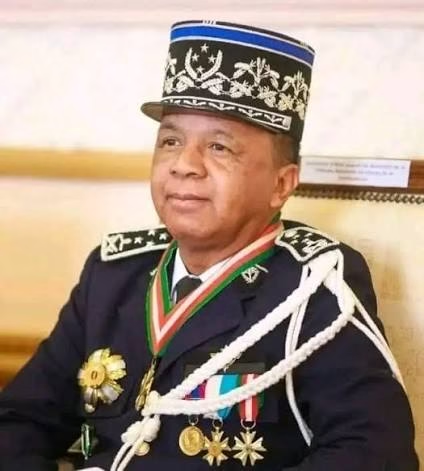

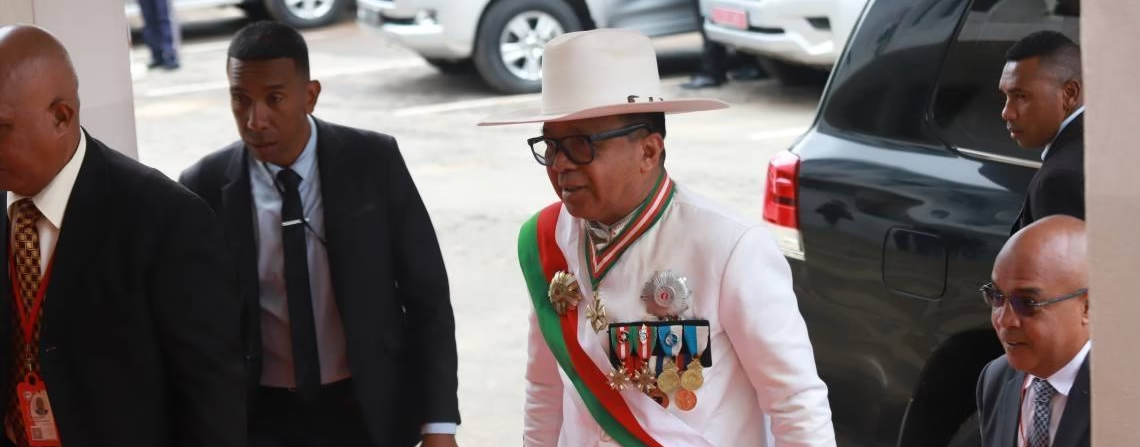
Madagascar’s former Senate president, Richard Ravalomanana, has been sentenced to 10 years of hard labor after being convicted of complicity in murder and complicity in causing bodily harm during last year’s deadly youth-led protests. The verdict was delivered Tuesday at the Ordinary Criminal Court in Antananarivo. Ravalomanana, a retired general and close ally of former President Andry Rajoelina, denied the allegations and said through his lawyer that he would appeal the decision. Prosecutors accused Ravalomanana of using his influence over the gendarmerie to direct violent actions against demonstrators during the September-October 2025 protests. His defense rejected the claim, arguing that there was no written or verbal evidence showing that he ordered police, soldiers or gendarmes to use force. A former national police chief who testified also said Ravalomanana was not part of the operational chain of command during the unrest.
The protests began in Antananarivo on September 25, 2025, over persistent electricity cuts and water shortages but quickly expanded into wider demands over the cost of living, corruption and Rajoelina’s leadership. The United Nations reported at least 22 deaths and more than 100 injuries, while the government disputed the figures. The unrest became the biggest political crisis Madagascar had faced in years. After weeks of demonstrations, Rajoelina was removed from office in October 2025 after parliament impeached him, while a military-backed administration led by Colonel Michael Randrianirina took power. The military takeover followed a split within the security forces, with an elite unit refusing to suppress the protesters.
Ravalomanana was removed as Senate president in October and arrested in December after failing to respond to a gendarmerie summons. He had remained in pre-trial detention at a high-security prison outside Antananarivo for about seven months before the verdict. He is also facing a separate corruption investigation. The court dismissed a separate allegation involving a death threat because the charge had passed the legal time limit for prosecution. Ravalomanana’s appeal could now move the case to a higher court, keeping one of the most politically sensitive prosecutions arising from Madagascar’s 2025 political upheaval alive.