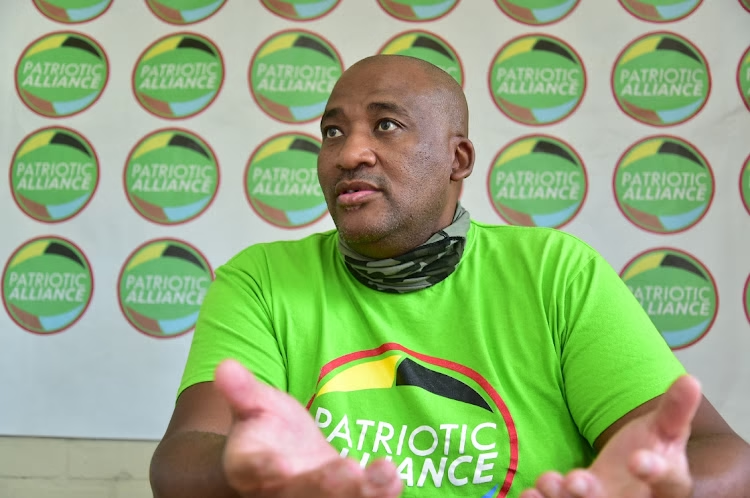

South Africa’s Sports, Arts and Culture Minister, Gayton McKenzie, is at the center of a racism storm after resurfaced social media posts showed him using the apartheid-era “K-word” to refer to black people. The South African Human Rights Commission (SAHRC) has given McKenzie until Wednesday to delete the posts and issue a public apology. The commission, which investigates human rights violations, says his remarks amount to hate speech. McKenzie, who leads the Patriotic Alliance (PA) and serves in President Cyril Ramaphosa’s coalition government, has denied being racist. He insists he identifies as both black and colored, citing his mixed-race heritage his mother is Sotho and his father of Japanese-Irish descent.
“I always saw myself as black growing up,” McKenzie said in a recent livestream, adding that his comments were taken out of context and reflected how he included himself when speaking about black people. He also stressed his role in the anti-apartheid struggle. The controversy erupted weeks after McKenzie criticized a podcast for derogatory remarks about colored people sparking anger from his supporters and leading to a criminal complaint. But “social media archaeologists” soon resurfaced McKenzie’s decade-old offensive tweets, turning the spotlight on him.

Under apartheid, people of mixed heritage were legally classified as “coloured,” a community that today makes up about 8% of South Africa’s population. Despite the end of apartheid in 1994, racial divisions remain stark with economic inequality, segregation, and political marginalization still tied to race. Experts say McKenzie’s case exposes the fragility of race relations in South Africa. “The idea of a rainbow nation is still more myth than reality,” said Prof. Kedibone Phago of North West University, noting that apartheid’s social divisions remain deeply embedded.
Ironically, McKenzie’s portfolio sports, arts and culture — is meant to unify South Africans. Instead, his old remarks have triggered fresh debates about race, identity, and political representation. It is now up to the SAHRC to decide whether to sanction him, while observers watch closely to see if President Ramaphosa will keep McKenzie in the cabinet amid mounting pressure.