
Mauritanian security forces have committed years of torture, sexual violence, and mass expulsions against migrants from West and Central Africa abuses intensified by European migration control funding, according to a major new report by Human Rights Watch (HRW). The 142-page investigation, released this week, documents violations between 2020 and early 2025, including arbitrary arrests, beatings, rape, extortion, and collective expulsions. HRW says the crackdown escalated after the European Union and Spain expanded financial and logistical support to Mauritania as part of efforts to block irregular migration to Europe.
In 2024, Mauritania signed a €210 million agreement with the EU to strengthen border security. Spain also deployed officers and increased bilateral aid. HRW argues that this support given without strong human rights safeguards — made the EU and Spain partly responsible for the abuses. The report is titled “They Accused Me of Trying to Go to Europe” and draws on interviews with 102 migrants. Victims describe being beaten with sticks, rubber whips, and gun butts before being expelled, often without food or water, to remote areas near Mali or Senegal. One Liberian man, Marco Gibson, said he was assaulted by soldiers and forced to walk across the desert with children.
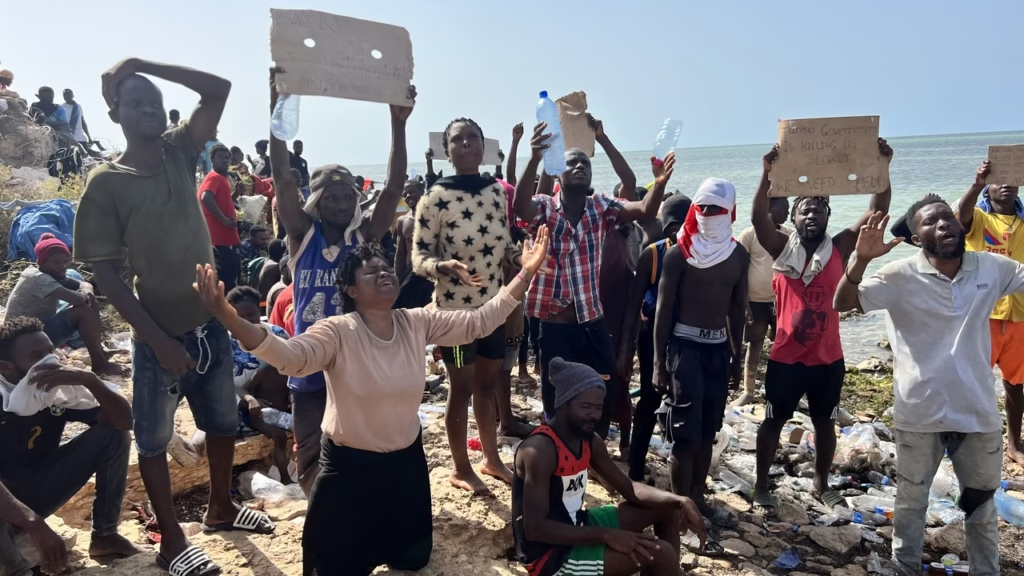
The scale of expulsions is vast: Mauritanian authorities removed more than 28,000 people in the first half of 2025 alone, according to HRW, often without due process or asylum screening. Many of those expelled were attempting to cross the Atlantic by boat to Spain’s Canary Islands one of the world’s deadliest migration routes — while others had simply settled in Mauritania for work. The Mauritanian government has denied systematic abuses but acknowledged challenges in managing migration pressures. Officials highlighted recent reforms, including a May 2025 ban on collective expulsions and new disembarkation procedures designed to protect migrant rights.
The European Commission defended its partnership with Nouakchott as “anchored in respect for rights” and pointed to its support for these reforms. HRW welcomed the new measures as an “important step” but stressed that deeper change is needed to end the abuses. “Mauritania now has the chance to set a precedent for rights respecting migration management in Africa,” said HRW researcher Lauren Seibert. “But Europe must stop pouring money into abusive security forces and start prioritizing the lives and dignity of migrants.” The report comes amid a surge in irregular migration through West Africa, with nearly 40,000 people arriving in the Canary Islands in 2023 alone — the highest number in over a decade.