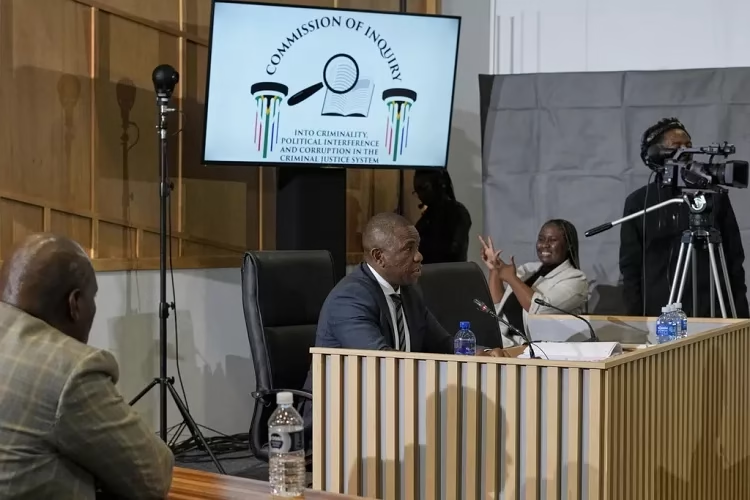

A high-stakes inquiry into corruption within South Africa’s law enforcement began in Pretoria on Wednesday, with KwaZulu-Natal Police Commissioner Nhlanhla Mkhwanazi testifying that powerful criminal syndicates have infiltrated the country’s police and justice system. Mkhwanazi first raised alarms in July, accusing senior politicians and police officials of shielding drug cartels and obstructing investigations into politically motivated killings. His claims sparked public outrage and led President Cyril Ramaphosa to establish the commission of inquiry. Parliament has also launched a separate probe.
In his opening statement, Mkhwanazi warned that the country’s criminal justice system was at “real risk of collapse” if systemic sabotage was not addressed. “The criminal justice system has been subject to a continuous threat over an extended period,” he told the inquiry. Among those implicated are Police Minister Senzo Mchunu and Deputy National Police Commissioner Shadrack Sibiya, whom Mkhwanazi accused of disbanding a unit that had linked powerful syndicates to contract killings and unsolved murders of musicians. Both men have been suspended and are expected to testify.
The inquiry has drawn mixed reactions. Critics, including opposition leaders Julius Malema of the Economic Freedom Fighters and the MK Party, argue that commissions under Ramaphosa have rarely led to accountability. The MK Party plans to challenge the legality of the probe in court. Still, analysts say this commission could mark a turning point if its recommendations are implemented. Louise Edwards of the African Policing Civilian Oversight Forum stressed the importance of enforcement: “The focus must be on outcomes and reforms. Too often commissions produce strong reports, but no real consequences.”
South Africa faces one of the world’s highest violent crime rates, and corruption within law enforcement has long been a source of public frustration. Mkhwanazi’s testimony, however, is among the rare occasions when a senior police official has openly accused colleagues and politicians of collusion with criminal networks.