
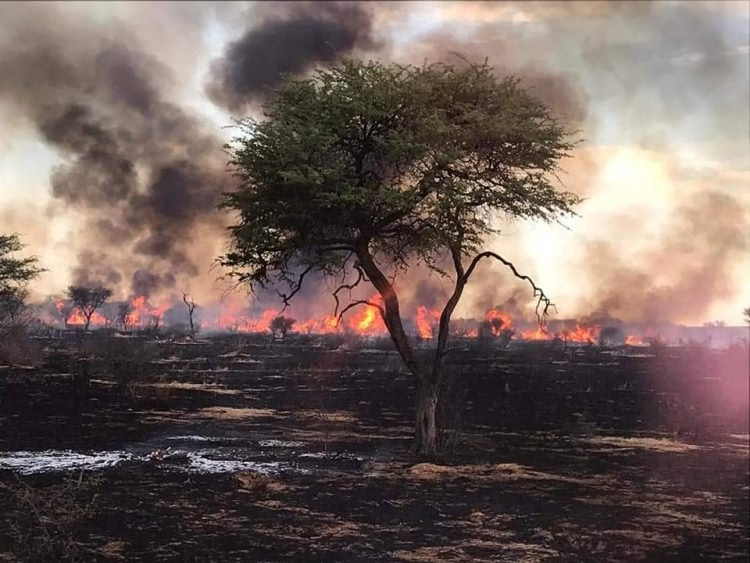

Namibia’s government says the devastating wildfire that swept across Etosha National Park one of Africa’s most iconic wildlife reserves has now been contained after burning for more than a week. The blaze destroyed nearly a third of the park, scorched hundreds of thousands of hectares of grazing land, and spilled across the northern border into Angola. At least nine antelopes were killed, while conservationists warn that critically endangered black rhinos, elephants, lions, and other species may have also been affected.
Environment Minister Indeleni Daniel confirmed that while smaller fires were still smoldering, they were under control. He said early investigations suggest the inferno began at a charcoal production site outside the park before strong winds and bone dry vegetation fueled its rapid spread. Etosha, covering 22,935 square kilometers an area almost the size of Belgium attracts around 200,000 tourists a year with its vast salt pan, visible from space, and its 114 mammal species, including cheetahs, giraffes, and black rhinos.
The government deployed helicopters, firefighters, and more than 500 soldiers to assist local volunteers and police in fighting the flames. Prime Minister Tjitunga Elijah Ngurare said emergency aerial surveys are underway to determine the full scale of destruction, with early estimates suggesting about 30% of the park’s grazing land was lost.
Opposition politicians have criticized the government’s response, saying authorities were slow to act despite the predictable risks of wildfires in the dry season. Conservation experts, however, note that while wildfires are part of the savannah’s natural cycle, this blaze was far more destructive than usual. The presidency said no human lives were lost, but the fires remain a significant threat to biodiversity and to the livelihoods of nearby farming communities who depend on grazing pastures.


