


The World Bank has revised its 2025 economic growth forecast for Sub-Saharan Africa upward to 3.8%, citing easing inflation, improving trade conditions, and stronger performance in several major economies. In its latest Africa’s Pulse report released Tuesday, the World Bank said growth in the region is gaining momentum after years of sluggish recovery from the pandemic, global inflation shocks, and high debt burdens. The new estimate marks an improvement from the 3.5% growth forecast issued in April.
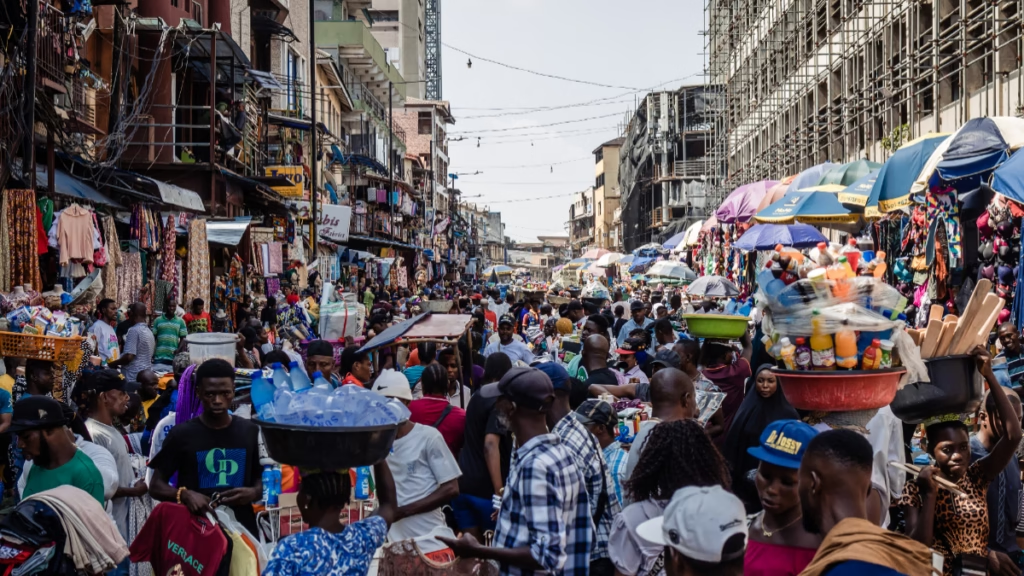
The Bank attributed the upgrade to declining inflation, which dropped to a median rate of 4.5% in 2024 its lowest level in nearly a decade and is expected to stabilize around 4% through 2026. The moderation in food and energy prices has eased pressure on households and allowed central banks to loosen monetary policy. According to the report, growth is expected to accelerate further to an average of 4.4% over the next two years, buoyed by stronger performances in Nigeria, Côte d’Ivoire, and Ethiopia, which together account for nearly one-third of the region’s GDP.
- Nigeria, Africa’s largest economy, is projected to benefit from reforms in the energy sector and modest recovery in oil production.
- Côte d’Ivoire is seeing solid export growth from cocoa, energy, and construction.
- Ethiopia continues to expand due to infrastructure investment and agricultural productivity gains.
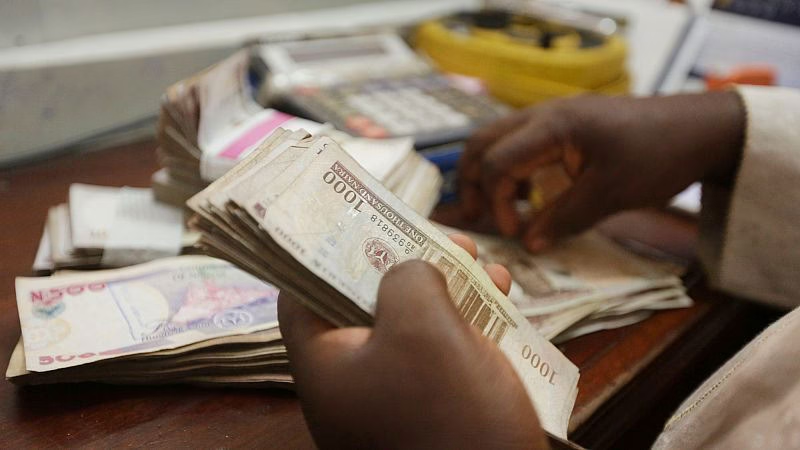
Despite the improved outlook, the World Bank warned that structural challenges including high public debt, weak job creation, and trade policy uncertainty still threaten long-term growth. Andrew Dabalen, the Bank’s Chief Economist for Africa, said the recent expiry of the African Growth and Opportunity Act (AGOA), a key U.S. trade preference program adds uncertainty to the region’s export prospects. “Trade challenges remain very high. We don’t know how this will be resolved because there are lots of negotiations going on,” Dabalen said.
The report also noted that U.S. President Donald Trump’s trade and immigration policies could impact African exports and remittances if they tighten access to global markets. The World Bank urged African governments to prioritize job creation and strengthen productivity growth, emphasizing the need for “more jobs that offer better pay, stability, and opportunities for young people.”


