
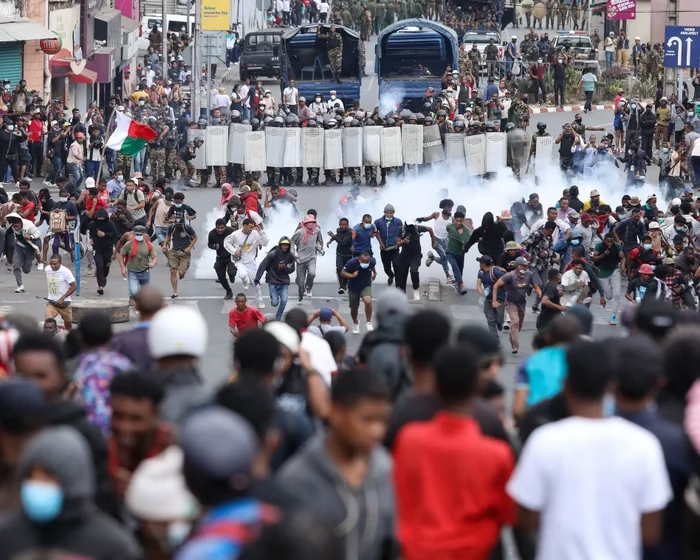

Protests intensified across Madagascar’s capital, Antananarivo, on Tuesday as medical students and junior doctors joined growing demonstrations over economic hardship and government mismanagement just a day after President Andry Rajoelina appointed a new prime minister. Hundreds of young medics marched out of Joseph Ravoahangy Andrianavalona Hospital, the country’s largest public medical facility, demanding better wages, safer working conditions, and investment in public healthcare.
The protesters were blocked by police near the Ministry of Health, and after more than an hour of tense negotiations, security forces fired tear gas to disperse the crowd. “We are doing this for the Malagasy people because the quality of care in Madagascar is very poor,” said one protester. “We will not return to work until our demands are met.” Medical staff say they are underpaid and overworked, treating as many as 50 to 100 patients per day with limited supplies and outdated equipment. Medical students earn just €0.25 an hour, while junior doctors make around €100 a month, far below the cost of living. They are demanding their pay be increased to €240 monthly.
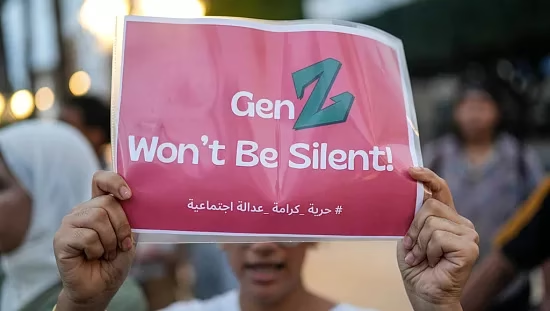
According to Dr. Santatra Andriamanantsoa, conditions in hospitals are “so precarious” that many healthcare workers are forced to use personal funds to buy basic supplies for patients. In protest, junior doctors have suspended minimum emergency services in public hospitals, a move that could further strain the country’s fragile health system. The unrest follows President Rajoelina’s appointment of a military officer as prime minister on Monday a controversial move aimed at calming a wave of nationwide protests led by students, civil servants, and youth groups.
Rajoelina has promised to launch a “national dialogue” starting Wednesday to address the growing social and economic crisis. However, opposition leaders and civil groups remain skeptical, accusing his administration of ignoring public grievances and stifling dissent. Madagascar, one of the world’s poorest nations, faces mounting pressure as inflation rises, unemployment remains high, and key sectors like healthcare and education continue to deteriorate.


