
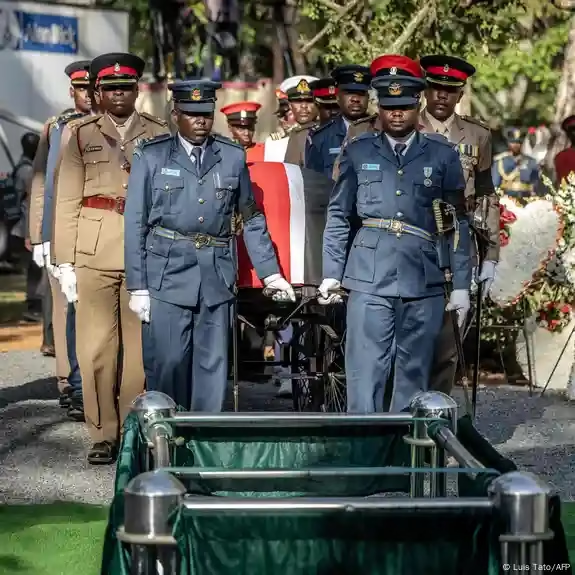

Kenya laid to rest former Prime Minister Raila Amolo Odinga on Sunday at his rural home in Bondo, Siaya County, marking the end of an era for one of Africa’s most resilient democracy champions. The 80-year-old veteran opposition leader, who died in India while undergoing medical treatment, was buried beside his father, Jaramogi Oginga Odinga, Kenya’s first vice president and a key figure in the country’s independence struggle. Odinga’s state burial drew thousands of mourners, including dignitaries from across Africa, as well as Kenya’s top political leadership among them President William Ruto, who signed a political pact with Odinga earlier this year to ease tensions after months of anti-government protests.
In a ceremony marked by full military honours, including a 17-gun salute, President Ruto hailed Odinga as a “patriot and mentor,” noting their partnership had helped “steady the country” after a wave of youth-led demonstrations in early 2025. “I am proud that Raila Odinga is being laid to rest when one of his students — a man he mentored is now the president of Kenya,” Ruto said. The burial followed days of emotional national mourning. Odinga’s body was received in Nairobi by crowds numbering in the tens of thousands, and four public viewings were held nationwide. Several stampedes during the processions left five people dead and hundreds injured, underscoring the depth of emotion surrounding his death.

Odinga’s Orange Democratic Movement (ODM), which he led for nearly two decades, now faces questions about its direction after his passing. Party officials remain divided some pledging to honour his unity pact with Ruto’s government, while others argue for a return to opposition politics. Known for his unrelenting pursuit of democracy, Odinga ran for president five times without success but played decisive roles in stabilizing Kenya during moments of post-election crisis. He also mediated political disputes across Africa and championed constitutional reforms, including the 2010 constitution that redefined Kenya’s governance structure.
Beyond politics, Odinga was remembered as a pan-Africanist and symbol of resilience. His trademark cowboy hat, placed atop his coffin during the state funeral in Nairobi, became a powerful emblem of his enduring public image. Among those paying tribute was former African Union Deputy Chairperson Erastus Mwencha, who described Odinga as “a statesman whose influence reached far beyond Kenya.” Odinga leaves behind his wife, Ida Odinga, and their children Rosemary, Raila Junior, and Winnie. His death closes a monumental chapter in Kenyan history one defined by struggle, reform, and an unyielding belief in democracy.


