


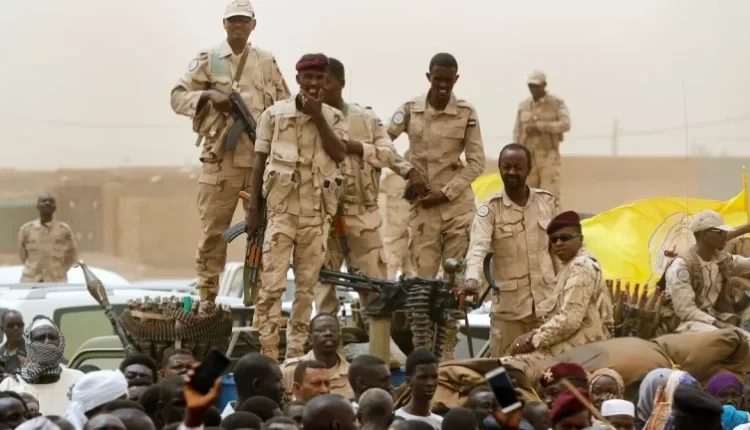
Sudan’s army has withdrawn from el-Fasher, the capital of North Darfur, after months of siege and fierce fighting, ceding control to the Rapid Support Forces (RSF) in what marks a major turning point in Sudan’s 18-month civil war. In a televised address, General Abdel-Fattah al-Burhan, Sudan’s military ruler, confirmed the retreat, saying commanders made the decision to prevent “systematic destruction and killing” of civilians. “The leadership there estimated that they should leave the city due to the systematic destruction it was subjected to,” he said. The RSF’s capture of el-Fasher, the army’s last major base in the Darfur region gives the paramilitary group control over nearly all of western Sudan. Human rights monitors and aid groups say the fall of the city could deepen one of the world’s worst humanitarian crises.
A City Under Siege
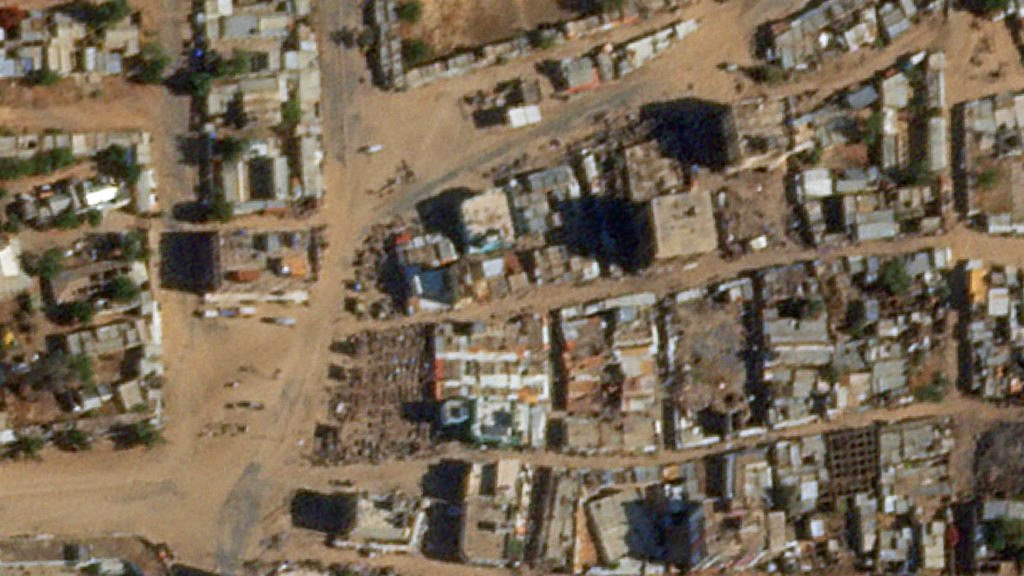
For more than a year, el-Fasher’s 250,000 residents, nearly half of them children, have endured relentless shelling, food shortages, and blocked humanitarian aid. Medical networks reported dozens of civilians killed and hundreds wounded during the latest clashes, with markets, hospitals, and displacement camps hit by artillery fire. Satellite imagery reviewed by international observers shows large sections of the city reduced to rubble. The UN Office for the Coordination of Humanitarian Affairs (OCHA) estimates that more than 8 million people have been displaced nationwide since fighting began in April 2023.
Scenes of Chaos and Conflicting Narratives
Videos posted online show RSF fighters celebrating around the army’s abandoned headquarters. In one clip, RSF deputy commander Abdulrahim Dagalo orders his men not to harm civilians. Yet other verified footage depicts looting, gunfire, and racial abuse echoing the ethnic violence that scarred Darfur during the early 2000s conflict. The RSF, originally formed from the Janjaweed militia accused of genocide in Darfur, denies systematic atrocities. But the United Nations and rights organizations have accused the group of ethnically targeted killings, sexual violence, and forced displacement over the past year.
A Strategic Defeat for the Army
Sudanese army officials privately admitted to losing the el-Fasher base, citing low ammunition, fuel shortages, and poor coordination. Analysts describe the withdrawal as both a tactical retreat and a sign of the army’s declining capacity. “The loss of el-Fasher is a psychological and logistical blow to the Sudanese Armed Forces,” said Crisis Group analyst Alan Boswell. “It also shows that the RSF now has near-total control of Darfur.”
War Without End
The war between Burhan’s Sudanese Armed Forces (SAF) and the RSF, led by Mohamed Hamdan Dagalo (Hemedti), erupted in April 2023 after disputes over military integration and political transition. It has since killed more than 15,000 people and pushed millions to the brink of famine, according to the UN and Human Rights Watch. International mediation efforts, led by Saudi Arabia, the U.S., and the African Union, have repeatedly collapsed. Burhan accused the global community of “watching in silence” as civilians are slaughtered.
A Nation on the Brink
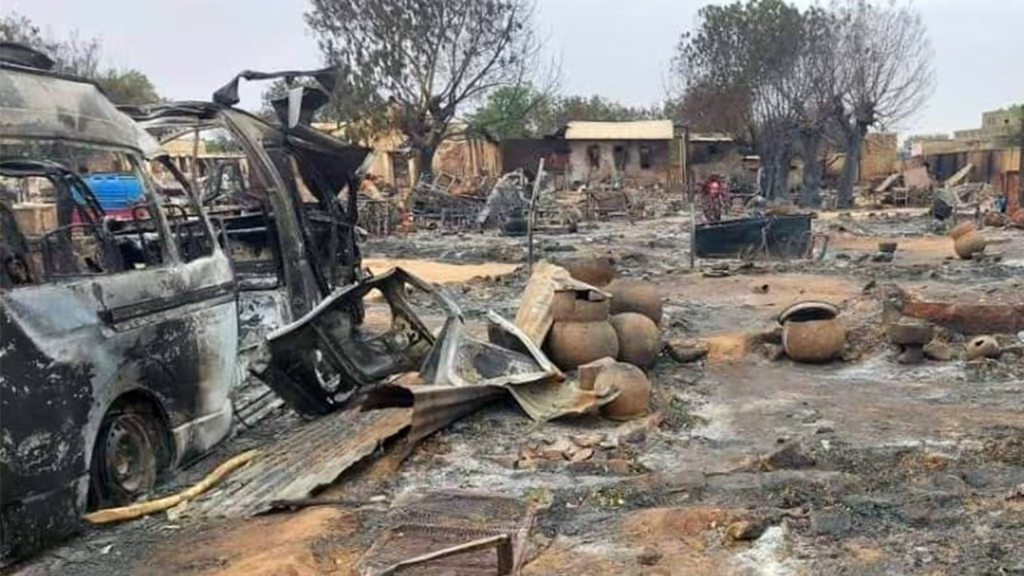
With the government now operating from Port Sudan on the Red Sea and much of the west under RSF control, experts warn Sudan could fragment into rival zones of power echoing the split that created South Sudan in 2011. As the world looks on, el-Fasher’s fall marks not only a military defeat for Burhan’s forces but a humanitarian catastrophe for Sudan’s civilians left trapped between hunger, airstrikes, and militia rule.


