
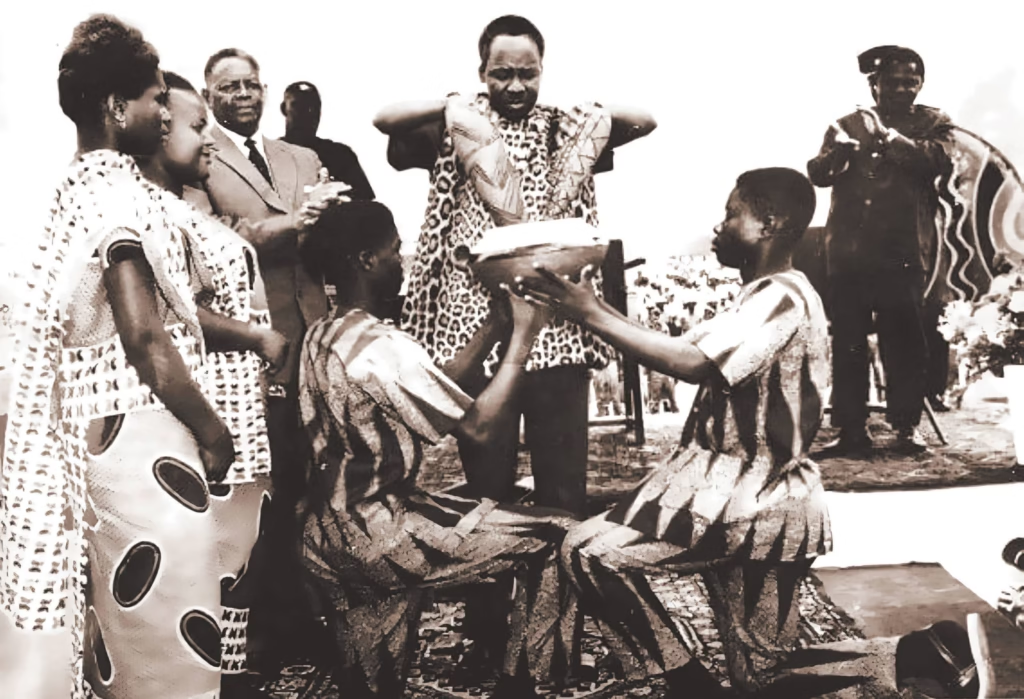

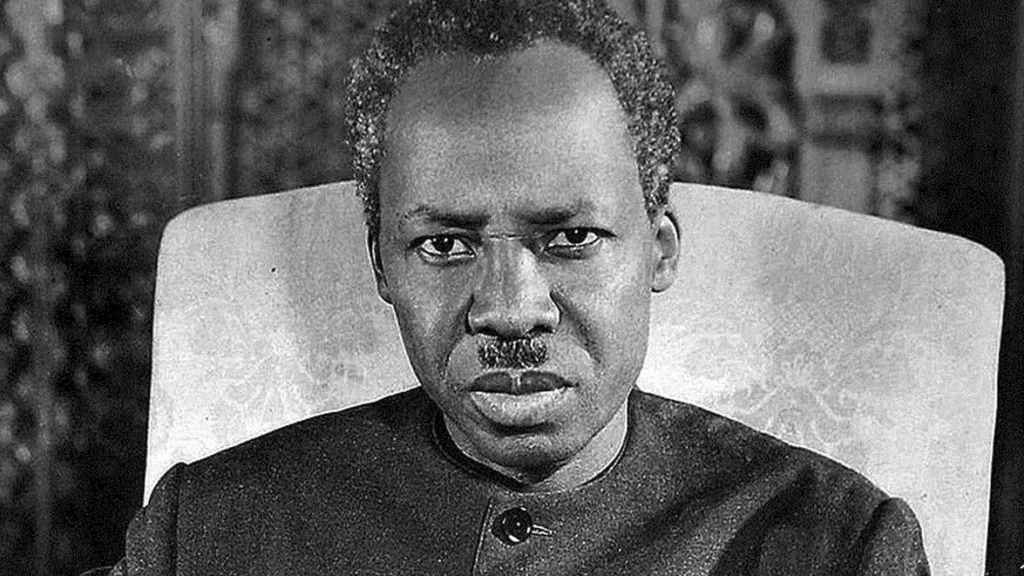
Since achieving independence on December 9th, 1961, Tanzania has established itself as the island of peace in Africa. This esteemed reputation is largely credited to the Tanzanian populace, renowned for their profound peacefulness, compassion, kindness, and capacity for forgiveness. These admirable qualities were particularly championed by the nation’s founding father, Mwl. Julius K. Nyerere, who constructed the nation upon the principles of selflessness, human dignity, and religious freedom. Nyerere aspired to create a nation that embraced all individuals, regardless of their religious beliefs, ethnic backgrounds, or languages. Consequently, he implemented Kiswahili as the national language to foster a sense of national identity and unity. Due to these foundational efforts, Tanzanians have acted as regional peace mediators, and as a nation, they have taken a leading role in advocating for the independence of several countries in the southern region. For many years, Tanzania has been acknowledged as a refuge for freedom fighters from various African nations, including South Africa, Mozambique, Namibia, Angola, and Zimbabwe.
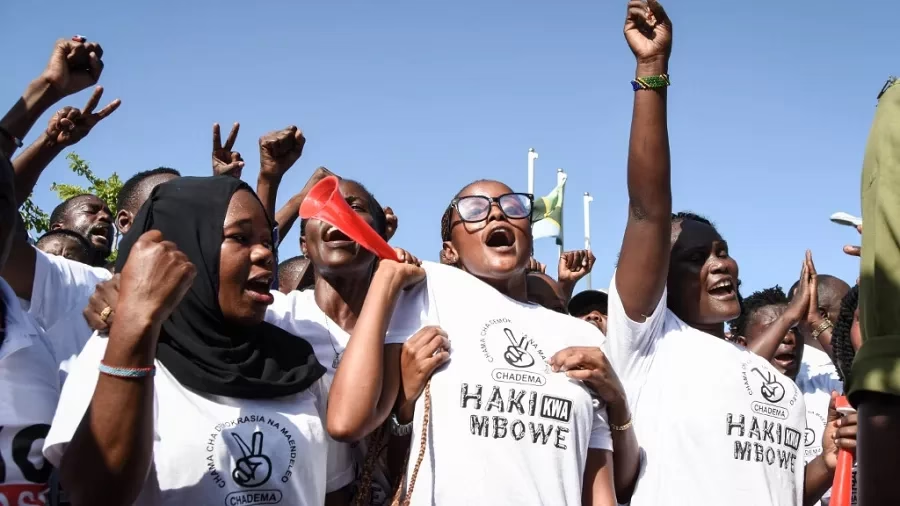
Tanzania implemented a multiparty policy in 1992, effectively ending the one-party system that had been established since independence. Since that time, Tanzania has conducted at least six general national elections under the multiparty framework, all of which have been predominantly peaceful. On October 29th, 2025, Tanzanians went to the polls to select their next president. Unlike previous elections, this one was marred by violence, with reports indicating that up to 3,000 individuals or more, primarily unarmed youths, were killed by the government during efforts to suppress peaceful protests. Once the turmoil subsides following the ongoing political crisis in Tanzania, political scientists, commentators, and analysts from across the globe will examine the circumstances, contemplating how the situation developed and how it went unnoticed. However, many religious leaders, civil society advocates, and patriotic politicians, consistently warned those in authority. Unfortunately, these warnings were disregarded. To begin with, here are several critical factors that have contributed to the tragic events that led to unnecessary loss of so many young lives in our beloved nation.
Suppression of Freedom of Expression
For many years, Tanzania has engaged in a systematic suppression of any news that criticized the government’s actions. Journalists have faced imprisonment, torture, acid attacks, or have been forced to flee the country. Media outlets have also endured severe government regulation, resulting in frequent suspensions and indefinite bans on newspapers that were critical of the government. Although this trend began nearly two decades ago, it intensified under former President Magufuli and the current Samia administration. Consequently, discussions about these issues have shifted from print media to whispers at dinner tables and in bars, where the government’s reach was insufficient to silence them. In instances where individuals posted content on social media that displeased the government, they often found themselves abducted or facing baseless charges and imprisonment. Numerous examples illustrate the victims of this excessive governmental control over the media. These include newspaper editors such as Messrs. Said Kubenea, Ndimara Tegambwage, and Absolom Kibanda, who suffered from past acid attacks, as well as Erick Kabendera, who was imprisoned for several years before fleeing the country after plea-bargaining on frivolous and unrelated charges. Additionally, Mr. Ansbert Ngurumo currently lives in political asylum outside the country. Many Tanzanians have witnessed these injustices and have reached a breaking point. The media has become untrustworthy, as everything reported must align with the government’s narrative, even when citizens are suffering due to poor government laws and policies. Their struggles have gone unnoticed, leaving them to fend for themselves without any assistance whatsoever. As if the situation weren’t already dire, the government – working hand in hand with parliament – enacted a sweeping cybersecurity law that effectively criminalizes free speech and independent journalism. Under this legislation, numerous journalists have been silenced or obstructed, leaving the media landscape dominated by outlets that no longer inform the public, but instead serve as echo chambers for government praise.
To worsen the situation, the government has started to target individuals who have voiced criticism regarding its policies or ineffective leadership. Over 195 individuals have been reported as abducted or have disappeared from their families without any accountability whatsoever. Political activists, local politicians, and some national politicians have gone missing, with a few bodies discovered days later; however, the government has displayed no interest in investigating or providing an explanation for these incidents. In certain instances, unmarked government vehicles have abducted individuals in broad daylight, only for the victims to be found dead a day or two later. A significant case is that of Tundu A. Lisu, the chairman of Chadema, who was shot 16 times in September 2017 yet remarkably survived. He spent more than three years in Belgium undergoing extensive treatments and surgeries before he recuperated and returned home to continue his leadership of the opposition. Another victim of this governmental brutality was Mr. Ali Kibao, the leader of the opposition party Chadema, a retired military officer who was forcibly removed from a public transport vehicle while returning to Tanga after a meeting in Dar es Salaam; his body was subsequently discovered in a forest two days later. Other notable Chadema party activists and leaders, such as Dioniz Kipanya and Mdude Nyagali, were also abducted within the past 12 months. While Dioniz Kipanya was taken by individuals who claimed to be Tanzanian Police and has never been found, Mdude Nyagali was forcibly taken from his home by unidentified people while he was asleep with his family, and he remains unaccounted for. Witnesses reported that he was beaten and injured prior to his abduction, as indicated by a trail of blood leading from his residence to a parked car that drove away with him. Additionally, a young man named Deusdedit Soka was called to a police station to retrieve his motorbike in broad daylight. He brought two friends for support, yet neither he nor his friends have been seen since. This series of events transpired between September 2024 and May 2025. Recently, Mr. Humphrey Polepole, a former Tanzanian Ambassador to Cuba and a vocal critic of Samia Suluhu, was abducted from his home in Dar es Salaam, and he has not been located to this day. These incidents have created a climate of fear, leaving individuals uncertain about whom to trust or what to express, as no one knows who might be listening or who could be the next victim to vanish.
Compromised Judicial System
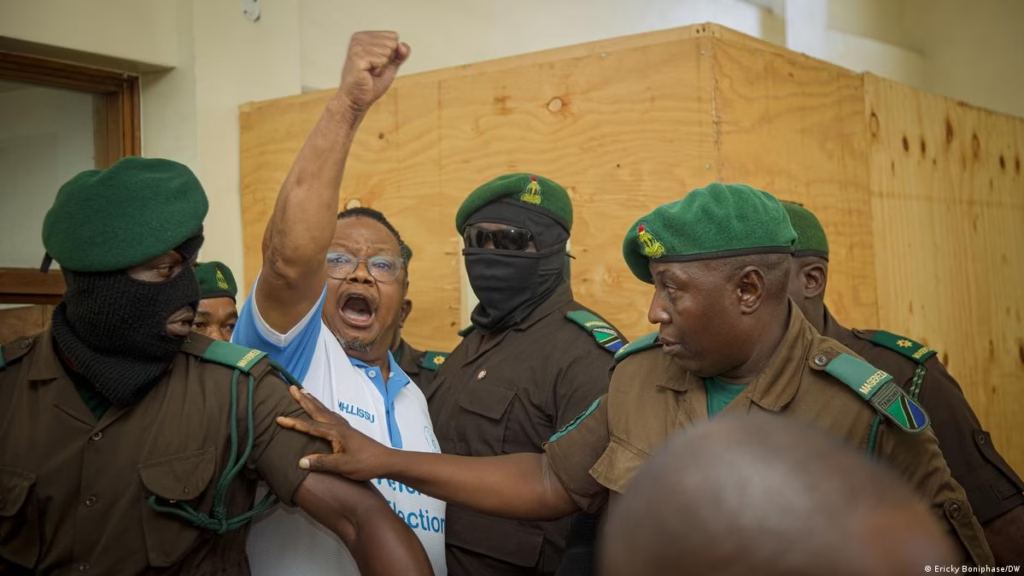
The Tanzanian judicial system has in the last 10 years become a laughingstock of the world. Most of the judges have been unable to render justice for fear of facing government wrath. The situation has gotten so bad to the extent that the major opposition parties decided not to contest any of the local elections in court because they wouldn’t get any justice. Baseless and trumped charges against politicians from opposition parties or any vocal critics of the government have been allowed to go on for years without ruling. In some cases, government prosecutors have dropped the charges only to arrest the same people outside the courts and bring new charges. The courts have become a charade to appease political class in government and have been used as a steppingstone for Police officers and government lawyers to get presidential appointments for their covered higher positions within the government. The politicization of justice system has gotten to the point that some people would trust setting their disputes outside the curt rather than go through the judicial system to get justice. This has left a lot of Tanzanians in a hopeless situation as government officials continue to behave with negligence with little or no regard for rule of law. A flawed judicial system discourages credible investors, resulting in high youth unemployment, which is significant since youths constitute 70% of the population.
Fraudulent Elections and Political Manipulations
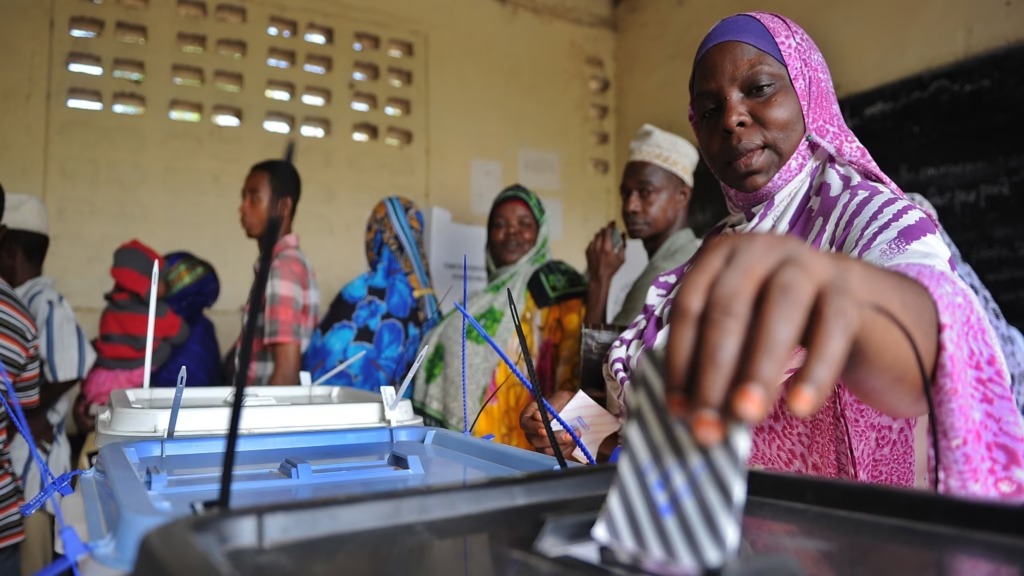
Tanzania conducted its inaugural multiparty elections in 1995. From that point until 2010, most Tanzanians perceived that the opposition parties had made considerable progress as they worked to erode the ruling party’s power. The composition of the parliament reached a stage where at least 20 percent of its members were from opposition parties, and these politicians played a crucial role in holding the government accountable by exposing various corruption schemes involving politicians and government officials. The year 2015 witnessed the most substantial increase in opposition party representation within the parliament and local government. Following this, the ruling party initiated a campaign to undermine the opposition’s political achievements by resorting to election theft, bribing politicians from opposition parties, restricting their contributions in parliament, and employing numerous guerrilla tactics to stifle opposition politics. By 2020, the elections were predominantly unfair, with extensive cheating implemented to prevent opposition parties from gaining traction in local and national politics. These new strategies to suppress opposition parties persisted under Samia Suluhu’s leadership during the 2024 local elections and the national election scheduled for October 29, 2025. Samia had professed a commitment to honoring the people’s will, yet he ensured that opposition parties would never have a fair opportunity, resorting to police intimidation, manipulating election laws to disqualify opposition parties from standing for election, and employing various other unscrupulous tactics. Consequently, the public has come to view these elections as a sham and a futile endeavor. The youth have grown weary and no longer wish to participate in this electoral farce. Chadema, which has long been the principal opposition party, has called for reforms that have been outright dismissed by President Samia and her party stalwarts. Anticipating an unfair electoral process, Chadema opted to boycott the elections, with their supporters echoing their leaders’ sentiments, asserting that they would only participate if there were fundamental reforms to guarantee free and fair elections. These conditions contribute to a situation where parliamentary members are often selected based on personal connections rather than expertise or knowledge. As a result, this gave rise to what is locally described as “Chawa” refers to politicians who act like parasites, who flat others to gain positions and exploit national resources.
Deepening Government Corruption
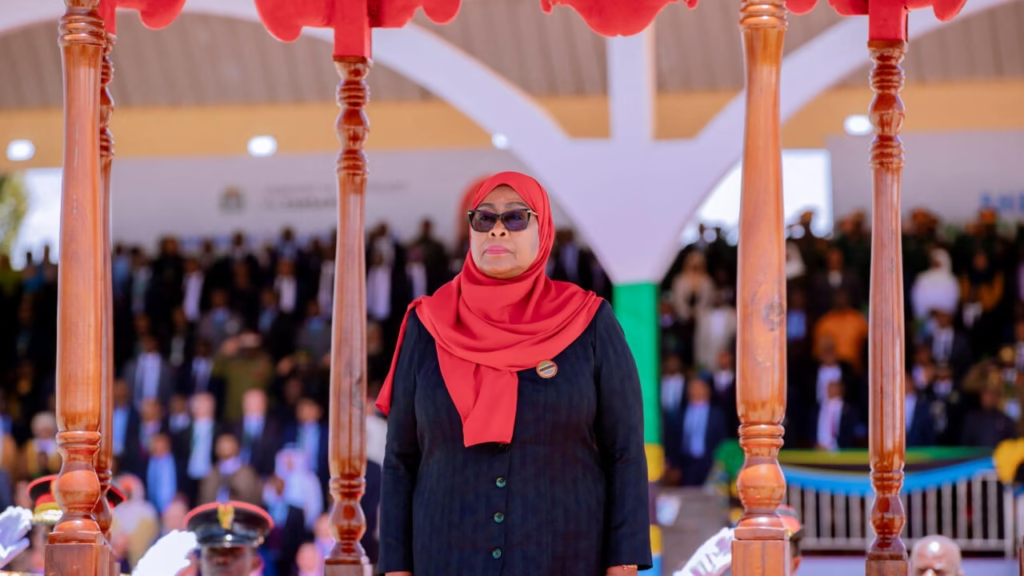
Since President Samia assumed power in March 2021, there has been a notable increase in corruption scandals involving Tanzanian government officials. A growing class of these officials has been misappropriating government funds without facing any consequences, while most impoverished Tanzanians struggle to secure even a single meal each day. These officials frequently travel abroad for family shopping and vacations, while farmers are unable to obtain fertilizer for their crops, hospitals operate with empty shelves devoid of medication, and doctors, teachers, and military personnel go unpaid for extended periods. To exacerbate the situation, these government officials flaunt their extravagant lifestyles on social media, inciting anger among many Tanzanian youths who are unable to find employment, as well as families with sick relatives who cannot access the medical services they desperately require. The way the Government of Tanzania entered into a lease agreement to transfer control of all its domestic ports to a UAE company named DP World has provoked significant outrage among Tanzanians. In Ngorongoro Arusha, the Masai people were forcibly removed from their ancestral lands to facilitate the construction of tourist hotels and accommodate game hunters, following substantial investments from a UAE business magnate. Most Tanzanians believe that corruption was the reason their land and their ports were handed over to foreigners and the lease agreements have been kept secret by their government.
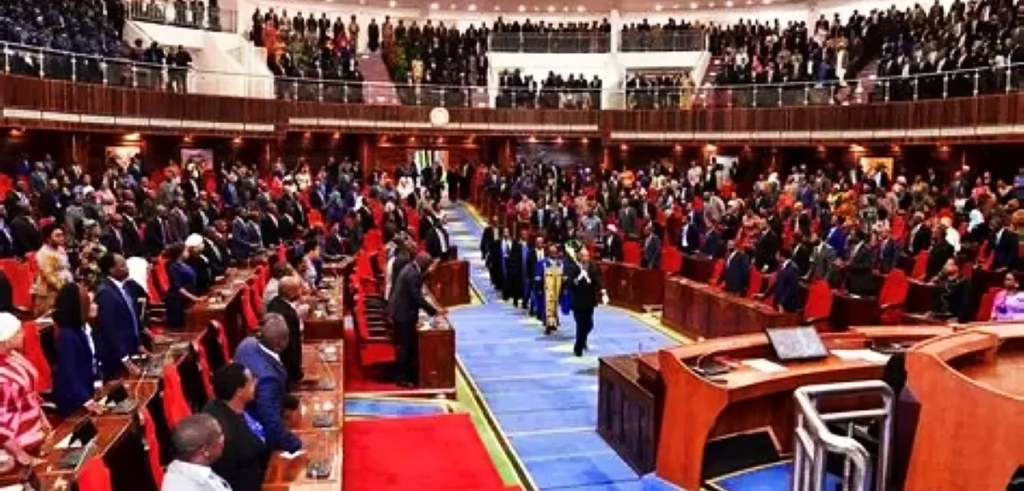
Furthermore, since taking office, President Samia has also neglected her crucial responsibility to address the Controller and Auditor General (CAG) Annual accounting reports, which reflect the level of financial accountability within the government regarding various projects and policy priorities. For four consecutive years, these reports have not been discussed in the Tanzania General Assembly (Parliament), where citizens previously monitored these discussions and observed the government acting against corrupt officials. Throughout her tenure, these reports have devolved into a mere routine exercise without any consequences, further infuriating Tanzanians as they witness the squandering of their resources. As if to endorse the corruption within the government that she oversees, she was once quoted advising her ministers not to be overly extravagant in their misuse of government resources, but rather to “eat according to the length of their ropes.” This statement was interpreted as a tacit approval for government officials to engage in corrupt practices, provided they do not do so excessively.
The Youth Unemployment Crisis
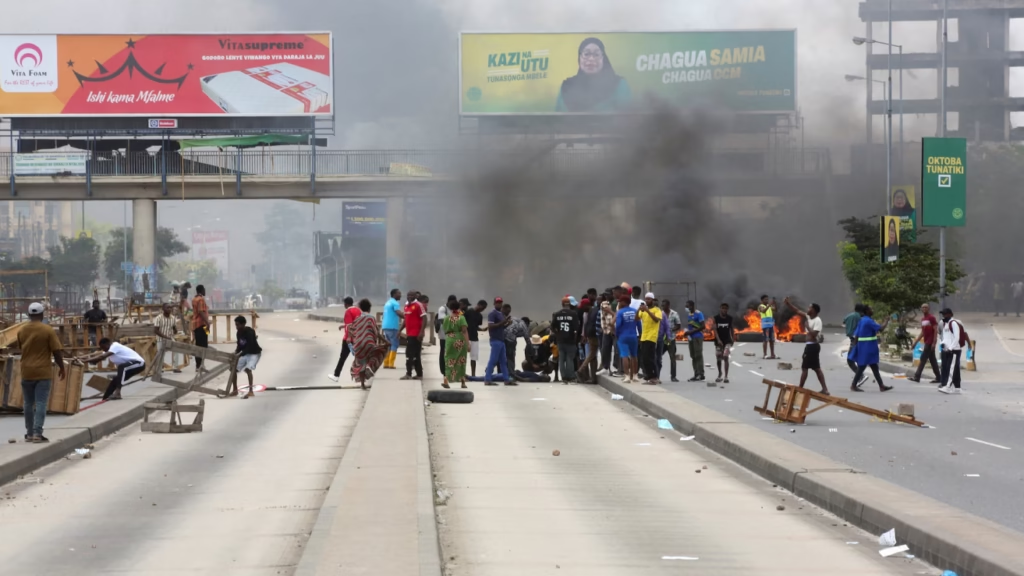
For many years, youth unemployment has been an escalating national issue. The government of Tanzania, particularly under President Samia, has persistently overlooked this challenge, hoping it will resolve itself. Numerous youths graduating from colleges and high schools are unable to secure employment. Young individuals with college degrees are spending as much as four years in search of a job, with some having given up entirely. A recent job announcement by the Tanzania Revenue Authority (TRA), which sought to recruit 1,500 individuals, attracted over 40,000 applications. The unemployment crisis in Tanzania is severe. The ruling elite and politicians have failed to confront this issue directly. Some initiatives aimed at assisting youths in starting agricultural projects have become mired in politics, deceit, and political favoritism. Securing any job opening often necessitates possessing strong political connections. These opportunities are less about identifying suitable candidates and more about having the most advantageous political ties. Unsurprisingly, only those affiliated with the ruling Chama cha Mapinduzi find it somewhat easier to obtain these positions, while most other youths struggle to find work. This situation has incited anger among the youth. In a few instances where some have attempted to become self-employed, the government has responded with a heavy hand, imposing maximum taxes on them. Recently, youths who showcase merchandise on their social media platforms in hopes of selling products to potential customers and earning a commission from merchandise owners have also been mandated to pay taxes on their commissions. This has exacerbated their struggles and fueled their resentment towards a government that appears indifferent to their plight. Due to their discontent with the government, they believe their only recourse is to make their voices heard through demonstrations, demanding the resignation of the current administration.
Silencing of Religious and Moral Voices
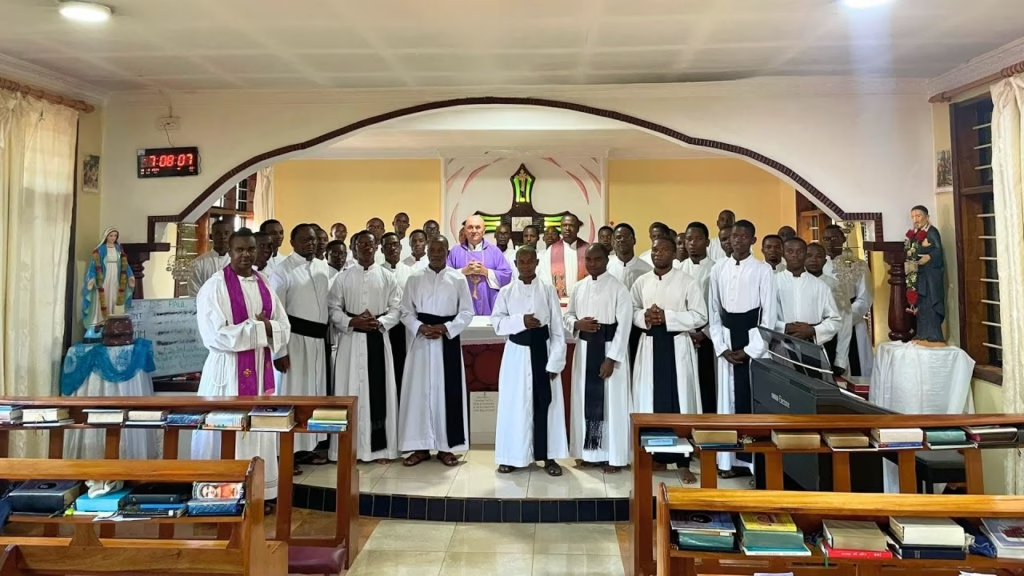
Political veterans and religious leaders have consistently occupied a prominent place in the hearts of Tanzanians. These individuals are often viewed as truth tellers and reservoirs of wisdom from which those less fortunate can seek advice, counseling, and guidance. Given their influence, these figures have also been skilled at interpreting the political landscape in Tanzania, and government leaders have regularly depended on them to assess public sentiment concerning various national and local policies. However, in recent years, this group has encountered neglect and mistreatment. Their counsel has frequently been overlooked, and whenever they have persistently cautioned the government, they have faced threats to silence them. A prominent example is Fr. Kitima of Dar es Salaam, who also holds the position of Secretary General of the Tanzanian Episcopal Conference of Catholic Bishops (TEC). Fr. Kitima has been an outspoken critic of recent government policies and actions, and instead of the government taking his advice into account, they chose to send thugs to intimidate him. A few months ago, while at his home, he was attacked by thugs believed to be supporters of the ruling Chama cha Mapinduzi (CCM) party, resulting in serious injuries and leaving him for dead. Fortunately, some good Samaritans came to his rescue, and he was taken to the hospital, where he stayed for several weeks before being discharged to continue his recovery at home. Another Catholic priest, who is a lecturer at one of the local Catholic universities in Mwanza, was kidnapped and found nearly seven days later in a forest without food or water. He has since been receiving medical treatment at Catholic Church hospitals. Others, including Bishop Benson Bagonza of the Karagwe Lutheran Church, have experienced intimidation because of their candid criticisms of the ruling party. Certain local churches have also been shut down after their preachers cautioned that the abductions were steering the nation into uncharted territories, urging the government to clarify the whereabouts of the abduction victims. Bishop Joseph Gwajima, the leader of the Glory of Christ Tanzanian Church, has recently been very vocal regarding the government’s management of missing persons. Due to his outspoken nature, Bishop Gwajima has faced repercussions, as over 2,000 of his congregations were ordered to be closed by the government. This represents the vindictive approach the government has adopted to silence him, rather than addressing the concerns of abducted individuals and their families. Former Prime Minister Joseph Sinde Warioba has also faced intimidation and has been publicly ridiculed by the youth wing of the CCM party due to his opposition to the current political climate in Tanzania.
President Samia Suluhu’s Leadership
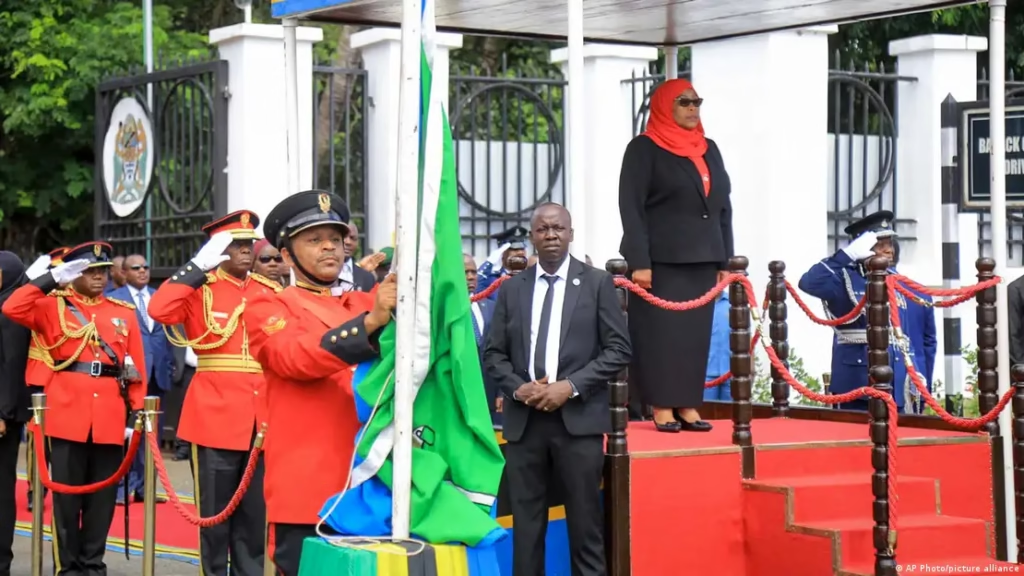
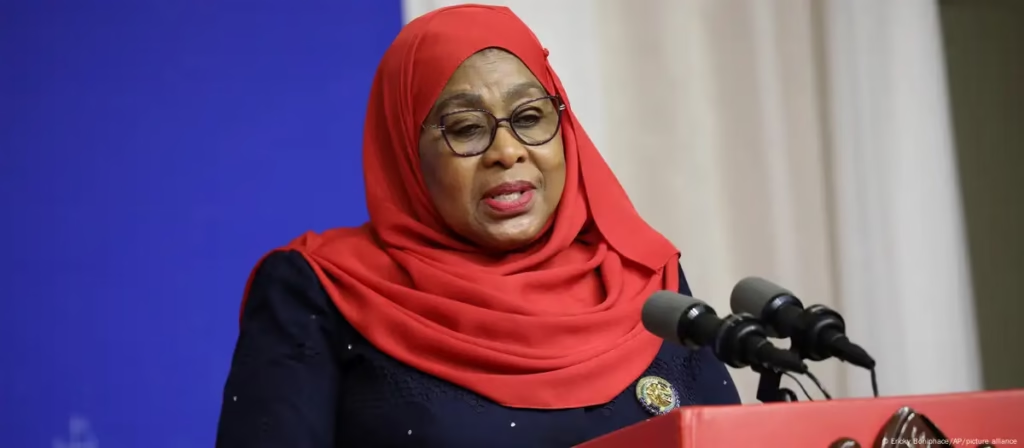
Let us face the truth! Samia Suluhu has proven to be the ineptest president among her five predecessors that the nation has known. For numerous Tanzanians, President Samia Suluhu’s rise to power was more about having a woman on the CCM presidential ticket than a deserving political elevation to power. Regrettably, following the death of President Magufuli, she assumed the role of de-facto president in accordance with the current Tanzanian constitution. Originating from Zanzibar, which had a population of fewer than 1.5 million at that time, she transitioned from the vice presidency to the presidency of Tanzania—a country with over 60 million inhabitants. The intricacies of the United Republic of Tanzania’s government exceed her understanding. She has assembled a group of young ministers, most of whom are ambitious yet lack patriotism and are deeply corrupt. Under her leadership, she has failed to establish any significant ethical standards within the government. Furthermore, she has permitted herself to be influenced by a network of corrupt politicians and businessmen who were expelled during President John P. Magufuli’s administration. Consequently, she has come to embody the very vices that President J.P. Magufuli endeavored to eradicate from the government, which had inspired hope in millions of Tanzanians. Due to her excessive tolerance for corrupt politicians and businessmen, she has been remarkably ineffective in addressing the issues posed by some of her ministers who are corrupt and have displayed gross incompetence. She consistently prefers to be called a mother, a title that those under her leadership interpret as a license to act irresponsibly without consequences, under the belief that a mother would never impose strictness on her wayward children. As a result of her ineptitude, she has been utterly incapable of assembling a team that effectively delivers results for the Tanzanian populace. Consequently, disillusioned Tanzanians, particularly those who experienced positive transformations during Magufuli’s administration, have come to understand that their lives could significantly improve if the nation were led by a competent president. As a Zanzibari, some have contended that she lacks genuine concern for mainland Tanzania, which is home to over 59 million Tanganyikans. Some Tanganyikans now feel that they are under the occupation of Zanzibaris, as she has appointed numerous individuals from Zanzibar to key positions to secure her ongoing governance and the exploitation of Tanganyika’s resources.

The Rise of Sycophantic Influencers
In recent years, the people of Tanzania have observed the emergence of individuals known as bootlickers, commonly referred to as ‘chawa,’ which translates to leeches. These individuals are part of the entourages of numerous local politicians, and their primary role is to extol and venerate these politicians, even in the face of their errors. Often lacking in moral integrity, these sycophants are perceived by society as failures, except for their talent in flattering the egos of politicians, which in turn allows them to earn a living. Many of these sycophants are known for their coarse language, social insensitivity, and disconnect from the hardships faced by the populace, making it challenging for Tanzanians to regard them favorably. Furthermore, alongside these bootlickers are local celebrities who willingly permit themselves to be exploited by the ruling class to further their political objectives. There is a notable absence of sympathy within Tanzanian society for these individuals, and they have significantly contributed to the growing frustration among Tanzanians who are demanding change.
Police Brutality and Lawlessness
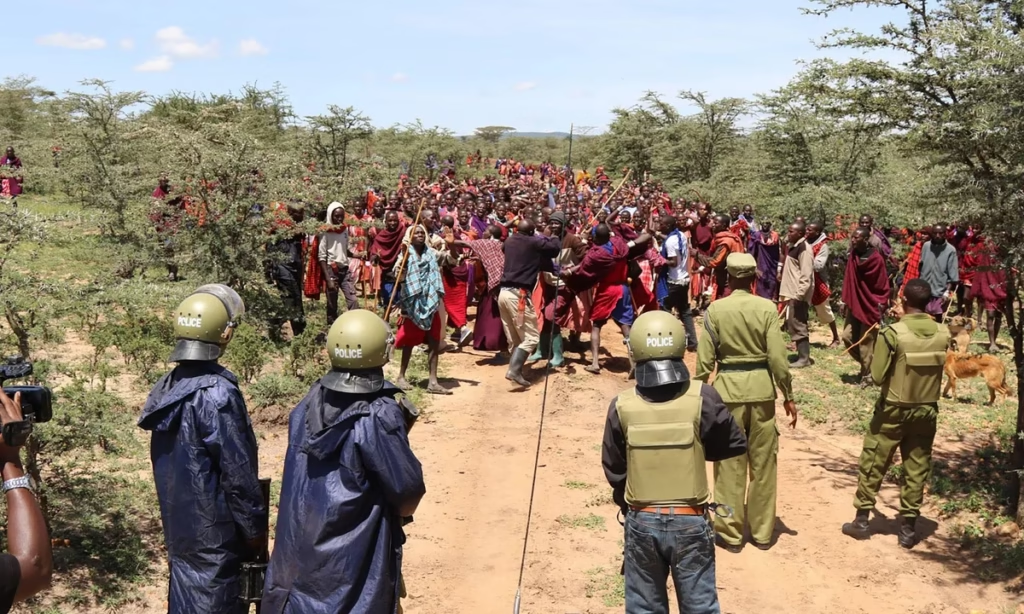
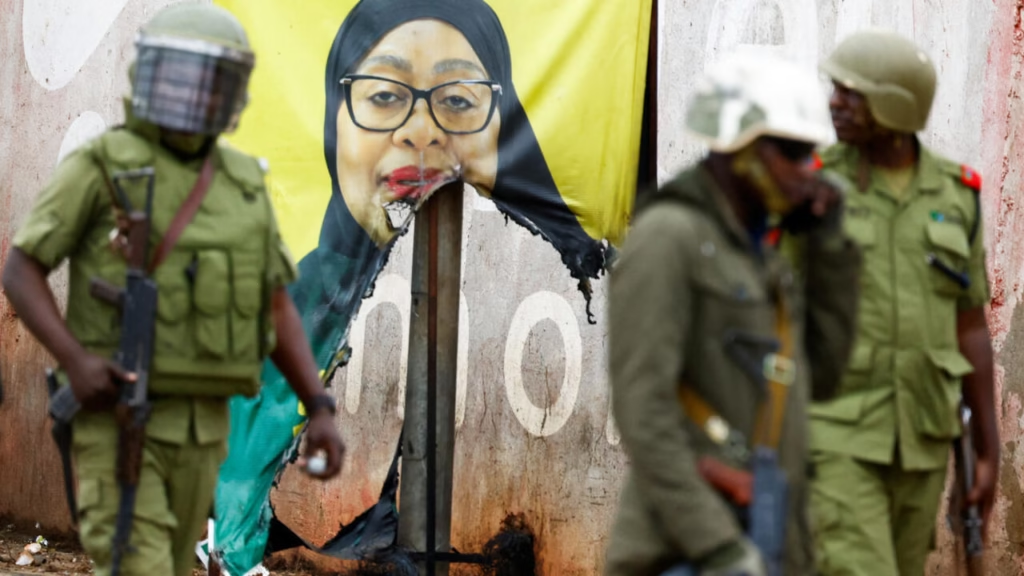
Security forces operate without accountability, quelling protests through unlawful arrests, torture, and intimidation. Citizens live in a constant state of fear, uncertain of whom to trust. Law enforcement has shifted its focus to political interests rather than public safety, fostering a culture of oppression that defines this dark chapter in Tanzanian history. In recent years, alarming reports have emerged of the Tanzanian Police assaulting law-abiding citizens both in court and outside court premises, documented by witnesses and widely shared with hundreds of thousands of people. The establishment of ruthless special units within the Police force, reportedly accountable only to a select few in the president’s inner circle, has been noted. These police units appear to operate above the law and maintain torture facilities throughout the country. Many victims of enforced disappearance are believed to have been abducted, tortured, and killed by these brutal police forces. Some survivors of these tortures have identified certain individuals within the police force as directly responsible for their suffering. However, no charges have been filed to hold these individuals accountable, and when human rights activists have presented their evidence to Tanzanian courts, it has been dismissed to protect these powerful figures within the police force from facing justice.
Conclusion
Tanzania’s transformation from a beacon of peace and democracy into an authoritarian regime is the cumulative outcome of pervasive corruption, deterioration of the judiciary, suppression of free expression, and ineffective leadership. Unless comprehensive reforms are implemented to reinstate the rule of law, accountability, and civic liberties, Tanzania faces the danger of forfeiting its sovereignty along with the regional influence it has cultivated for years since the era of its inaugural president and founding father, the late Mwl. Julius K. Nyerere. It would be a profound disappointment to allow this tranquil gem of Africa to descend into prolonged instability.
WRITTEN BY:
Joseph Mtalae, PhD(@Josephdon20)


