
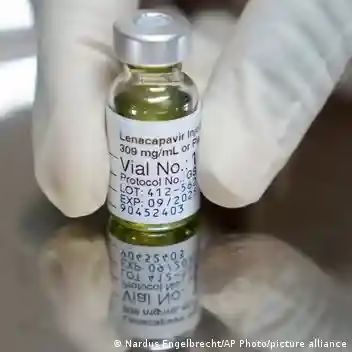

Eswatini on Tuesday became the first African nation to receive lenacapavir, a twice-yearly HIV prevention injection hailed as a potential game-changer in the fight against the virus that has claimed tens of millions of lives across the continent. Developed by Gilead Sciences, lenacapavir showed near-total protection in clinical trials. Its rollout in Africa is part of the U.S. President’s Emergency Plan for AIDS Relief (PEPFAR) in partnership with the Global Fund, with an initial plan to reach 10 high-risk African countries and benefit at least 2 million people by 2027.
Eswatini, a small kingdom with roughly 1.2 million people, over 200,000 living with HIV, and the highest HIV incidence rate in the world will provide the drug to approximately 6,000 high-risk individuals, focusing on preventing mother-to-child transmission. Daniel O’Day, CEO of Gilead Sciences, called the rollout “extraordinary,” noting that this marks the first time a new HIV medicine reaches sub-Saharan Africa the same year it was approved in the U.S., where it gained regulatory clearance in June 2025. Zambia also received its first shipment Tuesday, while Gilead seeks approvals in Botswana, Kenya, Malawi, Namibia, Rwanda, Tanzania, Uganda, and Zimbabwe. The U.S. initially planned 250,000 doses this year, later increased to 325,000 due to high demand. Over 25 million Africans currently live with HIV, making the new injection a critical addition to prevention tools.
The World Health Organization approved lenacapavir in July 2025, and UNAIDS has called long-acting injectables a “fresh option” amid concerns that foreign aid cuts could worsen infection rates. South Africa plans its own rollout in April 2026, with Health Minister Aaron Motsoaledi praising the drug’s effectiveness but warning of limited supplies. He also welcomed Gilead’s steep price reduction from $28,000 annually in the U.S. to around $40 in low-income countries. Civil society groups have criticized Gilead for excluding African manufacturers from licensing agreements, despite the region’s role in clinical trials. Eswatini’s participation underscores both the promise of long-acting HIV prevention and the ongoing debates over access, pricing, and manufacturing rights in Africa.


