


Guinea-Bissau’s presidential race took a dramatic turn on Tuesday as both leading candidates—incumbent President Umaro Sissoco Embaló and opposition contender Fernando Dias—declared victory ahead of the official results. Dias’ campaign was the first to claim a win, saying early tallies showed he held a decisive lead. His bid has been strengthened by support from the African Party for the Independence of Guinea and Cape Verde (PAIGC) and former Prime Minister Domingos Simões Pereira, whose own candidacy was rejected by the electoral commission on procedural grounds.
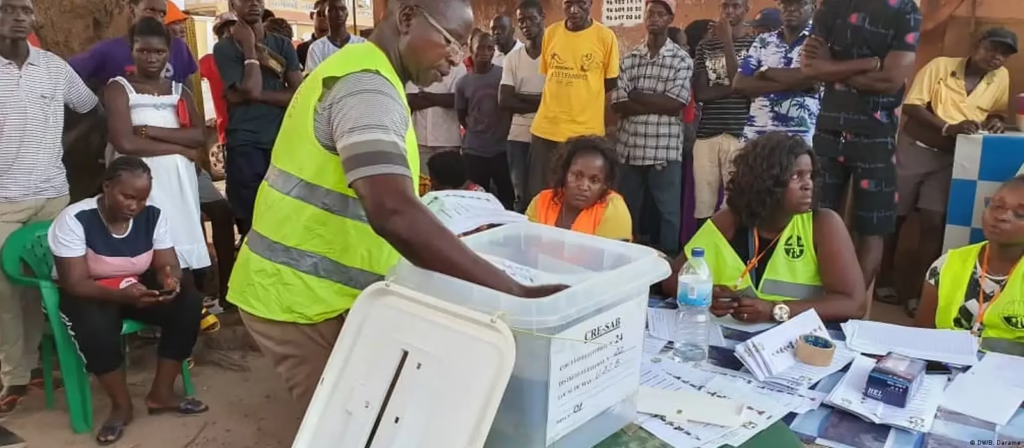
Hours later, Embaló’s team countered with its own declaration, insisting the president had secured more than 50% of the vote, enough to avoid a runoff. Local media reported that final official results were expected later on Tuesday. The conflicting claims have heightened political uncertainty in the small West African nation, long vulnerable to instability and military intervention. Guinea-Bissau has experienced multiple coups and attempted coups since independence, and observers fear the competing announcements could inflame tensions.
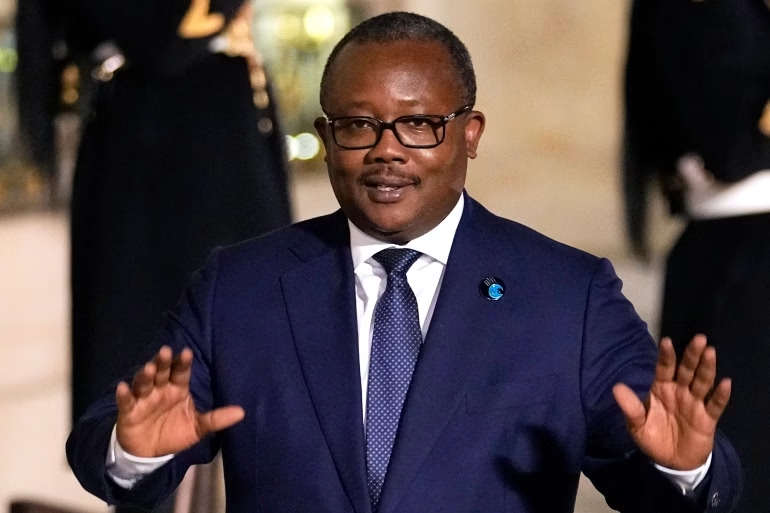
This election has been among the most contentious in recent decades, largely due to the exclusion of the main opposition party from the presidential ballot—a decision critics say undermined transparency and fairness. If Embaló is confirmed as the winner, he would become the first Guinean leader in nearly 30 years to win a second consecutive term.


