
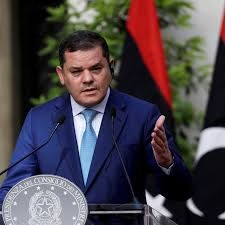

Libya’s Prime Minister, Abdulhamid Dbeibah, announced a reshuffle of his UN-backed government on Thursday, aiming to enhance efficiency and overcome regional divisions. Dbeibah will retain control of the defence and foreign affairs ministries, while roughly 10 of the 27 cabinet positions have been replaced. The reshuffle comes amid ongoing political fragmentation: Libya has two rival administrations, the UN recognized government in Tripoli led by Dbeibah and a parallel government in Benghazi under military commander Khalifa Haftar.
Relations between Dbeibah and key officials, including Mohamed el-Menfi, the representative for Libya’s three regions, and Mohamed Takala, head of the High State Council, had been tense due to disputes over the allocation of posts among western, southern, and eastern regions. Both Menfi and Takala attended the first cabinet meeting of the year following the reshuffle.
According to Libya’s government website, the reshuffle’s purpose is to improve “state performance.” Dbeibah emphasized on social media that the changes aim to “accelerate the delivery of services to citizens,” rather than being made for their own sake. The cabinet continues to have limited female representation, with only Randa Ghareb serving as minister for women’s affairs. Libya has struggled with political instability since the fall of strongman Moamer Kadhafi in 2011, and the latest cabinet reshuffle reflects ongoing efforts to stabilize governance amid persistent regional and political tensions.


