
Guinea-Bissau’s military-led transitional government has announced that a constitutional referendum will be held on August 30, asking citizens to vote on sweeping reforms that would significantly expand the powers of the country’s president. The proposal, announced in a decree issued on Monday, would replace Guinea-Bissau’s parliamentary system with a presidential model, marking a major shift in the country’s political structure. If approved, the new constitution would empower the president to appoint the prime minister and cabinet ministers, as well as dissolve parliament powers that are currently limited under the existing system.
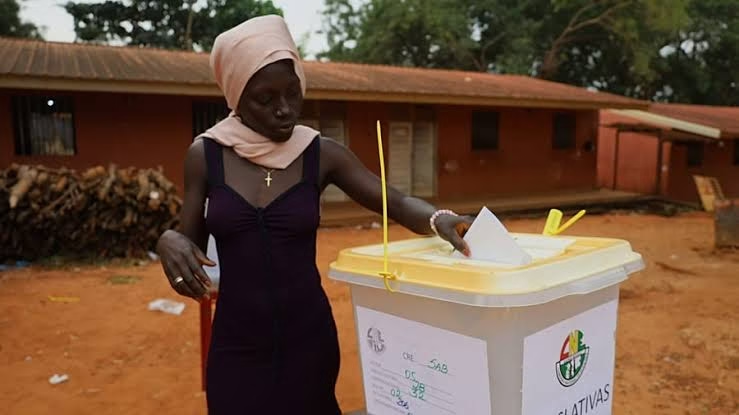
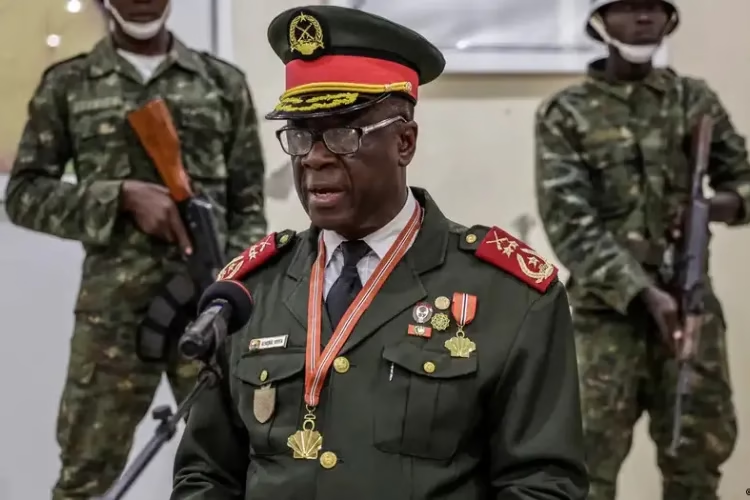
The referendum follows the military takeover in November 2025, when the armed forces seized power just days after a presidential election, ousted then-President Umaro Sissoco Embaló and suspended the electoral process. Military authorities have scheduled fresh elections for December 6 as part of a transition back to civilian rule. However, voters will first decide whether to endorse the proposed constitutional changes before electing a new government. The transitional administration has previously stated that interim leader General Horta N’Tam will not contest the presidential election, a move intended to reassure both domestic and international observers about the transition process.
Guinea-Bissau has experienced chronic political instability since gaining independence from Portugal in 1974, with at least five successful military coups and numerous attempted takeovers. Frequent political disputes between presidents and coalition governments have often hampered governance and institutional stability. Supporters of the constitutional reform argue that a stronger presidency could improve government efficiency and reduce prolonged political deadlock. Critics, however, warn that concentrating executive authority in the presidency could weaken democratic checks and balances. The referendum is expected to be a defining moment for Guinea-Bissau’s political future as the country seeks to restore constitutional order after months of military rule.