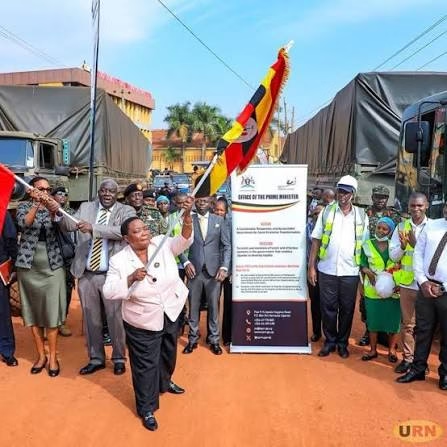

Uganda has launched an emergency food relief programme for the drought-stricken Karamoja region, where prolonged dry conditions have caused widespread crop failures and intensified hunger among vulnerable communities. The government announced that more than 313,000 households across nine districts will receive food assistance under a 9.4 million-kilogram relief package containing maize flour and beans. Prime Minister Robinah Nabbanja said the intervention is aimed at supporting families whose food reserves have been severely affected by the extended dry spell. She directed local authorities to ensure the supplies reach the most vulnerable households quickly and transparently. The relief effort comes after authorities reported that 16 people had died from severe food shortages earlier this month, highlighting the growing impact of drought and food insecurity in the northeastern region.
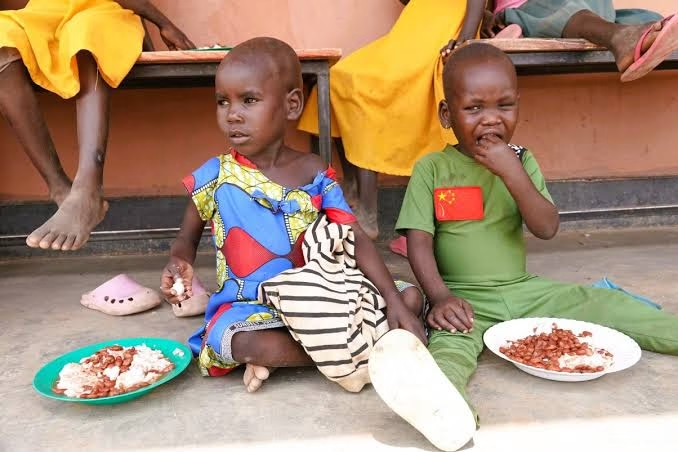
Karamoja, one of Uganda’s poorest areas, regularly faces climate-related challenges, including drought, limited agricultural productivity and livestock losses. Many communities depend heavily on subsistence farming and pastoralism, making them particularly vulnerable to prolonged dry periods. Beyond emergency assistance, the government says it is implementing longer-term measures to improve resilience, including strengthening agricultural production, supporting alternative livelihoods and developing strategies to help communities better cope with future climate shocks. Officials say the immediate priority remains preventing further loss of life while ensuring affected families have access to basic food supplies during the ongoing crisis. The humanitarian response in Karamoja reflects broader concerns across East Africa, where changing weather patterns and repeated droughts continue to threaten food security and rural livelihoods.