
The Executive Director of UNAIDS, Winnie Byanyima, has called for a fundamental shift in how African countries finance healthcare, urging governments to reduce their dependence on foreign aid and invest more in building resilient, self-sustaining health systems. Speaking at the African Union Health Summit in Accra, Ghana, Byanyima said recent cuts in international development assistance by major donors, including the United States and several European countries, have exposed the vulnerability of Africa’s health sector and underscored the need for greater domestic investment. Byanyima revealed that UNAIDS lost approximately 25 percent of its funding last year, warning that the era of relying heavily on external financing for critical health programmes is coming to an end.
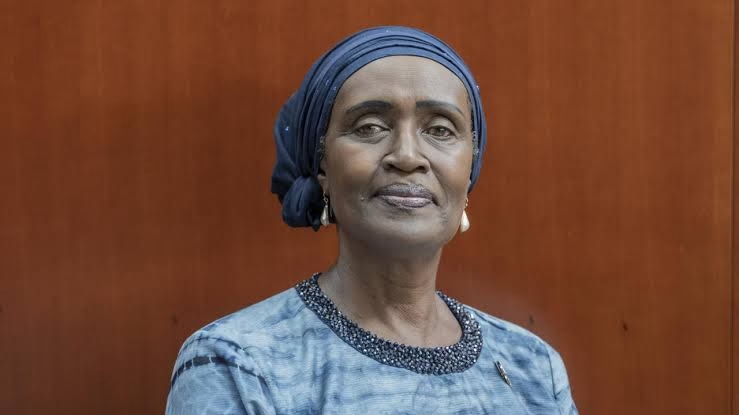
She called on African governments to increase national health budgets, prioritize healthcare in public spending, strengthen local pharmaceutical manufacturing and work toward achieving what she described as “health sovereignty”, the ability of countries to independently finance and manage their healthcare systems. According to UNAIDS, sub-Saharan Africa remains the region most affected by the HIV epidemic. The region accounts for nearly two-thirds of all people living with HIV worldwide and recorded about 60 percent of new HIV infections globally last year, highlighting the continued need for sustained investment in prevention, testing and treatment programmes. Byanyima also expressed concern that increasingly restrictive laws affecting LGBTQ communities in several African countries are discouraging vulnerable populations from accessing HIV prevention, testing and treatment services.
She warned that stigma, discrimination and criminalization are pushing many people away from healthcare facilities, threatening to reverse decades of progress made in reducing HIV infections and AIDS-related deaths across the continent. Health experts attending the summit emphasized that strengthening domestic financing, expanding local vaccine and medicine production and improving primary healthcare systems will be critical to achieving universal health coverage and reducing Africa’s dependence on international aid. Byanyima concluded that Africa’s long-term health security will depend on sustained political commitment, increased domestic investment and regional collaboration to ensure quality healthcare remains accessible even as global donor funding declines.