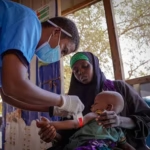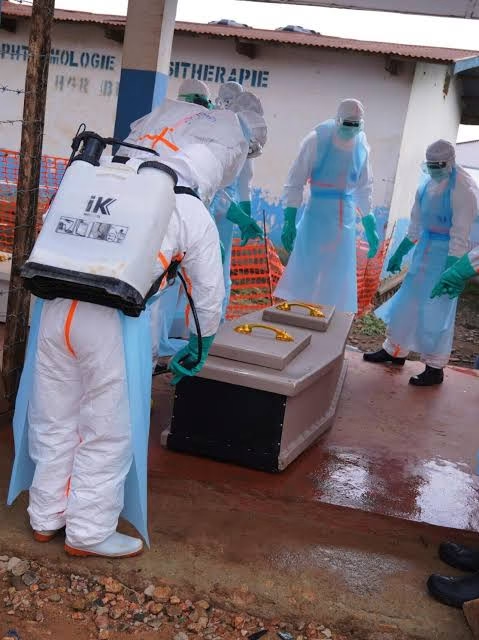

The Ebola outbreak in the Democratic Republic of Congo (DRC) has killed more than 2,000 people, making it the country’s second-deadliest Ebola outbreak and one of the fastest-growing recorded. Health authorities reported 4,381 confirmed cases and 2,011 deaths as of August 11, with infections recorded across five provinces. The outbreak, declared in May, is caused by Bundibugyo virus, a less common Ebola species for which there is currently no approved vaccine or virus-specific treatment. The scale of the outbreak has increased rapidly, although health officials caution that part of the recent rise reflects expanded testing and surveillance. The World Health Organization reported 2,124 confirmed cases and 828 deaths by July 15, illustrating the sharp increase in reported infections and fatalities since then.
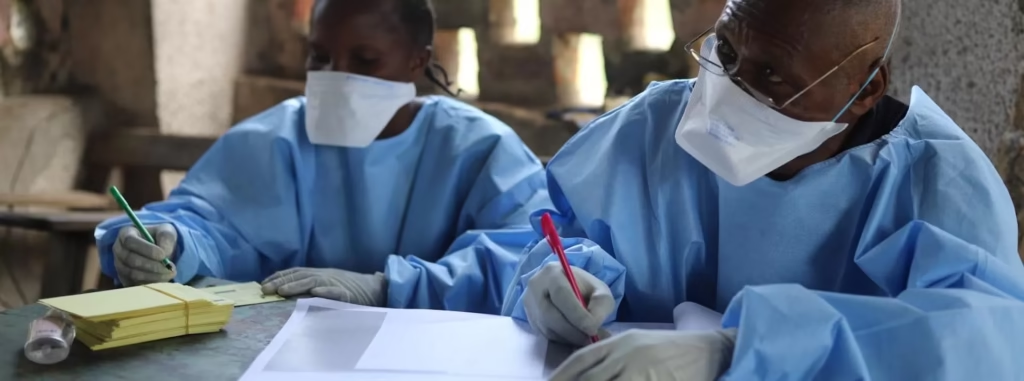
The outbreak began in Ituri Province, where insecurity, population movement and limited healthcare capacity have complicated efforts to identify cases and trace contacts. It has since spread to North Kivu, South Kivu, Haut-Uele and Tshopo. Genetic analysis has also provided important clues about the outbreak’s origins. Early sequencing indicated that the virus was most consistent with a new zoonotic spillover event, rather than a continuation of transmission from an earlier outbreak. The specific animal source has not been identified.
The WHO declared the outbreak a Public Health Emergency of International Concern in May, while Africa CDC classified it as a continental public health emergency. Uganda has also recorded infections linked to cross-border transmission from the DRC, although no new Ugandan cases have been reported since June 21. Health workers continue to face major obstacles, including insecurity, difficult access to affected communities, limited resources and mistrust. Authorities are relying on surveillance, laboratory testing, isolation and supportive medical care to slow transmission. With the outbreak still active, officials say sustained surveillance and international support will be critical to bringing the epidemic under control and preventing further regional spread.