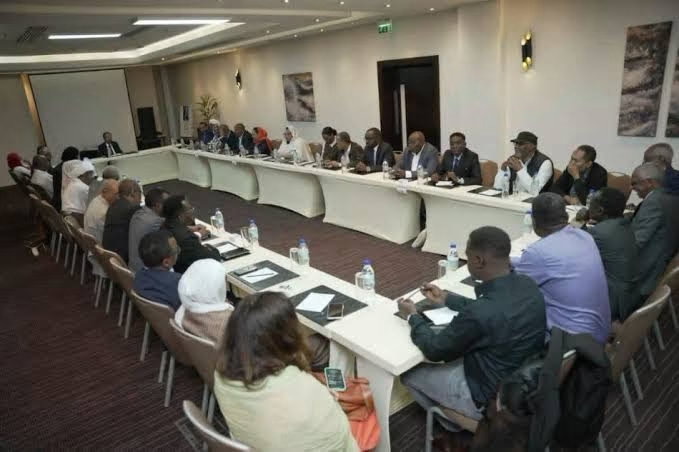

Sudanese political parties and civil society organizations opposed to the country’s war have rejected General Abdel Fattah al-Burhan’s proposed national dialogue, saying the initiative cannot deliver peace while fighting continues. The groups made their position clear at a major meeting in Addis Ababa, where representatives from political movements, former officials and civil society organizations discussed possible pathways to ending Sudan’s conflict. Participants said they would not take part in the proposed dialogue or recognize its outcome, arguing that the process lacks the conditions needed for a credible political settlement.
Former Prime Minister Abdalla Hamdok stressed that ending the fighting must come before any meaningful political dialogue. The participants also criticized the exclusion of the Rapid Support Forces (RSF), led by General Mohamed Hamdan Dagalo, known as Hemedti, from Burhan’s proposed process. Sudan has been at war since April 2023, when fighting erupted between Burhan’s Sudanese Armed Forces and the RSF following a power struggle over the country’s political transition. The conflict has killed tens of thousands of people, displaced millions and created one of the world’s worst humanitarian crises. Opposition groups accused Burhan of attempting to use the dialogue to strengthen his political legitimacy following the October 2021 military coup, which ended Sudan’s civilian-led transitional government.
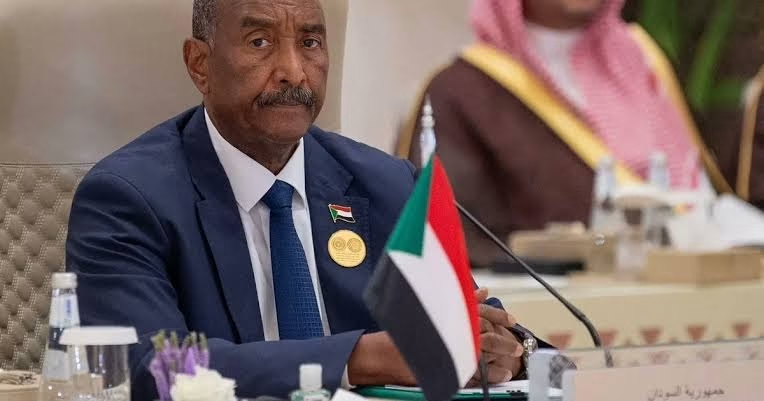
They also warned that holding a political process without addressing the war could deepen divisions between Sudanese communities and rival political and military camps. The Addis Ababa meeting included representatives linked to the National Congress Party, the Umma movement, the Summud coalition and Sudanese civil society organizations. While the groups differ politically, participants said ending the war and establishing a civilian-led political process should be central to any future settlement. The rejection adds another obstacle to efforts to create a unified political framework for ending Sudan’s war. International mediators have repeatedly called for an immediate ceasefire and an inclusive political process, but negotiations have so far failed to produce a lasting end to the fighting.