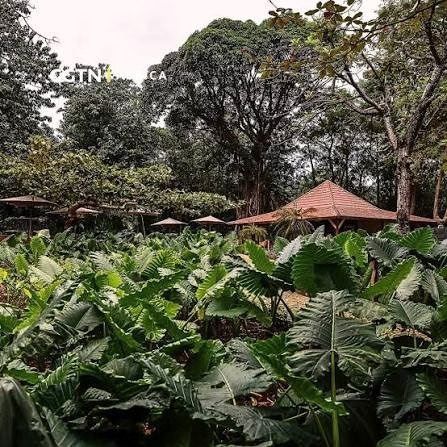

The historic plantation estates of São Tomé and Príncipe are receiving renewed attention after six former roças were added to the UNESCO World Heritage List, opening new possibilities for preservation and heritage tourism. The estates, including the Sundy plantation on Príncipe Island, were built during Portuguese colonial rule and became the center of a major agricultural economy based first on sugar and later on cocoa and coffee. Their history is closely linked to slavery and forced labur. Although Portugal formally abolished slavery in its colonies in 1869, thousands of workers were subsequently brought to São Tomé and Príncipe under contract arrangements from territories including Angola, Mozambique, Cape Verde, Gabon and the Congo. Many lived and worked under extremely harsh conditions.
UNESCO says the plantation complexes represent a large-scale colonial agricultural system built around forced migration and labour. The sites include agricultural land, processing facilities, workers’ housing, religious buildings and administrative structures. At Sundy, crumbling stables, a colonial-era manor, a small chapel and former workers’ quarters remain visible reminders of that past. For people whose families worked on the plantations, the sites are more than historic buildings. Conceição Moreno, a 46-year-old parliamentarian and descendant of contracted workers from Cape Verde, says his family has lived at Sundy for generations. “My grandmother lived here, my father was born here and I was born here too,” Moreno said, describing the plantation as part of his heritage.
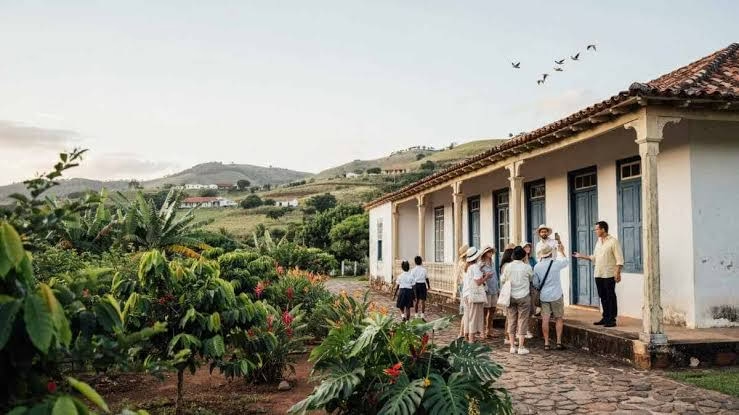
Many of the country’s former roças were nationalized after independence in 1975 and later privatized during economic reforms in the 1990s. Most subsequently fell into disrepair, with some remaining occupied by former workers and their descendants. Now, UNESCO recognition is creating fresh momentum for restoration. São Tomé and Príncipe has launched a 10-year program aimed at rehabilitating the plantation complexes and finding sustainable new uses for them. Private investors are already entering the sector. HBD Hotels, founded by South African entrepreneur Mark Shuttleworth, owns two former plantations on Príncipe and has converted the former Sundy plantation owner’s residence into a luxury hotel. Workers’ houses are also being renovated for accommodation.
Officials hope tourism investment will generate employment while helping preserve the buildings and their historical significance. However, authorities say development must not come at the expense of historical truth. Culture official Emir Boa Morte said the story of the plantations, including their connection to slavery and forced labour, must remain central to their future. For São Tomé and Príncipe, the challenge is now to turn UNESCO recognition into long-term preservation while ensuring that the painful history behind the roças is remembered rather than replaced by tourism.