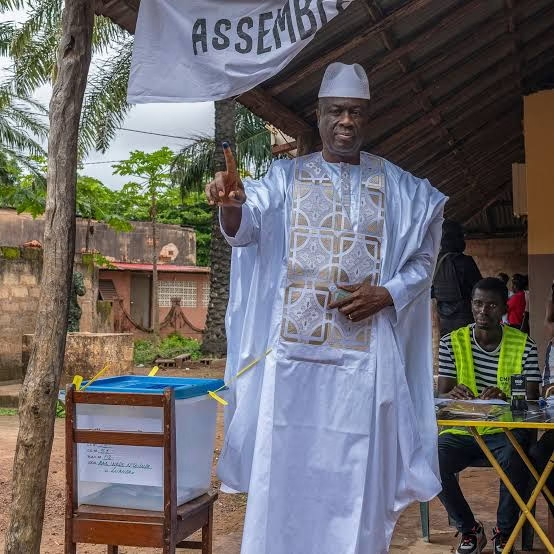

Ballot counting is under way in military-run Guinea-Bissau after voters took part in a constitutional referendum that could significantly strengthen presidential powers ahead of elections planned to restore civilian rule. Polling stations closed at 5:00 p.m. local time on Sunday, with the National Electoral Commission saying turnout had exceeded 55%. Electoral official Idrissa Djalo said voting was generally peaceful and that no major incidents had been reported that would undermine the credibility of the process. The first provisional results are expected on Tuesday.
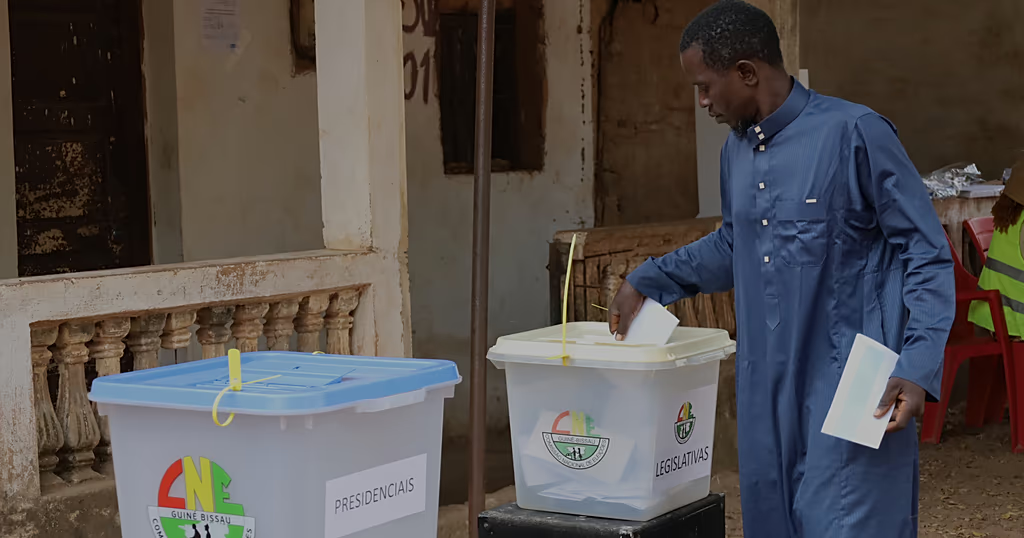
The referendum asks voters whether to approve a new constitution that would replace the current parliamentary system with a presidential model. Under the proposed system, the president would have greater authority to appoint and dismiss the prime minister and government ministers and could dissolve parliament. The military government says the reforms are necessary to create stronger and more stable institutions before presidential and parliamentary elections scheduled for December 6. Transitional President General Horta N’Tam, who is barred from contesting the election under the transitional charter, urged young people to participate. He said the objective was to ensure that whoever wins the next election can complete their mandate without political obstruction.
The vote comes less than a year after the military seized power, overthrowing former President Umaro Sissoco Embaló and suspending the electoral process. Opposition groups called for a boycott, citing restrictions on political freedoms and concerns about the military’s role in the transition. Guinea-Bissau has struggled with political instability since independence from Portugal in 1974, experiencing multiple coups and attempted coups. The country remains one of the world’s poorest, with political crises frequently disrupting government and economic activity. The referendum is therefore being closely watched as a test of whether the military-led transition can deliver credible elections or whether constitutional reform will further concentrate power in the presidency.