


Thousands of refugees from Burundi living in camps in Tanzania say they are being forced to return home as authorities demolish houses, churches and other structures in the camps, raising concerns among rights groups and humanitarian agencies. Refugees in the Nduta Refugee Camp and Nyarugusu Refugee Camp told reporters that Tanzanian security forces have overseen the destruction of homes since early January, leaving many families with little choice but to sign up for repatriation. Some refugees said police fired shots to prevent resistance while bulldozers and workers used large wooden logs to knock down mud-brick shelters.
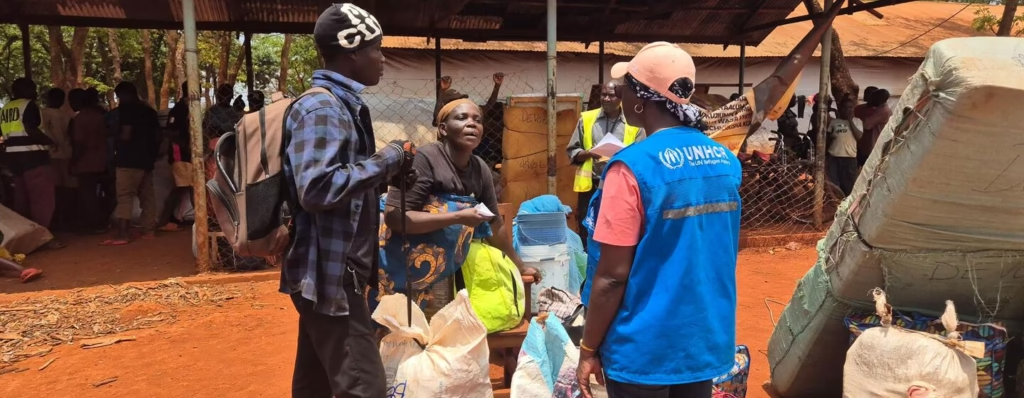
“There is nothing we can do. If you try to resist, the police shoot,” said a 33-year-old refugee who had lived in Nduta camp for several years. Refugees say churches and community buildings have also been destroyed, while some schools and medical facilities have closed, further increasing pressure on families to leave. According to the United Nations High Commissioner for Refugees (UNHCR), about 142,000 Burundian refugees were living in the two camps in Tanzania as of late 2025. Many fled political violence, repression and economic hardship following Burundi’s long-running political crisis.
Burundi’s Interior Minister Leonidas Ndaruzaniye said earlier this week that more than 100,000 refugees are expected to be repatriated by June under a bilateral agreement between the two countries. The arrangement, signed in December, aims to facilitate the return of up to 3,000 refugees per week. UNHCR says about 28,000 Burundians have already returned home so far this year. However, human rights experts say the current conditions raise serious concerns about whether the returns are truly voluntary. Stephanie Schwartz, a researcher at the London School of Economics, said forcing refugees to leave by destroying their homes amounts to coercion and may violate international refugee law.
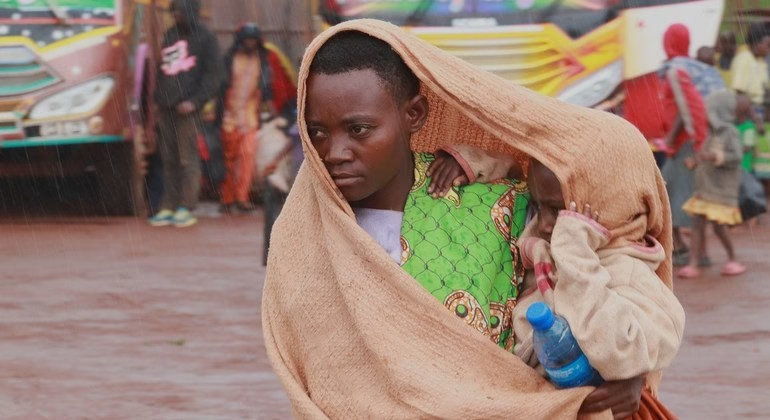
UNHCR said it had expressed “serious concern” about actions by Tanzanian authorities that appear to pressure refugees into registering for repatriation. Officials in Burundi insist the country is now stable and safe for returnees, rejecting allegations of forced repatriation. But activists warn that some returning refugees face harassment or persecution by the government, which critics describe as increasingly authoritarian. For many refugees, the choice appears stark: remain in camps with their homes destroyed and limited access to services, or return to a country some fled years ago in fear for their safety.


